Sönmezer, Emel

Loading...
Profile Picture
Name Variants
Emel, Sönmezer
S., Emel
Sönmezer, Emel
Emel, Sonmezer
E.,Sönmezer
Sönmezer,E.
Sonmezer,E.
E.,Sonmezer
Sonmezer, Emel
E., Sonmezer
S.,Emel
Job Title
Doçent Doktor
Email Address
emel.sonmezer@atilim.edu.tr
Main Affiliation
Department of Therapy and Rehabilitation
Status
Former Staff
Website
ORCID ID
Scopus Author ID
Turkish CoHE Profile ID
Google Scholar ID
WoS Researcher ID

Sustainable Development Goals

NO POVERTY1
NO POVERTY
0
Research Products
ZERO HUNGER2
ZERO HUNGER
0
Research Products
GOOD HEALTH AND WELL-BEING3
GOOD HEALTH AND WELL-BEING
2
Research Products
QUALITY EDUCATION4
QUALITY EDUCATION
0
Research Products
GENDER EQUALITY5
GENDER EQUALITY
1
Research Products
CLEAN WATER AND SANITATION6
CLEAN WATER AND SANITATION
0
Research Products
AFFORDABLE AND CLEAN ENERGY7
AFFORDABLE AND CLEAN ENERGY
0
Research Products
DECENT WORK AND ECONOMIC GROWTH8
DECENT WORK AND ECONOMIC GROWTH
0
Research Products
INDUSTRY, INNOVATION AND INFRASTRUCTURE9
INDUSTRY, INNOVATION AND INFRASTRUCTURE
0
Research Products
REDUCED INEQUALITIES10
REDUCED INEQUALITIES
0
Research Products
SUSTAINABLE CITIES AND COMMUNITIES11
SUSTAINABLE CITIES AND COMMUNITIES
0
Research Products
RESPONSIBLE CONSUMPTION AND PRODUCTION12
RESPONSIBLE CONSUMPTION AND PRODUCTION
0
Research Products
CLIMATE ACTION13
CLIMATE ACTION
0
Research Products
LIFE BELOW WATER14
LIFE BELOW WATER
0
Research Products
LIFE ON LAND15
LIFE ON LAND
0
Research Products
PEACE, JUSTICE AND STRONG INSTITUTIONS16
PEACE, JUSTICE AND STRONG INSTITUTIONS
0
Research Products
PARTNERSHIPS FOR THE GOALS17
PARTNERSHIPS FOR THE GOALS
0
Research Products
This researcher does not have a Scopus ID.
This researcher does not have a WoS ID.
Scholarly Output

5

Articles

2

Views / Downloads

24/78

Supervised MSc Theses

1

Supervised PhD Theses

0

WoS Citation Count

12

Scopus Citation Count

7

Patents

0

Projects

0

WoS Citations per Publication

2.40

Scopus Citations per Publication

1.40

Open Access Source

0

Supervised Theses

1

JournalCount
Insights Into Incontinence and the Pelvic Floor2
Aktuelle Rheumatologie1
Somatosensory & Motor Research1
Current Page: 1 / 1

Scopus Quartile Distribution

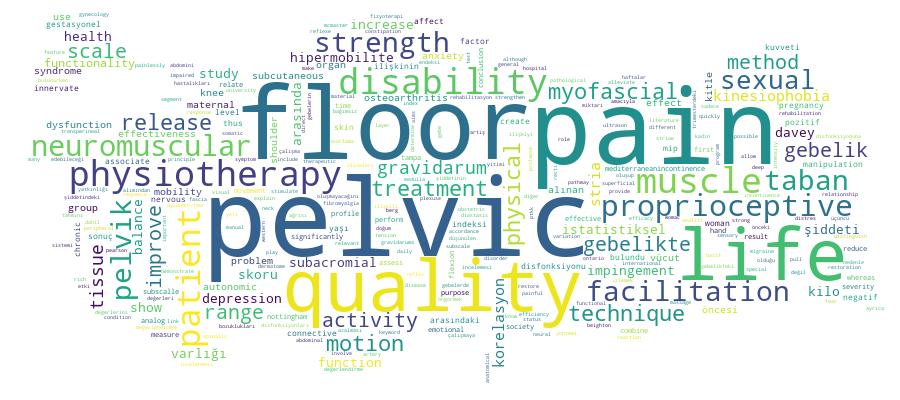
Competency Cloud

GCRIS Competency Cloud

Scholarly Output Search Results

Now showing 1 - 1 of 1
  • Article
    Citation - WoS: 6
    Effectiveness of Proprioceptive Neuromuscular Facilitation and Myofascial Release Techniques in Patients With Subacromial Impingement Syndrome
    (Taylor & Francis Ltd, 2022) Celik, Merve Sinem; Sonmezer, Emel; Acar, Manolya
    Purpose To compare the effectiveness of proprioceptive neuromuscular facilitation and myofascial release technique in patients with subacromial impingement syndrome on pain, range of motion, muscle strength, quality of life, functionality and disability. Methods Thirty patients were randomly divided into two groups: proprioceptive neuromuscular facilitation group (n = 15) and proprioceptive neuromuscular facilitation combined with myofascial release technique group (n = 15). Both treatment methods were performed 3 times a week for 4 weeks. Pain severity was assessed by Visuel Analog Scale, range of motion by a goniometer, muscle strength by digital hand dynamometer, quality of life by Nottingham health profile, functionality by arm, shoulder and hand problems questionnaire, disability by shoulder pain and disability index. All measurements were used before and after treatments. Pain severity, range of motion and muscle strength were also evaluated after the first session. Results After the treatment, shoulder pain, range of motion, muscle strength, functionality and disability were improved in two groups (p < 0.05). Proprioceptive neuromuscular facilitation showed improvement in pain, whereas myofascial release technique improved pain, physical activity, emotional state, sleep and total dimensions of life quality (p < 0.05). Proprioceptive neuromuscular facilitation was more effective in reducing activity pain, whereas myofascial release technique was more effective in increasing flexion, external and internal rotation range of motion, flexion and abduction muscle strength after the first session (p < 0.05). Conclusions The combined application of proprioceptive neuromuscular facilitation and myofascial release technique has a more acute and cumulative positive effect on pain, range of motion, muscle strength, functionality, disability and quality of life in patients with subacromial impingement syndrome.