Polat, Mehtap

Loading...
Profile Picture
Name Variants
Mehtap, Polat
M., Polat
Polat,M.
P.,Mehtap
Polat, Mehtap
M.,Polat
P., Mehtap
Job Title
Profesör Doktor
Email Address
mehtap.polat@atilim.edu.tr
Main Affiliation
First and Emergency Aid Program
Status
Former Staff
Website
ORCID ID
Scopus Author ID
Turkish CoHE Profile ID
Google Scholar ID
WoS Researcher ID

Sustainable Development Goals

2

ZERO HUNGER
ZERO HUNGER Logo

0

Research Products

11

SUSTAINABLE CITIES AND COMMUNITIES
SUSTAINABLE CITIES AND COMMUNITIES Logo

0

Research Products

14

LIFE BELOW WATER
LIFE BELOW WATER Logo

0

Research Products

6

CLEAN WATER AND SANITATION
CLEAN WATER AND SANITATION Logo

0

Research Products

1

NO POVERTY
NO POVERTY Logo

0

Research Products

5

GENDER EQUALITY
GENDER EQUALITY Logo

0

Research Products

9

INDUSTRY, INNOVATION AND INFRASTRUCTURE
INDUSTRY, INNOVATION AND INFRASTRUCTURE Logo

0

Research Products

16

PEACE, JUSTICE AND STRONG INSTITUTIONS
PEACE, JUSTICE AND STRONG INSTITUTIONS Logo

0

Research Products

17

PARTNERSHIPS FOR THE GOALS
PARTNERSHIPS FOR THE GOALS Logo

0

Research Products

15

LIFE ON LAND
LIFE ON LAND Logo

0

Research Products

10

REDUCED INEQUALITIES
REDUCED INEQUALITIES Logo

0

Research Products

7

AFFORDABLE AND CLEAN ENERGY
AFFORDABLE AND CLEAN ENERGY Logo

0

Research Products

8

DECENT WORK AND ECONOMIC GROWTH
DECENT WORK AND ECONOMIC GROWTH Logo

0

Research Products

4

QUALITY EDUCATION
QUALITY EDUCATION Logo

0

Research Products

12

RESPONSIBLE CONSUMPTION AND PRODUCTION
RESPONSIBLE CONSUMPTION AND PRODUCTION Logo

0

Research Products

3

GOOD HEALTH AND WELL-BEING
GOOD HEALTH AND WELL-BEING Logo

2

Research Products

13

CLIMATE ACTION
CLIMATE ACTION Logo

0

Research Products
This researcher does not have a Scopus ID.
This researcher does not have a WoS ID.
Scholarly Output

5

Articles

5

Views / Downloads

15/0

Supervised MSc Theses

0

Supervised PhD Theses

0

WoS Citation Count

35

Scopus Citation Count

92

WoS h-index

3

Scopus h-index

5

Patents

0

Projects

0

WoS Citations per Publication

7.00

Scopus Citations per Publication

18.40

Open Access Source

1

Supervised Theses

0

Google Analytics Visitor Traffic

JournalCount
Reproductive BioMedicine Online2
Fertility and Sterility1
Human Reproduction1
Human Reproduction Update1
Current Page: 1 / 1

Scopus Quartile Distribution

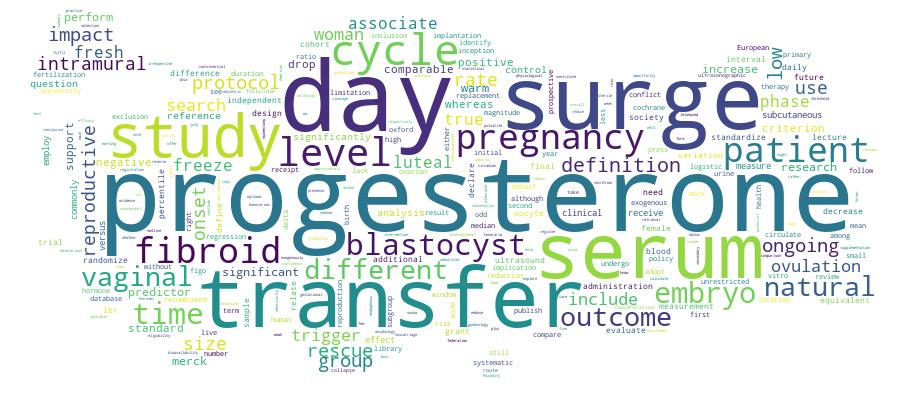
Competency Cloud

GCRIS Competency Cloud

Scholarly Output Search Results

Now showing 1 - 2 of 2
  • Review
    Citation - Scopus: 43
    The Lh Surge and Ovulation Re-Visited: a Systematic Review and Meta-Analysis and Implications for True Natural Cycle Frozen Thawed Embryo Transfer
    (Oxford University Press, 2022) Erden,M.; Mumusoglu,S.; Polat,M.; Yarali Ozbek,I.; Esteves,S.C.; Humaidan,P.; Yarali,H.
    BACKGROUND: Efficient and safe embryo vitrification techniques have contributed to a marked worldwide increase in the use of elective frozen embryo transfer (FET). Pinpointing the day of ovulation, more commonly by documentation of the LH surge and less commonly by ultrasonography, is crucial for timing of FET in a true natural cycle (t-NC) to maximize the reproductive outcome. OBJECTIVE AND RATIONALE: The definition of the onset of the LH surge should be standardized in t-NC FET cycles; however, a clear definition is lacking in the available literature. The first search question concerns the definition of the onset of the LH surge in a natural cycle. The second search question relates to the duration between the onset of the LH surge and ovulation. SEARCH METHODS: We searched PubMed, Web of Science and Cochrane Library databases for two search questions from inception until 31 August 2021. 'Luteinizing hormone'[MeSH] OR 'LH' AND 'surge' terms were used to identify eligible articles to answer the first question, whereas 'Luteinizing hormone'[MeSH] OR 'LH' AND 'surge' OR 'rise' AND 'ovulation'[MeSH] OR 'follicular rupture' OR 'follicular collapse' were the terms used regarding the second question. The included publications were all written in the English language, conducted in women of reproductive age with regular ovulatory cycles and in whom serial serum or urine LH measurement was performed. For the quality and risk of bias assessment of the included studies, the Strengthening the Reporting of Observational Studies in Epidemiology and modified Newcastle Ottawa Scale were used. OUTCOMES: A total of 10 and 8 studies were included for search Questions 1 and 2, respectively. Over the years, through different studies and set-ups, testing in either serum or urine, different definitions for the onset of the LH surge have been developed without a consensus. An increase in LH level varying from 1.8- to 6-fold above the baseline LH level was used in seven studies and an increase of at least two or three standard deviations above the mean of the preceding LH measurements was used in two studies. An LH level exceeding the 30% of the amplitude (peak-baseline LH level) of the LH surge was defined as the onset day by one study. A marked inter-personal variation in the time interval between the onset of the LH surge and ovulation was seen, ranging from 22 to 56 h. When meta-analysis was performed, the mean duration in hours between the onset of the LH surge and ovulation was 33.91 (95% CI = 30.79-37.03: six studies, 187 cycles). WIDER IMPLICATIONS: The definition of the onset of the LH surge should be precisely defined in future well-designed studies employing state-of-art laboratory and ultrasonographic equipment. The window of implantation in a natural cycle is still a black box, and future research is warranted to delineate the optimal interval to time the embryo transfer in t-NC FET cycles. Randomized controlled trials employing different precise endocrine and/or ultrasonographic criteria for timing of FET in a t-NC are urgently required. © 2022 The Author(s). Published by Oxford University Press on behalf of European Society of Human Reproduction and Embryology. All rights reserved.
  • Review
    Citation - WoS: 22
    Citation - Scopus: 28
    The Effect of £6 Cm Sized Noncavity-Distorting Intramural Fibroids on in Vitro Fertilization Outcomes: a Systematic Review and Meta-Analysis
    (Elsevier Science inc, 2023) Erden, Murat; Uyanik, Esra; Polat, Mehtap; Ozbek, Irem Yarali; Yarali, Hakan; Mumusoglu, Sezcan
    Importance: The potential detrimental effects of fibroids on natural fecundity and in vitro fertilization (IVF) outcomes may be influ-enced by their size, location, and number. The impact of small noncavity-distorting intramural fibroids on reproductive outcomes in IVF is still controversial, with conflicting results.Objective(s): To determine whether women with noncavity-distorting intramural fibroids of & LE;6 cm size have lower live birth rates (LBRs) in IVF than female age-matched controls with no fibroids.Data Sources: MEDLINE, Embase, Global Health, and Cochrane Library databases were searched from inception until July 1, 2022. Study Selection and Synthesis: Women undergoing IVF with noncavity-distorting intramural fibroids & LE;6 cm constituted the study group (n = 520), whereas women with no fibroid formed the controls (n = 1392). Female age-matched subgroup analyses were performed to evaluate the impact of different cut-offs for size (& LE;6, & LE;4, and & LE;2 cm), location (the International Federation of Gynecology and Obstetrics [FIGO] type-3), and the number of fibroids on reproductive outcomes. Mantel-Haenszel odds ratios (ORs) with 95% confidence intervals (CIs) were used for outcome measures. All statistical analyses were performed using RevMan 5.4.1Main Outcome Measure(s): The primary outcome measure was LBR. Secondary outcome measures were clinical pregnancy, implan-tation, and miscarriage rates.Result(s): After adopting the eligibility criteria, 5 studies were included in the final analysis. Women with & LE;6 cm noncavity-distorting intramural fibroids had significantly lower LBRs (OR: 0.48, 95% CI: 0.36-0.65, 3 studies, I2=0; low-certainty evidence) compared with women with no fibroids. A significant reduction in LBRs was noted in & LE;4 cm but not in the & LE;2 cm subgroups. The FIGO type-3 fibroids of 2-6 cm size were associated with significantly lower LBRs. Owing to a lack of studies, the impact of the number of noncavity-distorting intramural fibroids (single vs. multiple) on IVF outcomes could not be assessed.Conclusion(s): We conclude that 2-6 cm sized noncavity-distorting intramural fibroids have a deleterious effect on LBRs in IVF. The presence of FIGO type-3 fibroids of 2-6 cm size is associated with significantly lower LBRs. Conclusive evidence from high-quality randomized controlled trials, the reference standard study design for studies of health care interventions, is needed before myomectomy might be offered in daily clinical practice to women with such small fibroids before undergoing IVF treatment. (Fertil Sterile 2023;119:996-1007. & COPY;2023 by American Society for Reproductive Medicine.)El resumen esta disponible en Espanol al final del articulo.