Mısra, Sanjay

Loading...
Profile Picture
Name Variants
M.,Sanjay
Misra, Sanjay
Mısra,S.
Mısra, Sanjay
Misra,S.
S.,Misra
Sanjay, Mısra
Sanjay, Misra
S., Misra
S.,Mısra
M., Sanjay
Misra, S.
Job Title
Profesör Doktor
Email Address
sanjay.misra@atilim.edu.tr
Main Affiliation
Computer Engineering
Status
Website
ORCID ID
Scopus Author ID
Turkish CoHE Profile ID
Google Scholar ID
WoS Researcher ID

Sustainable Development Goals

NO POVERTY1
NO POVERTY
3
Research Products
ZERO HUNGER2
ZERO HUNGER
5
Research Products
GOOD HEALTH AND WELL-BEING3
GOOD HEALTH AND WELL-BEING
2
Research Products
QUALITY EDUCATION4
QUALITY EDUCATION
6
Research Products
GENDER EQUALITY5
GENDER EQUALITY
2
Research Products
CLEAN WATER AND SANITATION6
CLEAN WATER AND SANITATION
1
Research Products
AFFORDABLE AND CLEAN ENERGY7
AFFORDABLE AND CLEAN ENERGY
8
Research Products
DECENT WORK AND ECONOMIC GROWTH8
DECENT WORK AND ECONOMIC GROWTH
11
Research Products
INDUSTRY, INNOVATION AND INFRASTRUCTURE9
INDUSTRY, INNOVATION AND INFRASTRUCTURE
11
Research Products
REDUCED INEQUALITIES10
REDUCED INEQUALITIES
2
Research Products
SUSTAINABLE CITIES AND COMMUNITIES11
SUSTAINABLE CITIES AND COMMUNITIES
1
Research Products
RESPONSIBLE CONSUMPTION AND PRODUCTION12
RESPONSIBLE CONSUMPTION AND PRODUCTION
3
Research Products
CLIMATE ACTION13
CLIMATE ACTION
7
Research Products
LIFE BELOW WATER14
LIFE BELOW WATER
10
Research Products
LIFE ON LAND15
LIFE ON LAND
0
Research Products
PEACE, JUSTICE AND STRONG INSTITUTIONS16
PEACE, JUSTICE AND STRONG INSTITUTIONS
4
Research Products
PARTNERSHIPS FOR THE GOALS17
PARTNERSHIPS FOR THE GOALS
9
Research Products
This researcher does not have a Scopus ID.
This researcher does not have a WoS ID.
Scholarly Output

199

Articles

133

Views / Downloads

114/26

Supervised MSc Theses

3

Supervised PhD Theses

0

WoS Citation Count

2808

Scopus Citation Count

4101

Patents

0

Projects

0

WoS Citations per Publication

14.11

Scopus Citations per Publication

20.61

Open Access Source

53

Supervised Theses

3

JournalCount
Acta Polytechnica Hungarica12
Tehnicki Vjesnik8
Lecture Notes in Computer Science (including subseries Lecture Notes in Artificial Intelligence and Lecture Notes in Bioinformatics) -- 2011 International Conference on Computational Science and Its Applications, ICCSA 2011 -- 20 June 2011 through 23 June 2011 -- Santander -- 854805
Journal of Physics: Conference Series -- 3rd International Conference on Computing and Applied Informatics 2018, ICCAI 2018 -- 18 September 2018 through 19 September 2018 -- Medan, Sumatera Utara -- 1498654
Lecture Notes in Computer Science (including subseries Lecture Notes in Artificial Intelligence and Lecture Notes in Bioinformatics) -- 12th International Conference on Computational Science and Its Applications, ICCSA 2012 -- 18 June 2012 through 21 June 2012 -- Salvador de Bahia -- 909454
Current Page: 1 / 22

Scopus Quartile Distribution

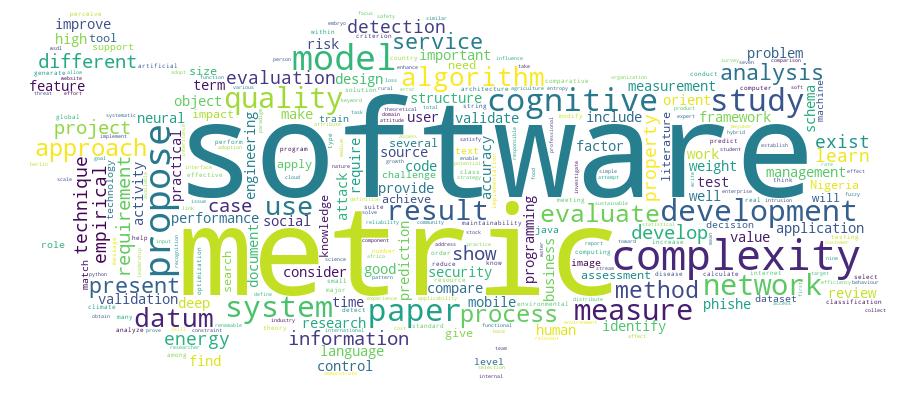
Competency Cloud

GCRIS Competency Cloud

Scholarly Output Search Results

Now showing 1 - 3 of 3
  • Article
    Citation - Scopus: 48
    Identifying Phishing Attacks in Communication Networks Using Url Consistency Features
    (Inderscience Publishers, 2020) Azeez,N.A.; Salaudeen,B.B.; Misra,S.; Damasevicius,R.; Maskeliunas,R.
    Phishing is a fraudulent attempt by cybercriminals, where the target audience is addressed by a text message, phone call or e-mail, requesting classified and sensitive information after presenting himself/herself as a legitimate agent. Successful phishing attack may result into financial loss and identity theft. Identifying forensic characteristics of phishing attack can help to detect the attack and its perpetuators and as well as to enable defence against it. To shield internet users from phishing assaults, numerous anti-phishing models have been proposed. Currently employed techniques to handle these challenges are not sufficient and capable enough. We aim at identifying phishing sites in order to guard internet users from being vulnerable to any form of phishing attacks by verifying the conceptual and literal consistency between the uniform resource locator (URL) and the web content. The implementation of the proposed PhishDetect method achieves an accuracy of 99.1%; indicating that it is effective in detecting various forms of phishing attacks. © 2020 Inderscience Enterprises Ltd.. All rights reserved.
  • Article
    Citation - WoS: 43
    Citation - Scopus: 80
    Adopting Automated Whitelist Approach for Detecting Phishing Attacks
    (Elsevier Advanced Technology, 2021) Azeez, Nureni Ayofe; Misra, Sanjay; Margaret, Ihotu Agbo; Fernandez-Sanz, Luis; Abdulhamid, Shafi'i Muhammad
    Phishing is considered a great scourge in cyberspace. Presently, there are two major challenges known with the existing anti-phishing solutions. Low detection rate and lack of quick access time in a real-time environment. However, it has been established that blacklist solution methods offer quick and immediate access time but with a low detection rate. This research paper presents an automated white-list approach for detecting phishing attacks. The white-list is determined by carrying out a detailed analysis between the visual link and the actual link. The similarities of the known trusted site are calculated by juxtaposing the domain name with the contents of the whitelist and later match it with the IP address before a decision is made and further analyzing the actual link and the visual link by calculating the similarities of the known trusted site. The technique then takes a final decision on the extracted information from the hyperlink, which can also be obtained from the web address provided by the user. The experiments carried out provided a very high level of accuracy, specifically, when the dataset was relatively at the lowest level. Six different datasets were used to perform the experiments. The average accuracy obtained after the six experiments was 96.17% and the approach detects phishing sites with a 95.0% true positive rate. It was observed that the level of accuracy varies from one dataset to another. This result shows that the proposed method performs better than similar approaches benchmarked with. The efficiency of the approach was further established through its computation time, memory, bandwidth as well as other computational resources that were utilized with the minimum requirements when compared with other approaches. This solution has provided immense benefits over the existing solutions by reducing the memory requirements and computational complexity, among other benefits. It has also shown that the proposed method can provide more robust detection performances when compared to other techniques. (c) 2021 Elsevier Ltd. All rights reserved.
  • Article
    Citation - WoS: 25
    Citation - Scopus: 48
    Identifying Phishing Attacks in Communication Networks Using Url Consistency Features
    (Inderscience Publishers, 2020) Azeez,N.A.; Salaudeen,B.B.; Misra,S.; Damasevicius,R.; Maskeliunas,R.
    Phishing is a fraudulent attempt by cybercriminals, where the target audience is addressed by a text message, phone call or e-mail, requesting classified and sensitive information after presenting himself/herself as a legitimate agent. Successful phishing attack may result into financial loss and identity theft. Identifying forensic characteristics of phishing attack can help to detect the attack and its perpetuators and as well as to enable defence against it. To shield internet users from phishing assaults, numerous anti-phishing models have been proposed. Currently employed techniques to handle these challenges are not sufficient and capable enough. We aim at identifying phishing sites in order to guard internet users from being vulnerable to any form of phishing attacks by verifying the conceptual and literal consistency between the uniform resource locator (URL) and the web content. The implementation of the proposed PhishDetect method achieves an accuracy of 99.1%; indicating that it is effective in detecting various forms of phishing attacks. © 2020 Inderscience Enterprises Ltd.. All rights reserved.