
Mısra, Sanjay
Loading...

Profile URL
Name Variants
M.,Sanjay
Misra, Sanjay
Mısra,S.
Mısra, Sanjay
Misra,S.
S.,Misra
Sanjay, Mısra
Sanjay, Misra
S., Misra
S.,Mısra
M., Sanjay
Misra, S.
Misra, Sanjay
Mısra,S.
Mısra, Sanjay
Misra,S.
S.,Misra
Sanjay, Mısra
Sanjay, Misra
S., Misra
S.,Mısra
M., Sanjay
Misra, S.
Job Title
Profesör Doktor
Email Address
sanjay.misra@atilim.edu.tr
Main Affiliation
Computer Engineering
Status
Website
ORCID ID
Scopus Author ID
Turkish CoHE Profile ID
Google Scholar ID
WoS Researcher ID
Sustainable Development Goals
 1
1NO POVERTY
3
Research Products
 2
2ZERO HUNGER
5
Research Products
 3
3GOOD HEALTH AND WELL-BEING
2
Research Products
 4
4QUALITY EDUCATION
6
Research Products
 5
5GENDER EQUALITY
2
Research Products
 6
6CLEAN WATER AND SANITATION
1
Research Products
 7
7AFFORDABLE AND CLEAN ENERGY
8
Research Products
 8
8DECENT WORK AND ECONOMIC GROWTH
11
Research Products
 9
9INDUSTRY, INNOVATION AND INFRASTRUCTURE
11
Research Products
 10
10REDUCED INEQUALITIES
2
Research Products
 11
11SUSTAINABLE CITIES AND COMMUNITIES
1
Research Products
 12
12RESPONSIBLE CONSUMPTION AND PRODUCTION
3
Research Products
 13
13CLIMATE ACTION
7
Research Products
 14
14LIFE BELOW WATER
10
Research Products
 15
15LIFE ON LAND
0
Research Products
 16
16PEACE, JUSTICE AND STRONG INSTITUTIONS
4
Research Products
 17
17PARTNERSHIPS FOR THE GOALS
9
Research Products

This researcher does not have a Scopus ID.

This researcher does not have a WoS ID.

Scholarly Output
199
Articles
133
Views / Downloads
686/271
Supervised MSc Theses
3
Supervised PhD Theses
0
WoS Citation Count
2629
Scopus Citation Count
3894
Patents
0
Projects
0
WoS Citations per Publication
13.21
Scopus Citations per Publication
19.57
Open Access Source
53
Supervised Theses
3
| Journal | Count |
|---|---|
| Acta Polytechnica Hungarica | 12 |
| Tehnicki Vjesnik | 8 |
| Lecture Notes in Computer Science (including subseries Lecture Notes in Artificial Intelligence and Lecture Notes in Bioinformatics) -- 2011 International Conference on Computational Science and Its Applications, ICCSA 2011 -- 20 June 2011 through 23 June 2011 -- Santander -- 85480 | 5 |
| Journal of Physics: Conference Series -- 3rd International Conference on Computing and Applied Informatics 2018, ICCAI 2018 -- 18 September 2018 through 19 September 2018 -- Medan, Sumatera Utara -- 149865 | 4 |
| Lecture Notes in Computer Science (including subseries Lecture Notes in Artificial Intelligence and Lecture Notes in Bioinformatics) -- 12th International Conference on Computational Science and Its Applications, ICCSA 2012 -- 18 June 2012 through 21 June 2012 -- Salvador de Bahia -- 90945 | 4 |
Current Page: 1 / 22
Scopus Quartile Distribution
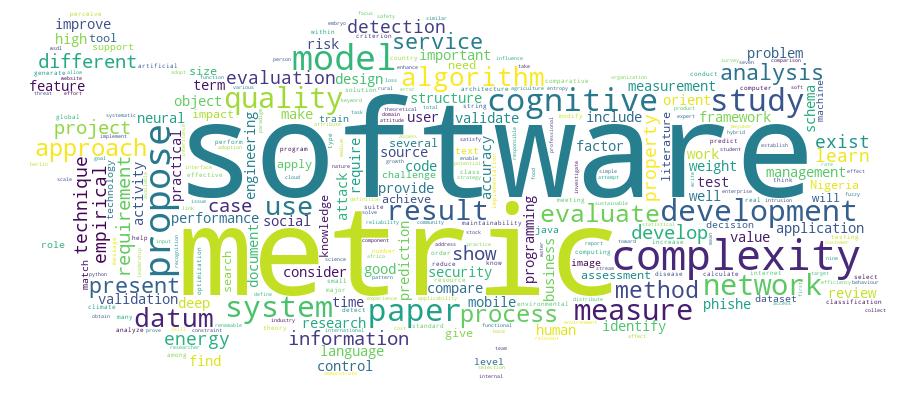
Competency Cloud
161 results
Scholarly Output Search Results
Now showing 1 - 10 of 161
Article Citation - WoS: 7Citation - Scopus: 13An Expert System for the Diagnosis of Sexually Transmitted Diseases - Esstd(Ios Press, 2017) Thompson, Temitope; Sowunmi, Olaperi; Misra, Sanjay; Fernandez-Sanz, Luis; Crawford, Broderick; Soto, RicardoOver 93 million people get ill with sexually transmitted diseases in sub-Saharan Africa. However, research has shown that people with sexually transmitted diseases find it difficult to share their problem with a physician due to societal discrimination in Africa. Due to this problem, we have implemented a medical expert system for diagnosing sexually transmitted diseases (ESSTD) that maintains the anonymity of the individuals. The patients diagnose themselves by answering questions provided by the system. This paper presents the design and development of the system. Forward chaining rules were used to implement the knowledge base and the system is easily accessible on mobile platforms. The Java Expert System Shell was used for its inference engine and the system was validated by domain experts. It is useful because it helps to maintain anonymity for patients with STD.Conference Object Citation - WoS: 2A Multi-Paradigm Complexity Metric (mcm)(Springer-verlag Berlin, 2011) Misra, Sanjay; Akman, Ibrahim; Cafer, FeridHuge amount of researches and software metrics have been proposed for procedural and object-oriented languages. However, there are only few metrics available in the literature related with multi-paradigm programming languages. In this paper, we propose a metric to evaluate the code written in multi-paradigm language. Our proposed metric can be used for most of the programming paradigms, including both procedural and object-oriented languages.Conference Object Embryo Spatial Model Reconstruction(Springer international Publishing Ag, 2020) Dirvanauskas, Darius; Maskeliunas, Rytis; Raudonis, Vidas; Misra, SanjayTime lapse microscopy offered new solutions to study embryo development process. It allows embryologist to monitor embryo growth in real time and evaluate them without interfering into their growth environment. Embryo evaluation during growth process is one of the key criteria in embryo selection for fertilization. Live embryo monitoring is time consuming and new tools are offered to automate part of process. Our proposed algorithm gives new possibilities for embryo monitoring. It uses embryo images which are taken from different embryo layers, extracts embryo cell features and returns metrical evaluation to compare different embryos. High number of extracted features shows embryo fragmentation. Other tool whichwe present is spatial embryo model. Features extracted from embryo layers are combined together to spatial model. It allows embryologist to examine embryo model and compare different layers in one space. The obtained spatial embryo model will be later used to develop new algorithms for embryo analysis tasks.Article Citation - WoS: 38Citation - Scopus: 59Career Abandonment Intentions among Software Workers(Wiley, 2014) Colomo-Palacios, Ricardo; Casado-Lumbreras, Cristina; Misra, Sanjay; Soto-Acosta, PedroWithin the software development industry, human resources have been recognized as one of the most decisive and scarce resources. Today, the retention of skilled IT (information technology) personnel is a major issue for employers and recruiters as well, since IT career abandonment is a common practice and means not only the loss of personnel, knowledge, and skills, but also the loss of business opportunities. This article seeks to discover the main motivations young practitioners abandon the software career. To achieve this objective, two studies were conducted. The first study was qualitative (performed through semistructured interviews) and intended to discover the main variables affecting software career abandonment. The second study was quantitative, consisting of a Web-based survey developed from the output of the first study and administered to a sample of 148 IT practitioners. Results show that work-related, psychological, and emotional variable are the most relevant group of variables explaining IT career abandonment. More specifically, the three most important variables that motivate employees to abandon the career are effort-reward imbalance, perceived workload, and emotional exhaustion. In contrast, variables such as politics and infighting, uncool work, and insufficient resources influence to a lesser extent the decision to leave the career. (c) 2012 Wiley Periodicals, Inc.Article An Evaluation of ICT Infrastructure and Application in Nigeria Universities(Budapest Tech Polytechnical Institution, 2014) Egoeze, Fidelis; Misra, Sanjay; Akman, Ibrahim; Colomo-Palacios, RicardoArticle Citation - WoS: 3Citation - Scopus: 5Particle Swarm Optimization of the Spectral and Energy Efficiency of an Scma-Based Heterogeneous Cellular Network(Wiley, 2022) Noma-Osaghae, Etinosa; Misra, Sanjay; Ahuja, Ravin; Koyuncu, MuratBackground The effect of stochastic small base station (SBS) deployment on the energy efficiency (EE) and spectral efficiency (SE) of sparse code multiple access (SCMA)-based heterogeneous cellular networks (HCNs) is still mostly unknown. Aim This research study seeks to provide insight into the interaction between SE and EE in SBS sleep-mode enabled SCMA-based HCNs. Methodology A model that characterizes the energy-spectral-efficiency (ESE) of a two-tier SBS sleep-mode enabled SCMA-based HCN was derived. A multiobjective optimization problem was formulated to maximize the SE and EE of the SCMA-based HCN simultaneously. The multiobjective optimization problem was solved using a proposed weighted sum modified particle swarm optimization algorithm (PSO). A comparison was made between the performance of the proposed weighted sum modified PSO algorithm and the genetic algorithm (GA) and the case where the SCMA-based HCN is unoptimized. Results The Pareto-optimal front generated showed a simultaneous maximization of the SE and EE of the SCMA-based HCN at high traffic levels and a convex front that allows network operators to select the SE-EE tradeoff at low traffic levels flexibly. The proposed PSO algorithm offers a higher SBS density, and a higher SBS transmit power at high traffic levels than at low traffic levels. The unoptimized SCMA-based HCN achieves an 80% lower SE and a 51% lower EE than the proposed PSO optimized SCMA-based HCN. The optimum SE and EE achieved by the SCMA-based HCN using the proposed PSO algorithm or the GA are comparable, but the proposed PSO uses a 51.85% lower SBS density and a 35.96% lower SBS transmit power to achieve the optimal SE and EE at moderate traffic levels. Conclusion In sleep-mode enabled SCMA-based HCNs, network engineers have to decide the balance of SBS density and SBS transmit power that helps achieve the desired SE and EE.Article Citation - WoS: 17Citation - Scopus: 26Toward Ontology-Based Risk Management Framework for Software Projects: an Empirical Study(Wiley, 2020) Abioye, Temitope Elizabeth; Arogundade, Oluwasefunmi Tale; Misra, Sanjay; Akinwale, Adio T.; Adeniran, Olusola JohnSoftware risk management is a proactive decision-making practice with processes, methods, and tools for managing risks in a software project. Many existing techniques for software project risk management are textual documentation with varying perspectives that are nonreusable and cannot be shared. In this paper, a life-cycle approach to ontology-based risk management framework for software projects is presented. A dataset from literature, domain experts, and practitioners is used. The identified risks are refined by 19 software experts; risks are conceptualized, modeled, and developed using Protege. The risks are qualitatively analyzed and prioritized, and aversion methods are provided. The framework is adopted in real-life software projects. Precision recall and F-measure metrics are used to validate the performance of the extraction tool while performance and perception evaluation are carried out using the performance appraisal form and technology acceptance model, respectively. Mean scores from performance and perception evaluation are compared with evaluation concept scale. Results showed that cost is reduced, high-quality projects are delivered on time, and software developers found this framework a potent tool needed for their day-to-day activities in software development.Article Citation - WoS: 3Citation - Scopus: 4Predictive Rental Values Model for Low-Income Earners in Slums: the Case of Ijora, Nigeria(Taylor & Francis Ltd, 2023) Iroham, Chukwuemeka O.; Misra, Sanjay; Emebo, Onyeka C.; Okagbue, Hilary, IIt is well known most often that values of properties tend to hike at the effluxion of time. This has necessitated the adoption of predictive models in interpreting outcomes in the property market in the future. Earlier studies have been oblivious of such models' outcomes as it affects any focal group, particularly the vulnerable. This present study focuses on the low-income earners found in the slum. The Ijora community in Lagos was the highlight of this study, particularly Ijora Badia and Ijora Oloye, regarded as slums according to the UNDP report. The entire fifty-two (52) local agents in the Ijora community were surveyed in cross-sectional survey research that entailed the questionnaire's issuance. The nexus of data collection, pre-processing, data analysis, algorithm application, and model evaluation resulted in retrieving rental values within the years 2010 and 2019 on two predominant residential property types of self-contain and one-bedroom flats found within the community. Three selected algorithms, Artificial Neural Network (ANN), Support Vector Machine, and Logistic Regression, were essentially used as classifiers but trained to predict the continuous values. These algorithms were implemented through the use of Python's SciKit-learn Library and RapidMiner. The findings revealed that though all three models gave accurate predictions, Logistic Regression was the highest with low error values. It was recommended that Logistic Regression be applied but with much data set of property values of low-income earners over much more period. This study will contribute to the Sustainable development goals(SDG) 11(Sustainable cities and communities) of the United Nations to benefit developing countries, especially in sub-Saharan Africa.Article Citation - WoS: 11Citation - Scopus: 17Software Measurement Activities in Small and Medium Enterprises: an Empirical Assessment(Budapest Tech, 2011) Pusatli, O. Tolga; Misra, Sanjay; Tolga Pusatli, O.; Computer EngineeringAn empirical study for evaluating the proper implementation of measurement/metric programs in software companies in one area of Turkey is presented. The research questions are discussed and validated with the help of senior software managers (more than 15 years' experience) and then used for interviewing a variety of medium and small scale software companies in Ankara. Observations show that there is a common reluctance/lack of interest in utilizing measurements/metrics despite the fact that they are well known in the industry. A side product of this research is that internationally recognized standards such as ISO and CMMI are pursued if they are a part of project/job requirements; without these requirements, introducing those standards to the companies remains as a long-term target to increase quality.Review Citation - WoS: 3Citation - Scopus: 9An Empirical Evaluation of Software Quality Assurance Practices and Challenges in a Developing Country: a Comparison of Nigeria and Turkey(Springer international Publishing Ag, 2016) Sowunmi, Olaperi Yeside; Mısra, Sanjay; Misra, Sanjay; Fernandez-Sanz, Luis; Crawford, Broderick; Soto, Ricardo; Mısra, Sanjay; Computer Engineering; Computer EngineeringBackground: The importance of quality assurance in the software development process cannot be overemphasized because its adoption results in high reliability and easy maintenance of the software system and other software products. Software quality assurance includes different activities such as quality control, quality management, quality standards, quality planning, process standardization and improvement amongst others. The aim of this work is to further investigate the software quality assurance practices of practitioners in Nigeria. While our previous work covered areas on quality planning, adherence to standardized processes and the inherent challenges, this work has been extended to include quality control, software process improvement and international quality standard organization membership. It also makes comparison based on a similar study carried out in Turkey. The goal is to generate more robust findings that can properly support decision making by the software community. The qualitative research approach, specifically, the use of questionnaire research instruments was applied to acquire data from software practitioners. Results: In addition to the previous results, it was observed that quality assurance practices are quite neglected and this can be the cause of low patronage. Moreover, software practitioners are neither aware of international standards organizations or the required process improvement techniques; as such their claimed standards are not aligned to those of accredited bodies, and are only limited to their local experience and knowledge, which makes it questionable. The comparison with Turkey also yielded similar findings, making the results typical of developing countries. The research instrument used was tested for internal consistency using the Cronbach's alpha, and it was proved reliable. Conclusion: For the software industry in developing countries to grow strong and be a viable source of external revenue, software assurance practices have to be taken seriously because its effect is evident in the final product. Moreover, quality frameworks and tools which require minimum time and cost are highly needed in these countries.
