
Mısra, Sanjay
Loading...

Profile URL
Name Variants
M.,Sanjay
Misra, Sanjay
Mısra,S.
Mısra, Sanjay
Misra,S.
S.,Misra
Sanjay, Mısra
Sanjay, Misra
S., Misra
S.,Mısra
M., Sanjay
Misra, S.
Misra, Sanjay
Mısra,S.
Mısra, Sanjay
Misra,S.
S.,Misra
Sanjay, Mısra
Sanjay, Misra
S., Misra
S.,Mısra
M., Sanjay
Misra, S.
Job Title
Profesör Doktor
Email Address
sanjay.misra@atilim.edu.tr
Main Affiliation
Computer Engineering
Status
Website
ORCID ID
Scopus Author ID
Turkish CoHE Profile ID
Google Scholar ID
WoS Researcher ID
Sustainable Development Goals
 1
1NO POVERTY
3
Research Products
 2
2ZERO HUNGER
5
Research Products
 3
3GOOD HEALTH AND WELL-BEING
2
Research Products
 4
4QUALITY EDUCATION
6
Research Products
 5
5GENDER EQUALITY
2
Research Products
 6
6CLEAN WATER AND SANITATION
1
Research Products
 7
7AFFORDABLE AND CLEAN ENERGY
8
Research Products
 8
8DECENT WORK AND ECONOMIC GROWTH
11
Research Products
 9
9INDUSTRY, INNOVATION AND INFRASTRUCTURE
11
Research Products
 10
10REDUCED INEQUALITIES
2
Research Products
 11
11SUSTAINABLE CITIES AND COMMUNITIES
1
Research Products
 12
12RESPONSIBLE CONSUMPTION AND PRODUCTION
3
Research Products
 13
13CLIMATE ACTION
7
Research Products
 14
14LIFE BELOW WATER
10
Research Products
 15
15LIFE ON LAND
0
Research Products
 16
16PEACE, JUSTICE AND STRONG INSTITUTIONS
4
Research Products
 17
17PARTNERSHIPS FOR THE GOALS
9
Research Products

This researcher does not have a Scopus ID.

This researcher does not have a WoS ID.

Scholarly Output
199
Articles
133
Views / Downloads
114/26
Supervised MSc Theses
3
Supervised PhD Theses
0
WoS Citation Count
2808
Scopus Citation Count
4101
Patents
0
Projects
0
WoS Citations per Publication
14.11
Scopus Citations per Publication
20.61
Open Access Source
53
Supervised Theses
3
| Journal | Count |
|---|---|
| Acta Polytechnica Hungarica | 12 |
| Tehnicki Vjesnik | 8 |
| Lecture Notes in Computer Science (including subseries Lecture Notes in Artificial Intelligence and Lecture Notes in Bioinformatics) -- 2011 International Conference on Computational Science and Its Applications, ICCSA 2011 -- 20 June 2011 through 23 June 2011 -- Santander -- 85480 | 5 |
| Journal of Physics: Conference Series -- 3rd International Conference on Computing and Applied Informatics 2018, ICCAI 2018 -- 18 September 2018 through 19 September 2018 -- Medan, Sumatera Utara -- 149865 | 4 |
| Lecture Notes in Computer Science (including subseries Lecture Notes in Artificial Intelligence and Lecture Notes in Bioinformatics) -- 12th International Conference on Computational Science and Its Applications, ICCSA 2012 -- 18 June 2012 through 21 June 2012 -- Salvador de Bahia -- 90945 | 4 |
Current Page: 1 / 22
Scopus Quartile Distribution
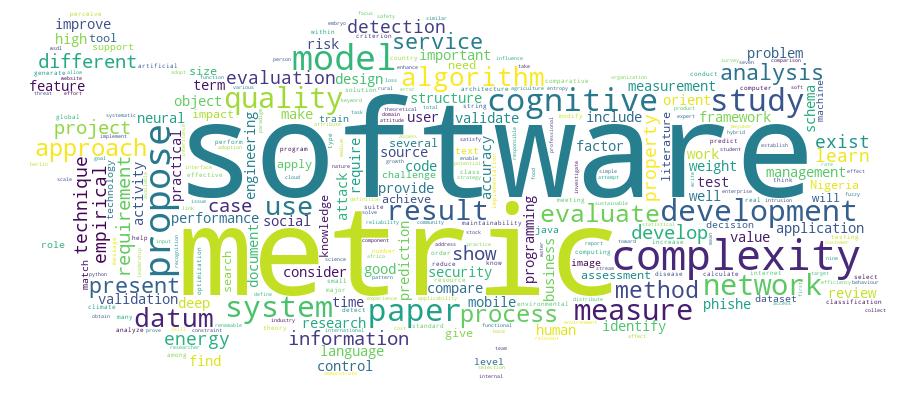
Competency Cloud
103 results
Scholarly Output Search Results
Now showing 1 - 10 of 103
Article Citation - WoS: 40Citation - Scopus: 49Analyzing Human Resource Management Practices Within the Gsd Context(Taylor & Francis inc, 2012) Colomo-Palacios, Ricardo; Casado-Lumbreras, Cristina; Soto-Acosta, Pedro; Misra, Sanjay; Garcia-Penalvo, Francisco JoseThe development of software across different countries (and time zones) differs substantially from software development in one single country or region. The management of processes and people, who work in globally distributed teams, requires a high level of coordination and collaboration which needs to be based on established human resource management practices. The People Capability Maturity Model (People-CMM) provides a complete framework that enables quality in human resource management to be improved. However, today, the adoption of the People-CMM within organizations using Global Software Development (GSD) is not an easy task. This paper uses an empirical study to analyze the implementation of the People-CMM within the GSD context. Results confirm that cultural and communication problems are the main challenges in the implementation of the People-CMM adoption within GSD scenarios.Article Citation - WoS: 7Citation - Scopus: 13An Expert System for the Diagnosis of Sexually Transmitted Diseases - Esstd(Ios Press, 2017) Thompson, Temitope; Sowunmi, Olaperi; Misra, Sanjay; Fernandez-Sanz, Luis; Crawford, Broderick; Soto, RicardoOver 93 million people get ill with sexually transmitted diseases in sub-Saharan Africa. However, research has shown that people with sexually transmitted diseases find it difficult to share their problem with a physician due to societal discrimination in Africa. Due to this problem, we have implemented a medical expert system for diagnosing sexually transmitted diseases (ESSTD) that maintains the anonymity of the individuals. The patients diagnose themselves by answering questions provided by the system. This paper presents the design and development of the system. Forward chaining rules were used to implement the knowledge base and the system is easily accessible on mobile platforms. The Java Expert System Shell was used for its inference engine and the system was validated by domain experts. It is useful because it helps to maintain anonymity for patients with STD.Conference Object Citation - WoS: 2A Multi-Paradigm Complexity Metric (mcm)(Springer-verlag Berlin, 2011) Misra, Sanjay; Akman, Ibrahim; Cafer, FeridHuge amount of researches and software metrics have been proposed for procedural and object-oriented languages. However, there are only few metrics available in the literature related with multi-paradigm programming languages. In this paper, we propose a metric to evaluate the code written in multi-paradigm language. Our proposed metric can be used for most of the programming paradigms, including both procedural and object-oriented languages.Conference Object Embryo Spatial Model Reconstruction(Springer international Publishing Ag, 2020) Dirvanauskas, Darius; Maskeliunas, Rytis; Raudonis, Vidas; Misra, SanjayTime lapse microscopy offered new solutions to study embryo development process. It allows embryologist to monitor embryo growth in real time and evaluate them without interfering into their growth environment. Embryo evaluation during growth process is one of the key criteria in embryo selection for fertilization. Live embryo monitoring is time consuming and new tools are offered to automate part of process. Our proposed algorithm gives new possibilities for embryo monitoring. It uses embryo images which are taken from different embryo layers, extracts embryo cell features and returns metrical evaluation to compare different embryos. High number of extracted features shows embryo fragmentation. Other tool whichwe present is spatial embryo model. Features extracted from embryo layers are combined together to spatial model. It allows embryologist to examine embryo model and compare different layers in one space. The obtained spatial embryo model will be later used to develop new algorithms for embryo analysis tasks.Article Citation - WoS: 38Citation - Scopus: 59Career Abandonment Intentions among Software Workers(Wiley, 2014) Colomo-Palacios, Ricardo; Casado-Lumbreras, Cristina; Misra, Sanjay; Soto-Acosta, PedroWithin the software development industry, human resources have been recognized as one of the most decisive and scarce resources. Today, the retention of skilled IT (information technology) personnel is a major issue for employers and recruiters as well, since IT career abandonment is a common practice and means not only the loss of personnel, knowledge, and skills, but also the loss of business opportunities. This article seeks to discover the main motivations young practitioners abandon the software career. To achieve this objective, two studies were conducted. The first study was qualitative (performed through semistructured interviews) and intended to discover the main variables affecting software career abandonment. The second study was quantitative, consisting of a Web-based survey developed from the output of the first study and administered to a sample of 148 IT practitioners. Results show that work-related, psychological, and emotional variable are the most relevant group of variables explaining IT career abandonment. More specifically, the three most important variables that motivate employees to abandon the career are effort-reward imbalance, perceived workload, and emotional exhaustion. In contrast, variables such as politics and infighting, uncool work, and insufficient resources influence to a lesser extent the decision to leave the career. (c) 2012 Wiley Periodicals, Inc.Article Citation - WoS: 105Citation - Scopus: 163Cassava Disease Recognition From Low-Quality Images Using Enhanced Data Augmentation Model and Deep Learning(Wiley, 2021) Abayomi-Alli, Olusola Oluwakemi; Damasevicius, Robertas; Misra, Sanjay; Maskeliunas, RytisImprovement of deep learning algorithms in smart agriculture is important to support the early detection of plant diseases, thereby improving crop yields. Data acquisition for machine learning applications is an expensive task due to the requirements of expert knowledge and professional equipment. The usability of any application in a real-world setting is often limited by unskilled users and the limitations of devices used for acquiring images for classification. We aim to improve the accuracy of deep learning models on low-quality test images using data augmentation techniques for neural network training. We generate synthetic images with a modified colour value distribution to expand the trainable image colour space and to train the neural network to recognize important colour-based features, which are less sensitive to the deficiencies of low-quality images such as those affected by blurring or motion. This paper introduces a novel image colour histogram transformation technique for generating synthetic images for data augmentation in image classification tasks. The approach is based on the convolution of the Chebyshev orthogonal functions with the probability distribution functions of image colour histograms. To validate our proposed model, we used four methods (resolution down-sampling, Gaussian blurring, motion blur, and overexposure) for reducing image quality from the Cassava leaf disease dataset. The results based on the modified MobileNetV2 neural network showed a statistically significant improvement of cassava leaf disease recognition accuracy on lower-quality testing images when compared with the baseline network. The model can be easily deployed for recognizing and detecting cassava leaf diseases in lower quality images, which is a major factor in practical data acquisition.Article Citation - WoS: 31Citation - Scopus: 51Neural Network and Classification Approach in Identifying Customer Behavior in the Banking Sector: a Case Study of an International Bank(Wiley, 2015) Ogwueleka, Francisca Nonyelum; Misra, Sanjay; Colomo-Palacios, Ricardo; Fernandez, LuisThe customer relationship focus for banks is in development of main competencies and strategies of building strong profitable customer relationships through considering and managing the customer impression, influence on the culture of the bank, satisfactory treatment, and assessment of valued relationship building. Artificial neural networks (ANNs) are used after data segmentation and classification, where the designed model register records into two class sets, that is, the training and testing sets. ANN predicts new customer behavior from previously observed customer behavior after executing the process of learning from existing data. This article proposes an ANN model, which is developed using a six-step procedure. The back-propagation algorithm is used to train the ANN by adjusting its weights to minimize the difference between the current ANN output and the desired output. An evaluation process is conducted to determine whether the ANN has learned how to perform. The training process is halted periodically, and its performance is tested until an acceptable result is obtained. The principles underlying detection software are grounded in classical statistical decision theory.Conference Object An Evaluation on Developer's Perception of Xml Schema Complexity Metrics for Web Services(Springer-verlag Berlin, 2013) Crasso, Marco; Mateos, Cristian; Coscia, Jose Luis Ordiales; Zunino, Alejandro; Misra, SanjayUndoubtedly, the Service-Oriented Computing (SOC) is not an incipient computing paradigm anymore, while Web Services technologies is now a very mature stack of technologies. Both have been steadily gaining maturity as their adoption in the software industry grew. Accordingly, several metric suites for assessing different quality attributes of Web Services have been recently proposed. In particular, researchers have focused on measuring services interfaces descriptions, which like any other software artifact, have a measurable size, complexity and quality. This paper presents a study that assesses human perception of some recent services interfaces complexity metrics (Basci and Misra's metrics suite). Empirical evidence suggests that a service interface that it is not complex for a software application, in terms of time and space required to analyze it, will not be necessarily well designed, in terms of best practices for designing Web Services. A Likert-based questionnaire was used to gather individuals opinions about this topic.Article Citation - WoS: 20Citation - Scopus: 25A Study on the Key Soft Skills for Successful Participation of Students in Multinational Engineering Education(Tempus Publications, 2017) Fernandez-Sanz, Luis; Teresa Villalba, Maria; Amelio Medina, Jose; Misra, Sanjay; Villalba, Maria Teresa; Medina, José Amelio; Computer EngineeringSoft-skills have proved to be a necessary complement to technical skills in today's multinational workplaces. As universities are facing the challenge of promoting internationalization and mobility in students and teachers, they have to decide how to help their students in developing these skills as well as increase their awareness on the cultural differences in multinational settings. After a long trajectory of participation in multinational educational experiences, the authors launched a survey to check if their previous findings on the preferred soft skills by educational experts and managers still remain valid after 5 years. Another goal of the study was the analysis of the link between preference for specific soft skills and cultural background in each country as characterized by Hofstede's indicators. The data collected from 123 experts from 45 different countries have confirmed the existence of a stable core set of preferred soft skills at global level and also for European countries. Results have also shown links between specific cultural indicators and preference for some soft skills.Article Citation - Scopus: 1Maintaining Software Through Bit-Parallelism and Hashing the Parameterized q-grams(Univ Osijek, Tech Fac, 2012) Prasad, Rajesh; Agarwal, Suneeta; Misra, Sanjay; Sharma, Anuj Kumar; Singh, Alok; Computer EngineeringIn the software maintenance, it is often required to find duplicity present in the codes. Two code fragments are equivalent, if one can be transformed into the other via consistent renaming of identifiers, literals and variables. This equivalency can be detected by parameterized string matching. In this matching, a given pattern is said to match with a substring of the text, if there exists a one-to-one correspondence between symbols of and symbols of. In this paper, we propose an efficient algorithm for this problem by using both the overlapping and non-overlapping q-gram. We show the effect of running time of the algorithm on increasing the duplicity present in the code.
