
Mısra, Sanjay
Loading...

Profile URL
Name Variants
M.,Sanjay
Misra, Sanjay
Mısra,S.
Mısra, Sanjay
Misra,S.
S.,Misra
Sanjay, Mısra
Sanjay, Misra
S., Misra
S.,Mısra
M., Sanjay
Misra, S.
Misra, Sanjay
Mısra,S.
Mısra, Sanjay
Misra,S.
S.,Misra
Sanjay, Mısra
Sanjay, Misra
S., Misra
S.,Mısra
M., Sanjay
Misra, S.
Job Title
Profesör Doktor
Email Address
sanjay.misra@atilim.edu.tr
Main Affiliation
Computer Engineering
Status
Website
ORCID ID
Scopus Author ID
Turkish CoHE Profile ID
Google Scholar ID
WoS Researcher ID
Sustainable Development Goals
 1
1NO POVERTY
3
Research Products
 2
2ZERO HUNGER
5
Research Products
 3
3GOOD HEALTH AND WELL-BEING
2
Research Products
 4
4QUALITY EDUCATION
6
Research Products
 5
5GENDER EQUALITY
2
Research Products
 6
6CLEAN WATER AND SANITATION
1
Research Products
 7
7AFFORDABLE AND CLEAN ENERGY
8
Research Products
 8
8DECENT WORK AND ECONOMIC GROWTH
11
Research Products
 9
9INDUSTRY, INNOVATION AND INFRASTRUCTURE
11
Research Products
 10
10REDUCED INEQUALITIES
2
Research Products
 11
11SUSTAINABLE CITIES AND COMMUNITIES
1
Research Products
 12
12RESPONSIBLE CONSUMPTION AND PRODUCTION
3
Research Products
 13
13CLIMATE ACTION
7
Research Products
 14
14LIFE BELOW WATER
10
Research Products
 15
15LIFE ON LAND
0
Research Products
 16
16PEACE, JUSTICE AND STRONG INSTITUTIONS
4
Research Products
 17
17PARTNERSHIPS FOR THE GOALS
9
Research Products

This researcher does not have a Scopus ID.

This researcher does not have a WoS ID.

Scholarly Output
199
Articles
133
Views / Downloads
114/26
Supervised MSc Theses
3
Supervised PhD Theses
0
WoS Citation Count
2808
Scopus Citation Count
4101
Patents
0
Projects
0
WoS Citations per Publication
14.11
Scopus Citations per Publication
20.61
Open Access Source
53
Supervised Theses
3
| Journal | Count |
|---|---|
| Acta Polytechnica Hungarica | 12 |
| Tehnicki Vjesnik | 8 |
| Lecture Notes in Computer Science (including subseries Lecture Notes in Artificial Intelligence and Lecture Notes in Bioinformatics) -- 2011 International Conference on Computational Science and Its Applications, ICCSA 2011 -- 20 June 2011 through 23 June 2011 -- Santander -- 85480 | 5 |
| Journal of Physics: Conference Series -- 3rd International Conference on Computing and Applied Informatics 2018, ICCAI 2018 -- 18 September 2018 through 19 September 2018 -- Medan, Sumatera Utara -- 149865 | 4 |
| Lecture Notes in Computer Science (including subseries Lecture Notes in Artificial Intelligence and Lecture Notes in Bioinformatics) -- 12th International Conference on Computational Science and Its Applications, ICCSA 2012 -- 18 June 2012 through 21 June 2012 -- Salvador de Bahia -- 90945 | 4 |
Current Page: 1 / 22
Scopus Quartile Distribution
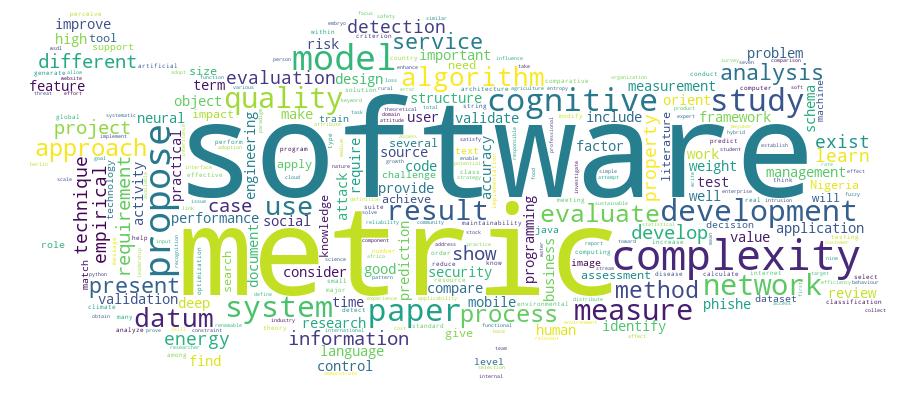
Competency Cloud
19 results
Scholarly Output Search Results
Now showing 1 - 10 of 19
Article Citation - WoS: 30Citation - Scopus: 40Software Code Smell Prediction Model Using Shannon, Renyi and Tsallis Entropies(MDPI, 2018) Blazauskas, Tomas; Gupta, Aakanshi; Misra, Sanjay; Suri, Bharti; Kumar, Vijay; Damasevicius, RobertasThe current era demands high quality software in a limited time period to achieve new goals and heights. To meet user requirements, the source codes undergo frequent modifications which can generate the bad smells in software that deteriorate the quality and reliability of software. Source code of the open source software is easily accessible by any developer, thus frequently modifiable. In this paper, we have proposed a mathematical model to predict the bad smells using the concept of entropy as defined by the Information Theory. Open-source software Apache Abdera is taken into consideration for calculating the bad smells. Bad smells are collected using a detection tool from sub components of the Apache Abdera project, and different measures of entropy (Shannon, Renyi and Tsallis entropy). By applying non-linear regression techniques, the bad smells that can arise in the future versions of software are predicted based on the observed bad smells and entropy measures. The proposed model has been validated using goodness of fit parameters (prediction error, bias, variation, and Root Mean Squared Prediction Error (RMSPE)). The values of model performance statistics (R-2, adjusted R-2, Mean Square Error (MSE) and standard error) also justify the proposed model. We have compared the results of the prediction model with the observed results on real data. The results of the model might be helpful for software development industries and future researchers.Article Citation - WoS: 18Citation - Scopus: 35Distributed Centrality Analysis of Social Network Data Using Mapreduce(Mdpi, 2019) Behera, Ranjan Kumar; Rath, Santanu Kumar; Misra, Sanjay; Damasevicius, Robertas; Maskeliunas, RytisAnalyzing the structure of a social network helps in gaining insights into interactions and relationships among users while revealing the patterns of their online behavior. Network centrality is a metric of importance of a network node in a network, which allows revealing the structural patterns and morphology of networks. We propose a distributed computing approach for the calculation of network centrality value for each user using the MapReduce approach in the Hadoop platform, which allows faster and more efficient computation as compared to the conventional implementation. A distributed approach is scalable and helps in efficient computations of large-scale datasets, such as social network data. The proposed approach improves the calculation performance of degree centrality by 39.8%, closeness centrality by 40.7% and eigenvalue centrality by 41.1% using a Twitter dataset.Article Citation - WoS: 33Citation - Scopus: 52Optimizing Green Computing Awareness for Environmental Sustainability and Economic Security as a Stochastic Optimization Problem(Mdpi, 2017) Okewu, Emmanuel; Misra, Sanjay; Maskeliunas, Rytis; Damasevicius, Robertas; Fernandez-Sanz, LuisThe role of automation in sustainable development is not in doubt. Computerization in particular has permeated every facet of human endeavour, enhancing the provision of information for decision-making that reduces cost of operation, promotes productivity and socioeconomic prosperity and cohesion. Hence, a new field called information and communication technology for development (ICT4D) has emerged. Nonetheless, the need to ensure environmentally friendly computing has led to this research study with particular focus on green computing in Africa. This is against the backdrop that the continent is feared to suffer most from the vulnerability of climate change and the impact of environmental risk. Using Nigeria as a test case, this paper gauges the green computing awareness level of Africans via sample survey. It also attempts to institutionalize green computing maturity model with a view to optimizing the level of citizens awareness amid inherent uncertainties like low bandwidth, poor network and erratic power in an emerging African market. Consequently, we classified the problem as a stochastic optimization problem and applied metaheuristic search algorithm to determine the best sensitization strategy. Although there are alternative ways of promoting green computing education, the metaheuristic search we conducted indicated that an online real-time solution that not only drives but preserves timely conversations on electronic waste (e-waste) management and energy saving techniques among the citizenry is cutting edge. The authors therefore reviewed literature, gathered requirements, modelled the proposed solution using Universal Modelling Language (UML) and developed a prototype. The proposed solution is a web-based multi-tier e-Green computing system that educates computer users on innovative techniques of managing computers and accessories in an environmentally friendly way. We found out that such a real-time web-based interactive forum does not only stimulate the interest of the common man in environment-related issues, but also raises awareness about the impact his computer-related activities have on mother earth. This way, he willingly becomes part of the solution to environment degradation in his circle of influence.Article Citation - WoS: 116Citation - Scopus: 167Relationship Between Convenience, Perceived Value, and Repurchase Intention in Online Shopping in Vietnam(Mdpi, 2018) Quoc Trung Pham; Xuan Phuc Tran; Misra, Sanjay; Maskeliunas, Rytis; Damasevicius, Robertas; Tran, Xuan Phuc; Pham, Quoc TrungElectronic commerce (e-commerce) is an increasingly popular trend in modern economy concomitant with the development of the Internet. E-commerce has developed considerably, making Vietnam one of the fastest growing markets in the world. However, its growth rate has not matched its potential, leading to the question how online retailers could improve their practices and thus contribute to the sustainable development of emerging markets such as Vietnam. Therefore, with the goal of providing online retailers with many methods to improve their online shopping service, this study examined the direct and indirect influence of the dimensions of online shopping convenience on repurchase intention through customer-perceived value. A survey of 230 Vietnamese customers was conducted to test the theoretical model. A structural equation model was used for data analysis. The results determined that the five dimensions of online shopping convenience are: access, search, evaluation, transaction, and possession/post-purchase convenience. All dimensions have a direct impact on perceived value and repurchase intention. The results also show the important role of perceived value when a factor both directly influences repurchase intention and mediates the relationship between convenience and repurchase intention.Article Citation - WoS: 11Citation - Scopus: 16Deep Neural Networks for Curbing Climate Change-Induced Farmers-Herdsmen Clashes in a Sustainable Social Inclusion Initiative(Politechnika Lubelska, 2019) Okewu, Emmanuel; Misra, Sanjay; Fernandez Sanz, Luis; Ayeni, Foluso; Mbarika, Victor; Damasevicius, Robertas; Computer EngineeringPeaceful coexistence of farmers and pastoralists is becoming increasingly elusive and has adverse impact on agricultural revolution and global food security. The targets of Sustainable Development Goal 16 (SDG 16) include promoting peaceful and inclusive societies for sustainable development, providing access to justice for all and building effective, accountable and inclusive institutions at all levels. As a soft approach and long term solution to the perennial farmers herdsmen clashes with attendant humanitarian crisis, this study proposes a social inclusion architecture using deep neural network (DNN). This is against the backdrop that formulating policies and implementing programmes based on unbiased information obtained from historical agricultural data using intelligent technology like deep neural network (DNN) can be handy in managing emotions. In this vision paper, a DNN-based Farmers-Herdsmen Expert System (FHES) is proposed based on data obtained from the Nigerian National Bureau of Statistics for tackling the incessant climate change induced farmers-herdsmen clashes, with particular reference to Nigeria. So far, many lives have been lost. FHES is modelled as a deep neural network and trained using farmers-herdsmen historical data. Input variables used include land, water, vegetation, and implements while the output is farmers/herders disposition to peace. Regression analysis and pattern recognition performed by the DNN on the farmers-herdsmen data will enrich the inference engine of FHES with extracted rules (knowledge base). This knowledge base is then relied upon to classify future behaviours of herdsmen/farmers as well as predict their dispositions to violence. Critical stakeholders like governments, service providers and researchers can leverage on such advisory to initiate proactive and socially inclusive conflict prevention measures such as, people-friendly policies, programmes and legislations. This way, conflicts can be averted, national security challenges tackled, and peaceful atmosphere guaranteed for sustainable development.Article Citation - WoS: 25Citation - Scopus: 42Network Intrusion Detection With a Hashing Based Apriori Algorithm Using Hadoop Mapreduce(Mdpi, 2019) Azeez, Nureni Ayofe; Ayemobola, Tolulope Jide; Misra, Sanjay; Maskeliunas, Rytis; Damasevicius, RobertasUbiquitous nature of Internet services across the globe has undoubtedly expanded the strategies and operational mode being used by cybercriminals to perpetrate their unlawful activities through intrusion on various networks. Network intrusion has led to many global financial loses and privacy problems for Internet users across the globe. In order to safeguard the network and to prevent Internet users from being the regular victims of cyber-criminal activities, new solutions are needed. This research proposes solution for intrusion detection by using the improved hashing-based Apriori algorithm implemented on Hadoop MapReduce framework; capable of using association rules in mining algorithm for identifying and detecting network intrusions. We used the KDD dataset to evaluate the effectiveness and reliability of the solution. Our results obtained show that this approach provides a reliable and effective means of detecting network intrusion.Article Citation - WoS: 36Citation - Scopus: 59A Suite of Object Oriented Cognitive Complexity Metrics(Ieee-inst Electrical Electronics Engineers inc, 2018) Misra, Sanjay; Adewumi, Adewole; Fernandez-Sanz, Luis; Damasevicius, RobertasObject orientation has gained a wide adoption in the software development community. To this end, different metrics that can be utilized in measuring and improving the quality of object-oriented (OO) software have been proposed, by providing insight into the maintainability and reliability of the system. Some of these software metrics are based on cognitive weight and are referred to as cognitive complexity metrics. It is our objective in this paper to present a suite of cognitive complexity metrics that can be used to evaluate OO software projects. The present suite of metrics includes method complexity, message complexity, attribute complexity, weighted class complexity, and code complexity. The metrics suite was evaluated theoretically using measurement theory and Weyuker's properties, practically using Kaner's framework and empirically using thirty projects.Article Citation - WoS: 23Citation - Scopus: 26Reconstruction of 3d Object Shape Using Hybrid Modular Neural Network Architecture Trained on 3d Models From Shapenetcore Dataset(Mdpi, 2019) Kulikajevas, Audrius; Maskeliunas, Rytis; Damasevicius, Robertas; Misra, SanjayDepth-based reconstruction of three-dimensional (3D) shape of objects is one of core problems in computer vision with a lot of commercial applications. However, the 3D scanning for point cloud-based video streaming is expensive and is generally unattainable to an average user due to required setup of multiple depth sensors. We propose a novel hybrid modular artificial neural network (ANN) architecture, which can reconstruct smooth polygonal meshes from a single depth frame, using a priori knowledge. The architecture of neural network consists of separate nodes for recognition of object type and reconstruction thus allowing for easy retraining and extension for new object types. We performed recognition of nine real-world objects using the neural network trained on the ShapeNetCore model dataset. The results evaluated quantitatively using the Intersection-over-Union (IoU), Completeness, Correctness and Quality metrics, and qualitative evaluation by visual inspection demonstrate the robustness of the proposed architecture with respect to different viewing angles and illumination conditions.Article Citation - WoS: 63Citation - Scopus: 80Hybrid Microgrid for Microfinance Institutions in Rural Areas - a Field Demonstration in West Africa(Elsevier, 2019) Ayodele, Esan; Misra, Sanjay; Damasevicius, Robertas; Maskeliunas, RytisWe present a hybrid energy microgrid optimization model for a microbank in a remote rural residential area. The model is based on the use of renewable (wind turbines & solar photovoltaic (PV)) and conventional (gasoline generators) energy sources and battery storage systems. We conducted a detailed assessment of a typical microbank's load, residential loads and energy resources in a village called Ajasse-Ipo in Kwara State, Nigeria. We performed the modeling of a hybrid microgrid system, followed by an economic analysis and sensitivity analysis to optimize the hybrid system design. We performed simulations based on the energy resources available (solar PV, wind, gasoline generator & battery energy storage system) to satisfy the energy demands of the microbank, while the excess energy was supplied to meet the demand of the community loads, i.e. water pumping machine and rural home lighting. The results obtained showed that the hybrid system comprising the solar PV/battery/diesel was most techno-economically viable with a Net Present Cost (NPC) and Cost of Energy (COE) of $468,914 and 0.667$/kWh, respectively. Comparing these results with those obtained using analytical methods, the solar PV, battery and converter sizes obtained were slightly higher than the optimal system configurations as produced by HOMER. The proposed hybrid energy system also allowed to achieve almost 50% reductions in CO2, CO, unburned hydrocarbons, particulate matter, SO2 & NO2. The system can be applicable for other rural regions in the developing countries with similar environmental conditions.Article Citation - WoS: 13Citation - Scopus: 18An E-Environment System for Socio-Economic Sustainability and National Security(Politechnika Lubelska, 2018) Okewu, Emmanuel; Misra, Sanjay; Fernandez Sanz, Luis; Maskeliunas, Rytis; Damasevicius, Robertas; Sanz, Luis Fernandez; Computer EngineeringThough there are adequate institutional frameworks and legal instruments for the protection of the Sub-Saharan African environment, their impact on the development and conservation (protection) of the environment leaves much to be desired. This assertion is substantiated by the reality that inspite of these regulatory frameworks, the environment is largely degraded with negative ramifications for the twin goals of attaining sustainable socio-economic advancement and realization of environmental rights. Both national and regional state of environment (SoE) reports show that degradation is apparent. It is worthy of mention that almost all African countries have ratified and domesticated the various regional and subregional environmental agreement. Efforts to solve the puzzle have revealed that corruption and environmental degradation in Sub-Saharan Africa are closely linked. Financial impropriety in ecological funds management, poorly equipped environmental protection institutions, and inadequate citizens' environmental management awareness campaigns are outcomes of corruption in the public sector. Since corruption thrives in the absence of transparency and accountability, this study proposes a cutting-edge technology-based solution that promotes participatory environmental accountability using an e-Environment system. The web-based multi-tier e-Environment system will empower both citizens and government officials to deliberate online real-time on environmental policies, programmes and projects to be embarked upon. Both parties will equally put forward proposals on the use of tax payers money in the environment sector while monitoring discrepancies between amount budgeted, amount released and actual amount spent. We applied design and software engineering skills to actualize the proposed solution. Using Nigeria as case study, our research methodology comprised literature review, requirements gathering, design of proposed solution using universal modelling language (UML) and development/implementation on the Microsoft SharePoint platform. In view of our determination to evolve a zero-defect software, we applied Cleanroom Software Engineering techniques. The outcome obtained so far has proved that the model supports our expectations. The system is not only practical, but ecologically sound. It is anticipated that the full-scale implementation of such an enterprise e-Environment system will decrease the current tide of corruption in the environment sector, mitigate environmental degradation and by extension, reduce social-economic tensions and guarantee national security.
