Mısra, Sanjay

Loading...
Profile Picture
Name Variants
M.,Sanjay
Misra, Sanjay
Mısra,S.
Mısra, Sanjay
Misra,S.
S.,Misra
Sanjay, Mısra
Sanjay, Misra
S., Misra
S.,Mısra
M., Sanjay
Misra, S.
Job Title
Profesör Doktor
Email Address
sanjay.misra@atilim.edu.tr
Main Affiliation
Computer Engineering
Status
Former Staff
Website
ORCID ID
Scopus Author ID
Turkish CoHE Profile ID
Google Scholar ID
WoS Researcher ID

Sustainable Development Goals

NO POVERTY1
NO POVERTY
3
Research Products
ZERO HUNGER2
ZERO HUNGER
5
Research Products
GOOD HEALTH AND WELL-BEING3
GOOD HEALTH AND WELL-BEING
2
Research Products
QUALITY EDUCATION4
QUALITY EDUCATION
6
Research Products
GENDER EQUALITY5
GENDER EQUALITY
2
Research Products
CLEAN WATER AND SANITATION6
CLEAN WATER AND SANITATION
1
Research Products
AFFORDABLE AND CLEAN ENERGY7
AFFORDABLE AND CLEAN ENERGY
8
Research Products
DECENT WORK AND ECONOMIC GROWTH8
DECENT WORK AND ECONOMIC GROWTH
11
Research Products
INDUSTRY, INNOVATION AND INFRASTRUCTURE9
INDUSTRY, INNOVATION AND INFRASTRUCTURE
11
Research Products
REDUCED INEQUALITIES10
REDUCED INEQUALITIES
2
Research Products
SUSTAINABLE CITIES AND COMMUNITIES11
SUSTAINABLE CITIES AND COMMUNITIES
1
Research Products
RESPONSIBLE CONSUMPTION AND PRODUCTION12
RESPONSIBLE CONSUMPTION AND PRODUCTION
3
Research Products
CLIMATE ACTION13
CLIMATE ACTION
7
Research Products
LIFE BELOW WATER14
LIFE BELOW WATER
10
Research Products
LIFE ON LAND15
LIFE ON LAND
0
Research Products
PEACE, JUSTICE AND STRONG INSTITUTIONS16
PEACE, JUSTICE AND STRONG INSTITUTIONS
4
Research Products
PARTNERSHIPS FOR THE GOALS17
PARTNERSHIPS FOR THE GOALS
9
Research Products
This researcher does not have a Scopus ID.
This researcher does not have a WoS ID.
Scholarly Output

199

Articles

133

Views / Downloads

125/33

Supervised MSc Theses

3

Supervised PhD Theses

0

WoS Citation Count

2811

Scopus Citation Count

4107

Patents

0

Projects

0

WoS Citations per Publication

14.13

Scopus Citations per Publication

20.64

Open Access Source

53

Supervised Theses

3

JournalCount
Acta Polytechnica Hungarica12
Tehnicki Vjesnik8
Lecture Notes in Computer Science (including subseries Lecture Notes in Artificial Intelligence and Lecture Notes in Bioinformatics) -- 2011 International Conference on Computational Science and Its Applications, ICCSA 2011 -- 20 June 2011 through 23 June 2011 -- Santander -- 854805
Journal of Physics: Conference Series -- 3rd International Conference on Computing and Applied Informatics 2018, ICCAI 2018 -- 18 September 2018 through 19 September 2018 -- Medan, Sumatera Utara -- 1498654
Lecture Notes in Computer Science (including subseries Lecture Notes in Artificial Intelligence and Lecture Notes in Bioinformatics) -- 12th International Conference on Computational Science and Its Applications, ICCSA 2012 -- 18 June 2012 through 21 June 2012 -- Salvador de Bahia -- 909454
Current Page: 1 / 22

Scopus Quartile Distribution

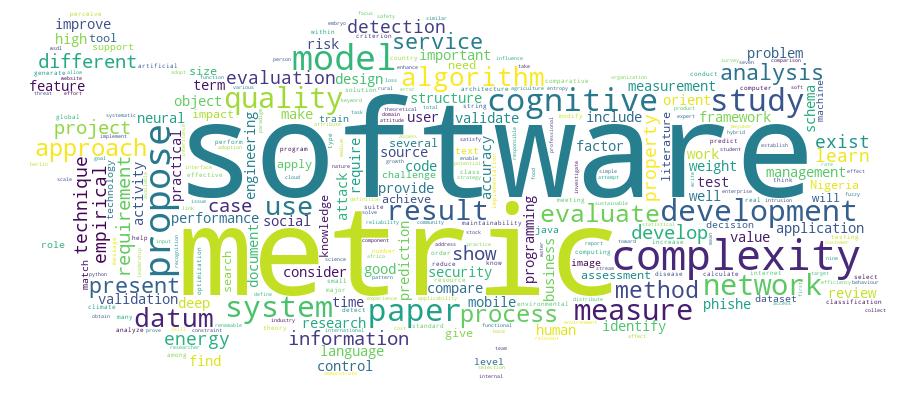
Competency Cloud

GCRIS Competency Cloud

Scholarly Output Search Results

Now showing 1 - 1 of 1
  • Article
    Citation - WoS: 59
    Citation - Scopus: 109
    Windows Pe Malware Detection Using Ensemble Learning
    (Mdpi, 2021) Azeez, Nureni Ayofe; Odufuwa, Oluwanifise Ebunoluwa; Misra, Sanjay; Oluranti, Jonathan; Damasevicius, Robertas
    In this Internet age, there are increasingly many threats to the security and safety of users daily. One of such threats is malicious software otherwise known as malware (ransomware, Trojans, viruses, etc.). The effect of this threat can lead to loss or malicious replacement of important information (such as bank account details, etc.). Malware creators have been able to bypass traditional methods of malware detection, which can be time-consuming and unreliable for unknown malware. This motivates the need for intelligent ways to detect malware, especially new malware which have not been evaluated or studied before. Machine learning provides an intelligent way to detect malware and comprises two stages: feature extraction and classification. This study suggests an ensemble learning-based method for malware detection. The base stage classification is done by a stacked ensemble of fully-connected and one-dimensional convolutional neural networks (CNNs), whereas the end-stage classification is done by a machine learning algorithm. For a meta-learner, we analyzed and compared 15 machine learning classifiers. For comparison, five machine learning algorithms were used: naive Bayes, decision tree, random forest, gradient boosting, and AdaBoosting. The results of experiments made on the Windows Portable Executable (PE) malware dataset are presented. The best results were obtained by an ensemble of seven neural networks and the ExtraTrees classifier as a final-stage classifier.