
Sarıçam, Ersin
Loading...

Profile URL
Name Variants
Ersin, Saricam
Saricam E.
S.,Ersin
Saricam, Ersin
Sariçam E.
E.,Sarıçam
Ersin, Sariçam
S., Ersin
E., Saricam
Sarıçam, Ersin
Ersin, Sarıçam
E.,Saricam
E., Sarıçam
Sarıçam,E.
E.,Sariçam
E., Sariçam
Sariçam, Ersin
Saricam,E.
Saricam E.
S.,Ersin
Saricam, Ersin
Sariçam E.
E.,Sarıçam
Ersin, Sariçam
S., Ersin
E., Saricam
Sarıçam, Ersin
Ersin, Sarıçam
E.,Saricam
E., Sarıçam
Sarıçam,E.
E.,Sariçam
E., Sariçam
Sariçam, Ersin
Saricam,E.
Job Title
Doçent Doktor
Email Address
ersin.saricam@atilim.edu.tr
Main Affiliation
Internal Medical Sciences
Status
Website
ORCID ID
Scopus Author ID
Turkish CoHE Profile ID
Google Scholar ID
WoS Researcher ID
Sustainable Development Goals
 1
1NO POVERTY
0
Research Products
 2
2ZERO HUNGER
0
Research Products
 3
3GOOD HEALTH AND WELL-BEING
6
Research Products
 4
4QUALITY EDUCATION
0
Research Products
 5
5GENDER EQUALITY
0
Research Products
 6
6CLEAN WATER AND SANITATION
0
Research Products
 7
7AFFORDABLE AND CLEAN ENERGY
0
Research Products
 8
8DECENT WORK AND ECONOMIC GROWTH
0
Research Products
 9
9INDUSTRY, INNOVATION AND INFRASTRUCTURE
0
Research Products
 10
10REDUCED INEQUALITIES
0
Research Products
 11
11SUSTAINABLE CITIES AND COMMUNITIES
0
Research Products
 12
12RESPONSIBLE CONSUMPTION AND PRODUCTION
0
Research Products
 13
13CLIMATE ACTION
0
Research Products
 14
14LIFE BELOW WATER
0
Research Products
 15
15LIFE ON LAND
0
Research Products
 16
16PEACE, JUSTICE AND STRONG INSTITUTIONS
0
Research Products
 17
17PARTNERSHIPS FOR THE GOALS
0
Research Products

Documents
27
Citations
216
h-index
7

Documents
0
Citations
0

Scholarly Output
11
Articles
11
Views / Downloads
46/0
Supervised MSc Theses
0
Supervised PhD Theses
0
WoS Citation Count
35
Scopus Citation Count
38
Patents
0
Projects
0
WoS Citations per Publication
3.18
Scopus Citations per Publication
3.45
Open Access Source
7
Supervised Theses
0
| Journal | Count |
|---|---|
| International Journal of General Medicine | 4 |
| Current vascular pharmacology | 1 |
| Current Vascular Pharmacology | 1 |
| Frontiers in Cardiovascular Medicine | 1 |
| Journal of health sciences and medicine (Online) | 1 |
Current Page: 1 / 2
Scopus Quartile Distribution
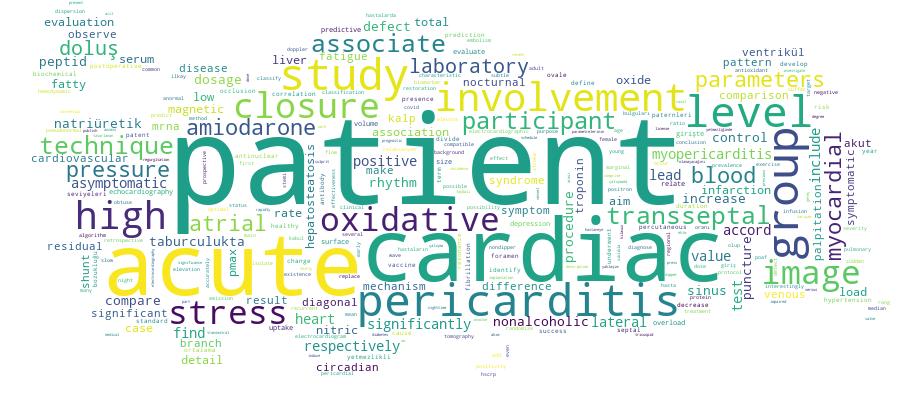
Competency Cloud
4 results
Scholarly Output Search Results
Now showing 1 - 4 of 4
Article Citation - WoS: 1Citation - Scopus: 2The Detailed Transseptal Puncture Technique for Optimal Closure in Patients With a Patent Foramen Ovale(Frontiers Media Sa, 2024) Ilkay, Erdogan; Saricam, Ersin; Kacmaz, Fehmi; Yakici, Aysel; Koca, Cigdem; Ozeke, Ozcan; Onal, Mehmet ZulkufBackground The closure of a patent foramen ovale (PFO) using transseptal puncture has particular advantages and disadvantages. Thus, transseptal puncture should be re-evaluated in detail. Aims We aimed to assess the effectiveness of the detailed transseptal puncture technique in patients who underwent PFO closure due to cryptogenic stroke or transient ischemic attack in terms of residual shunts and atrial fibrillation. Methods We prospectively analyzed 144 consecutive patients who underwent PFO closure by the detailed transseptal puncture technique between February 2013 and April 2023 in two centers. All of the patients had a >10 mm long-tunnel PFO. Results The procedural success rate was 100%. However, after the procedure, moderate pericardial effusion developed in one patient (0.7%) and an acute pulmonary embolism related to femoral vein thrombosis was observed in one patient (0.7%) during the first month. Complications related to the procedure were noted in two patients (1.4%) during the first month of follow-up. Residual shunts were observed in 1.4% of cases after PFO closure. Conclusion We demonstrated that the detailed transseptal technique is safe and effective for PFO closure. The detailed transseptal PFO closure technique significantly reduced the risk of atrial fibrillation, and the occurrence of residual shunts was significantly low following the closure.Article The Evaluation of P-Wave Parameters in Patients With Percutaneous Closure of Atrial Septal Defect(Wiley, 2025) Astan, Ramazan; Kacmaz, Fehmi; Saricam, Ersin; Ilkay, ErdoganBackground: Atrial septal defect (ASD) can lead to volume overload and related changes in P-wave parameters in surface electrocardiograms of these patients. In this study, we aimed to evaluate the effect of volume overload on P-wave parameters in patients with ASD. Materials and methods: This study is a retrospective cohort analysis. A total of 142 patients with secundum ASD who underwent percutaneous closure were evaluated. P-wave duration (Pmax) and P-wave dispersion (PWD) were measured on the surface ECG before and 1 h after the closure procedure. We evaluated P-wave parameters in terms of defect size, duration of the volume overload, and closure device sizes. Results: Pmax and PWD were significantly decreased after the procedure compared with the values before the procedure (p < 0.001). Pmax values had a statistically significant correlation with ASD size (< 20 mm or >= 20 mm) both before and after the procedure. Pmax values were significantly higher in patients older than 30 years of age (119.6 +/- 19.5 vs. 102.7 +/- 17.1 ms, respectively; p = 0.039). A significantly positive correlation was found between pre- and post-procedural Pmax and defect sizes (r = 0.474, p = 0.019 and r = 0.4233, p = 0.04, respectively). However, no positive correlation between PWD and defect age and size was present. Conclusion: Percutaneous closure of ASD is associated with an immediate decrease in both Pd and Pmax that seems to be related to the acute volume overload cessation in cardiac chambers.Article New Ecg Algorithm for the Prediction of Culprit Vessel in Acute Myocardial Infarction Involving Lateral Part of the Ventricle: Ilkay Classification(Dove Medical Press Ltd, 2023) Saricam, Ersin; Erdol, Mehmet Akif; Bozkurt, Engin; Ilkay, Erdogan; Cantekin, Omer FarukBackground: Isolated lateral myocardial infarction sometimes does not meet ST-segment elevation myocardial infarction (STEMI) criteria according to contiguous leads. This condition could cause late diagnosis and the need for revascularization therapy.Aim: To accurately predict the occlusion of lateral surface of the left ventricle, we defined a new electrocardiogram (ECG) algorithm by using angiographic and electrocardiographic correlations.Methods: This was a retrospective, multicenter observational study. The study population consisted of 200 patients with STEMI affecting lateral surface of myocardium, between 2021 and 2022. According to the coronary angiography results, we identified 74 eligible patients for study protocol. The study patients were divided into two groups: isolated DB (14 patients) or circumflex obtuse marginal group (60 patients).Results: ST depression in lead V2 had high positive predictive values for the prediction of obtuse marginal occlusion (positive predictive values (PPV), 100%; negative predictive value (NPV), 90%). ST elevation in V2 in ECG, in conjunction with ST depression in lead III had high positive predictive values for prediction of diagonal branch of LAD. Moreover, the presence of hyperacute T wave (& GE;10 mm) in lead V2 and & GE;2 mm ST depression in lead III had large diagonal branch of LAD (PPV, 98%; NPV, 100%). However, <10 mm T wave in lead V2 and <2 mm ST depression in lead III had small diagonal branch of LAD.Conclusion: We comprehensively classified the lateral STEMI definition through new electrocardiographic scheme as Ilkay classification, whereby we could accurately predict infarct-related artery and its occlusion level in lateral myocardial infarction.Article Citation - WoS: 2Citation - Scopus: 2Association Between the Degree of Nonalcoholic Fatty Liver Disease and Nocturnal Hypertension(Lippincott Williams & Wilkins, 2025) Astan, Ramazan; Kacmaz, Fehmi; Saricam, Ersin; Ozyer, Esref Umut; Ilkay, ErdoganNighttime blood pressure (BP) decreases have prognostic significance owing to circadian patterns. The prevalence of nonalcoholic fatty liver disease (NAFLD) has rapidly increased in recent years. We aimed to investigate circadian blood pressure changes in patients with NAFLD. The present study included 114 patients diagnosed with nonalcoholic fatty liver disease and no previous hypertension diagnosis. Thirty patients comprised the control group (no hepatosteatosis and no hypertension). The patients were divided into 3 groups based on nocturnal BP dipping. Blood pressure patterns using night-day ratios were classified as dipper (ratio <= 0, 9), nondipper (0, 9 < ratio <= 1, 0), or nocturnal hypertension (ratio > 1, 0). There were no significant differences in sex, age, presence of diabetes, or biochemical test results between the groups. According to the blood pressure pattern, the nondipper rate in the hepatosteatosis group was significantly higher than that in the control group. Patients were compared in terms of the presence and severity of hepatosteatosis according to night blood pressure patterns. A significant difference was observed between the groups (P < .001 and P = .001, respectively). We found an association between hepatosteatosis severity and night blood pressure patterns. Patients with nonalcoholic fatty liver disease have a higher incidence of nocturnal hypertension. We observed impaired circadian blood pressure changes in patients with nonalcoholic fatty liver disease.
