Üner, Mehmet Mithat

Loading...
Profile Picture
Name Variants
U.,Mehmet Mithat
Uner, M. Mithat
Üner,M.M.
Uner M.
Mithat Üner M.
Ü., Mehmet Mithat
Uner,M.M.
U., Mehmet Mithat
M.M.Üner
Mithat Üner, M.
M., Uner
Uner, Mithat
Üner, Mehmet Mithat
M.,Üner
Üner M.
Mehmet Mithat, Uner
Ü.,Mehmet Mithat
Üner, M. Mithat
Mithat Uner M.
M. M. Uner
M.M.Uner
Mehmet Mithat, Üner
Uner, Mehmet Mithat
M. M. Üner
Mithat Uner, Mehmet
Üner, Mehmet
Job Title
Profesor Doktor
Email Address
mithat.uner@atilim.edu.tr
Main Affiliation
Business
Status
Website
Scopus Author ID
Turkish CoHE Profile ID
Google Scholar ID
WoS Researcher ID

Sustainable Development Goals

5

GENDER EQUALITY
GENDER EQUALITY Logo

0

Research Products

14

LIFE BELOW WATER
LIFE BELOW WATER Logo

0

Research Products

10

REDUCED INEQUALITIES
REDUCED INEQUALITIES Logo

2

Research Products

3

GOOD HEALTH AND WELL-BEING
GOOD HEALTH AND WELL-BEING Logo

0

Research Products

2

ZERO HUNGER
ZERO HUNGER Logo

0

Research Products

9

INDUSTRY, INNOVATION AND INFRASTRUCTURE
INDUSTRY, INNOVATION AND INFRASTRUCTURE Logo

3

Research Products

16

PEACE, JUSTICE AND STRONG INSTITUTIONS
PEACE, JUSTICE AND STRONG INSTITUTIONS Logo

0

Research Products

11

SUSTAINABLE CITIES AND COMMUNITIES
SUSTAINABLE CITIES AND COMMUNITIES Logo

0

Research Products

8

DECENT WORK AND ECONOMIC GROWTH
DECENT WORK AND ECONOMIC GROWTH Logo

6

Research Products

13

CLIMATE ACTION
CLIMATE ACTION Logo

0

Research Products

4

QUALITY EDUCATION
QUALITY EDUCATION Logo

3

Research Products

6

CLEAN WATER AND SANITATION
CLEAN WATER AND SANITATION Logo

0

Research Products

1

NO POVERTY
NO POVERTY Logo

0

Research Products

15

LIFE ON LAND
LIFE ON LAND Logo

0

Research Products

17

PARTNERSHIPS FOR THE GOALS
PARTNERSHIPS FOR THE GOALS Logo

8

Research Products

7

AFFORDABLE AND CLEAN ENERGY
AFFORDABLE AND CLEAN ENERGY Logo

0

Research Products

12

RESPONSIBLE CONSUMPTION AND PRODUCTION
RESPONSIBLE CONSUMPTION AND PRODUCTION Logo

6

Research Products
Documents

27

Citations

614

h-index

11

Documents

24

Citations

496

Scholarly Output

40

Articles

24

Views / Downloads

19/0

Supervised MSc Theses

10

Supervised PhD Theses

6

WoS Citation Count

355

Scopus Citation Count

421

WoS h-index

9

Scopus h-index

9

Patents

0

Projects

0

WoS Citations per Publication

8.88

Scopus Citations per Publication

10.53

Open Access Source

12

Supervised Theses

16

Google Analytics Visitor Traffic

JournalCount
İşletme Araştırmaları Dergisi3
Thunderbird International Business Review2
International Business Review2
İletişim ve Diplomasi1
International Journal of Contemporary Hospitality Management1
Current Page: 1 / 4

Scopus Quartile Distribution

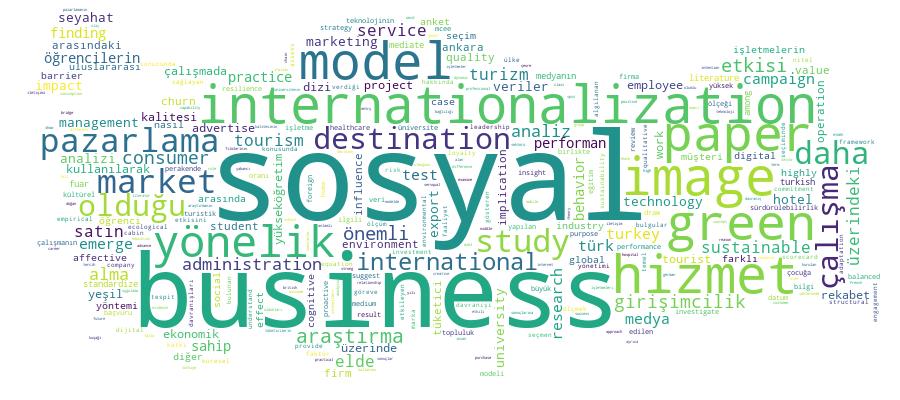
Competency Cloud

GCRIS Competency Cloud

Scholarly Output Search Results

Now showing 1 - 3 of 3
  • Article
    Citation - WoS: 17
    Citation - Scopus: 24
    The New Middle Class in Emerging Markets: How Values and Demographics Influence Discretionary Consumption
    (Wiley, 2019) Belbag, Aybegum G.; Uner, M. Mithat; Cavusgil, Erin; Cavusgi, S. Tamer
    The rise of new middle-class consumers in rapidly transforming emerging markets has attracted the attention of Western business executives. What they know about this growing segment of customers will determine whether they succeed or fail in these markets. The present study examines the factors that drive the discretionary consumption of this new middle class, including the effects of consumerist values, religious values, occupation, education levels, and ownership of fixed assets. The study draws its insights from data gathered from 391 new middle-class consumers in Ankara, the second-largest city in Turkey. The findings provide important implications for businesses, both indigenous and foreign. An overall implication is that managers ought to understand and qualify the new middle class in emerging markets not simply by their access to disposable income but by deeper attitudinal and behavioral characteristics.
  • Article
    ULUSLARARASI GİRİŞİMCİLİK YÖNELİMİNİN YENİLİKÇİLİK BOYUTU: KÜRESEL DOĞAN İŞLETMELER ÜZERİNE NİTEL BİR ÇALIŞMA
    (2019) Yalçın, Aybüke; Üner, M. Mithat
    1990'lı yıllardan itibaren uluslararasılaşma süreci modeli ile faaliyetlerini diğer ülke pazarlarına götürmekte olan işletmelerden farklı olarak, daha erken ve hızlı bir şekilde uluslararasılaşan işletmelerin varlığı belirlenmeye başlanmıştır. Kuruldukları andan itibaren veya kuruluşlarını takiben kısa bir süre içerisinde uluslararası faaliyetlerde bulunan küçük ve orta ölçekli işletmeler “Küresel Doğan İşletmeler” olarak isimlendirilmektedir. Küresel doğan işletmelerin uluslararasılaşma süreci modeli ile uluslararasılaşan işletmelere nazaran daha hızlı uluslararası faaliyetlerde bulunabilmelerinde sahip oldukları uluslararası girişimcilik yöneliminin rolü büyüktür. Uluslararası girişimcilik yönelimi, proaktiflik, risk alma ve yenilikçilik şeklindeki üç boyutuyla ele alınmaktadır. Çalışma kapsamında, uluslararası girişimciliğin yenilikçilik boyutu incelenmektedir. Çalışmada, Ankara, Çorum ve Konya‟da farklı sektörlerde faaliyet gösteren (on) 10 küresel doğan işletmeye ulaşılmıştır. Verilerin incelenmesi nitel araştırma yöntemi kullanılarak yapılmıştır. Verilerin analizi için QSR NVivo 11 programı kullanılmıştır. Çalışma içeriğinde elde edilen veriler sayesinde küresel doğan işletmelerin yenilikçiliklerini etkileyen dört faktör ortaya konmuş ve incelenmiştir. Adı geçen faktörler; bilgi oluşturma ve paylaşma, girişimcilik, bilgi ve iletişim teknolojileri ve insan kaynaklarıdır.
  • Article
    Citation - WoS: 13
    Citation - Scopus: 15
    Build-Operate Projects as a Hybrid Mode of Market Entry: the Case of Yavuz Sultan Selim Bridge in Istanbul
    (Elsevier Science Bv, 2018) Uner, M. Mithat; Cavusgil, Erin; Cavusgil, S. Tamer
    BOT (Build- Operate-Transfer) projects are well known to sponsors and contractors of mega infrastructure projects around the world. The massive scale and long-term time frame of these construction projects require non-traditional business relationships among the sponsors, prime contractors, sub-contractors, and a host of other vendors. The BOT model is typically sought by local and national governments that cannot independently finance complex mega projects. A BOT deal refers to a large-scale project where the sponsor (typically a governmental agency) contracts with a prime contractor, that assumes the responsibility for completing the construction and operating it for a predetermined period, before turning ownership back over to the sponsor. During this predetermined period, the contractor can recoup its investment through its operations and/or through a guaranteed rate of return from the sponsor. This paper reports on such a project - the case of Yavuz Sultan Selim Bridge, the third bridge linking Asia and Europe in Istanbul, a sprawling metropolis of roughly 15 million people. The bid also called for the construction of the connecting highways. It was initiated in 2012 and was completed in 2016. Named after a celebrated Ottoman Sultan, the bridge is widely acknowledged to address a much-needed infrastructure project for Istanbul. We detail BOT projects - rarely discussed in the IB literature - as a hybrid mode of international market entry, with unique features, benefits, and risks. The insights offered in this manuscript were gathered from a series of unstructured interviews with senior executives of the prime contractors.