Demir, Mehmet Emin

Loading...
Profile Picture
Name Variants
Demir, M. E.
Mehmet Emin, Demir
Demir M.
Demir,M.E.
D.,Mehmet Emin
D., Mehmet Emin
M. E. Demir
M.E.Demir
Emin M.
Demir, Mehmet E.
M., Demir
Demir, Mehmet Emin
M.,Demir
Job Title
Doçent Doktor
Email Address
mehmet.demir@atilim.edu.tr
Main Affiliation
Internal Medical Sciences
Status
Website
ORCID ID
Scopus Author ID
Turkish CoHE Profile ID
Google Scholar ID
WoS Researcher ID

Sustainable Development Goals

2

ZERO HUNGER
ZERO HUNGER Logo

0

Research Products

14

LIFE BELOW WATER
LIFE BELOW WATER Logo

0

Research Products

17

PARTNERSHIPS FOR THE GOALS
PARTNERSHIPS FOR THE GOALS Logo

0

Research Products

5

GENDER EQUALITY
GENDER EQUALITY Logo

0

Research Products

16

PEACE, JUSTICE AND STRONG INSTITUTIONS
PEACE, JUSTICE AND STRONG INSTITUTIONS Logo

0

Research Products

8

DECENT WORK AND ECONOMIC GROWTH
DECENT WORK AND ECONOMIC GROWTH Logo

0

Research Products

4

QUALITY EDUCATION
QUALITY EDUCATION Logo

0

Research Products

6

CLEAN WATER AND SANITATION
CLEAN WATER AND SANITATION Logo

1

Research Products

7

AFFORDABLE AND CLEAN ENERGY
AFFORDABLE AND CLEAN ENERGY Logo

0

Research Products

10

REDUCED INEQUALITIES
REDUCED INEQUALITIES Logo

0

Research Products

11

SUSTAINABLE CITIES AND COMMUNITIES
SUSTAINABLE CITIES AND COMMUNITIES Logo

0

Research Products

9

INDUSTRY, INNOVATION AND INFRASTRUCTURE
INDUSTRY, INNOVATION AND INFRASTRUCTURE Logo

0

Research Products

1

NO POVERTY
NO POVERTY Logo

0

Research Products

3

GOOD HEALTH AND WELL-BEING
GOOD HEALTH AND WELL-BEING Logo

5

Research Products

12

RESPONSIBLE CONSUMPTION AND PRODUCTION
RESPONSIBLE CONSUMPTION AND PRODUCTION Logo

0

Research Products

13

CLIMATE ACTION
CLIMATE ACTION Logo

0

Research Products

15

LIFE ON LAND
LIFE ON LAND Logo

0

Research Products
Documents

30

Citations

361

h-index

8

Documents

47

Citations

500

Scholarly Output

11

Articles

10

Views / Downloads

4/0

Supervised MSc Theses

0

Supervised PhD Theses

0

WoS Citation Count

21

Scopus Citation Count

18

WoS h-index

2

Scopus h-index

2

Patents

0

Projects

0

WoS Citations per Publication

1.91

Scopus Citations per Publication

1.64

Open Access Source

10

Supervised Theses

0

Google Analytics Visitor Traffic

JournalCount
Frontiers in Immunology2
Frontiers in Public Health1
Frontiers in Systems Neuroscience1
International Journal of General Medicine1
International Urology and Nephrology1
Current Page: 1 / 2

Scopus Quartile Distribution

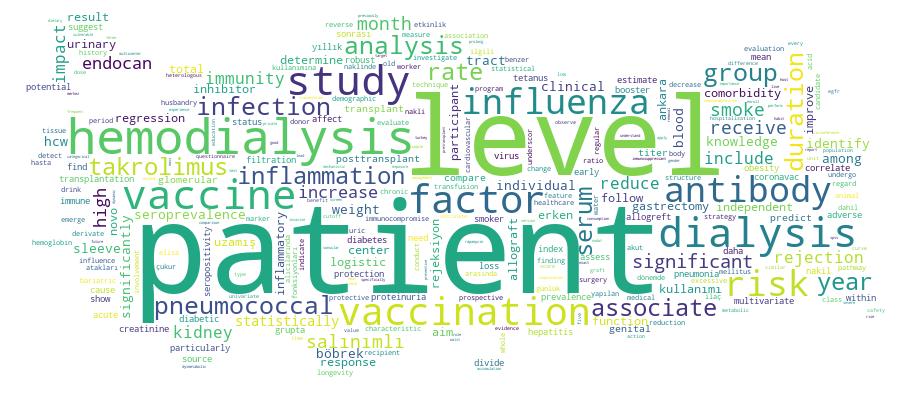
Competency Cloud

GCRIS Competency Cloud

Scholarly Output Search Results

Now showing 1 - 1 of 1
  • Article
    Complex Multisource Sound Induces Greater Neurodegeneration in Neonatal Rat Brain than Single-Source Sound
    (Frontiers Media SA, 2026) Daltaban, Iskender Samet; Aydin, Mehmet Dumlu; Eyupoglu, Eylem Eren; Demirci, Elif; Okuyan, Aybike Aydin; Demir, Mehmet Emin
    Background: Excessive noise exposure is a known environmental health hazard linked to neurological injury and cognitive deficits. Whether complex sound waveforms from multiple sources exacerbate brain damage compared to a single-source noise of equal intensity remains unclear. We investigated the effects of identical music played either through one or four loudspeakers on the developing brain of newborn rats. Methods: Forty-one newborn Sprague-Dawley rat pups (both sexes), along with their dams, were randomly assigned to three groups: control (no noise, n = 6), single-speaker exposure (n = 15), and multi-speaker exposure (n = 20). From postnatal day 0 to 30, the exposure groups were subjected to an 8-min music track (similar to 85 dB SPL) either via one loudspeaker (simple waveform) or simultaneously via four loudspeakers (complex interfering waveform), six times daily at 4-h intervals. Sound intensity was calibrated at the cages with a sound-level meter. All procedures followed ARRIVE guidelines and the EU Directive 2010/63/EU for animal research, with institutional ethical approval. After 1 month, rat brains were examined histologically. Unbiased stereology was used to estimate neuronal densities in the temporal lobe (including amygdala and hippocampal dentate gyrus). Immunohistochemistry for neuron-specific enolase (NSE), glial fibrillary acidic protein (GFAP) and TUNEL assay (terminal deoxynucleotidyl transferase dUTP nick-end labeling) was performed to identify neuronal integrity, astroglial response, and apoptosis, respectively. Outcome measures were degenerated (TUNEL-positive) neuron densities and histopathological lesions. Statistical comparisons were made using Student's t-tests or ANOVA and chi-square tests (with p < 0.05 considered significant). Results: Eight of 20 pups (40%) in the multi-speaker group died during the exposure period, compared to 5/15 (33%) in the single-speaker group and 3/6 (50%) in controls (differences not statistically significant). Maternal rats exhibited agitation, stress behaviors, and weight loss under noise; some eventually ceased escape attempts (habituation/helplessness behavior) in both noise-exposed groups. Histologically, the multi-speaker exposure caused more severe brain injury than the single-speaker exposure. Pups in the multi-speaker group showed frequent subarachnoid hemorrhages and cortical microvascular bleeding in the temporal lobes, whereas these lesions were mild or infrequent in the single-speaker group and absent in controls. Neurons in noise-exposed brains displayed morphological signs of degeneration (shrunken, angulated cell bodies with pyknotic nuclei and condensed cytoplasm), which were markedly pronounced in the multi-speaker group. Stereological cell counting revealed a significant increase in apoptotic neuron density in both sound-exposed groups, with the multi-speaker group highest. For example, in the hippocampal dentate gyrus, the mean density of TUNEL-positive (degenerating) neurons was 13,450 +/- 1,560 per mm(3) in the multi-speaker group vs. 7,600 +/- 980 per mm(3) in the single-speaker group and only 200 +/- 34 per mm(3) in unexposed controls (p < 0.05). In the amygdala, apoptotic neuron density averaged 3,460 +/- 863 per mm(3) (multi-speaker) vs. 1,470 +/- 285 (single-speaker) and 1,321 +/- 234 (control), with the multi-speaker group showing a significantly higher burden of neuronal cell death (p < 0.005 for complex vs. simple waveforms). Correspondingly, multi-speaker exposed brains showed intense immunostaining for NSE and GFAP fragmentation, indicating widespread neuronal loss and reactive astroglial injury, whereas single-speaker exposure caused only moderate changes. Conclusion: Identical musical noise caused substantially more neurodegeneration in the developing brain when delivered as complex wave interference from multiple speakers rather than as a single-source sound of the same intensity. Complex multisource waveforms appear to amplify the harmful effects of noise on neonatal brain tissue, likely through interference-driven pressure fluctuations. These findings have clinical and public health implications, suggesting that current noise exposure guidelines should consider not only sound intensity and duration but also the acoustic complexity and source configuration, especially to protect vulnerable populations such as infants and children from high-intensity multisource noise environments.