Demir, Mehmet Emin

Loading...
Profile Picture
Name Variants
Demir, M. E.
Mehmet Emin, Demir
Demir M.
Demir,M.E.
D.,Mehmet Emin
D., Mehmet Emin
M. E. Demir
M.E.Demir
Emin M.
Demir, Mehmet E.
M., Demir
Demir, Mehmet Emin
M.,Demir
Job Title
Doçent Doktor
Email Address
mehmet.demir@atilim.edu.tr
Main Affiliation
Internal Medical Sciences
Status
Website
ORCID ID
Scopus Author ID
Turkish CoHE Profile ID
Google Scholar ID
WoS Researcher ID

Sustainable Development Goals

NO POVERTY1
NO POVERTY
0
Research Products
ZERO HUNGER2
ZERO HUNGER
0
Research Products
GOOD HEALTH AND WELL-BEING3
GOOD HEALTH AND WELL-BEING
5
Research Products
QUALITY EDUCATION4
QUALITY EDUCATION
0
Research Products
GENDER EQUALITY5
GENDER EQUALITY
0
Research Products
CLEAN WATER AND SANITATION6
CLEAN WATER AND SANITATION
1
Research Products
AFFORDABLE AND CLEAN ENERGY7
AFFORDABLE AND CLEAN ENERGY
0
Research Products
DECENT WORK AND ECONOMIC GROWTH8
DECENT WORK AND ECONOMIC GROWTH
0
Research Products
INDUSTRY, INNOVATION AND INFRASTRUCTURE9
INDUSTRY, INNOVATION AND INFRASTRUCTURE
0
Research Products
REDUCED INEQUALITIES10
REDUCED INEQUALITIES
0
Research Products
SUSTAINABLE CITIES AND COMMUNITIES11
SUSTAINABLE CITIES AND COMMUNITIES
0
Research Products
RESPONSIBLE CONSUMPTION AND PRODUCTION12
RESPONSIBLE CONSUMPTION AND PRODUCTION
0
Research Products
CLIMATE ACTION13
CLIMATE ACTION
0
Research Products
LIFE BELOW WATER14
LIFE BELOW WATER
0
Research Products
LIFE ON LAND15
LIFE ON LAND
0
Research Products
PEACE, JUSTICE AND STRONG INSTITUTIONS16
PEACE, JUSTICE AND STRONG INSTITUTIONS
0
Research Products
PARTNERSHIPS FOR THE GOALS17
PARTNERSHIPS FOR THE GOALS
0
Research Products
Documents

30

Citations

361

h-index

8

Documents

47

Citations

501

Scholarly Output

11

Articles

10

Views / Downloads

4/0

Supervised MSc Theses

0

Supervised PhD Theses

0

WoS Citation Count

22

Scopus Citation Count

18

Patents

0

Projects

0

WoS Citations per Publication

2.00

Scopus Citations per Publication

1.64

Open Access Source

10

Supervised Theses

0

JournalCount
Frontiers in Immunology2
Frontiers in Public Health1
Frontiers in Systems Neuroscience1
International Journal of General Medicine1
International Urology and Nephrology1
Current Page: 1 / 2

Scopus Quartile Distribution

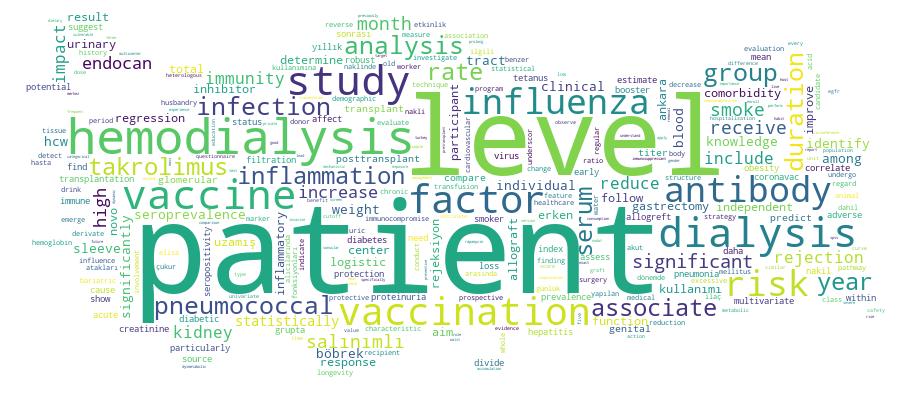
Competency Cloud

GCRIS Competency Cloud

Scholarly Output Search Results

Now showing 1 - 1 of 1
  • Article
    Investigation of Hepatitis E Virus Seroprevalence and Risk Factors in Hemodialysis Patients
    (Frontiers Media Sa, 2025) Ozturk, Hakki; Ozsoy, Metin; Tuna, Aysegul; Varlibas, Artuner; Cesur, Salih; Aksoy, Altan; Demir, Mehmet Emin
    Background: Hemodialysis patients are at increased risk for hepatitis E virus (HEV) infection due to their immunocompromised status and frequent exposure to invasive medical procedures. HEV can lead to chronic infections and severe complications, particularly in high-risk populations. This study aimed to determine HEV-IgG seroprevalence among hemodialysis patients in Ankara, Turkey, and evaluate associated risk factors. Methods: A total of 160 hemodialysis patients from three private dialysis centers in Ankara were included in this prospective, cross-sectional study. Anti-HEV-IgG antibodies were detected using the ELISA method. Demographic characteristics and potential risk factors, including dialysis duration, comorbidities, blood transfusion history, drinking water source, dietary habits, and involvement in animal husbandry, were assessed via structured surveys. Statistical analyses were conducted using SPSS Version 22.0, with Pearson's chi-square and Fisher's exact tests applied to categorical variables. Logistic regression analysis was performed to identify independent risk factors for HEV seropositivity. Results: HEV-IgG seropositivity was detected in 42 patients (26.25%). Seroprevalence increased significantly with age, rising from 6.7% in patients under 55 years to 47.4% in those over 65 years (p < 0.001). Extended dialysis duration (>5 years) was also significantly associated with HEV seropositivity (p = 0.02). However, no significant associations were found between HEV seropositivity and gender, blood transfusion history, source of drinking water, consumption of raw meat, or involvement in animal husbandry (p > 0.05). Conclusion: The HEV-IgG seroprevalence among hemodialysis patients in Ankara was higher than previously reported rates in Turkey. Age and prolonged dialysis duration emerged as significant risk factors, underscoring the importance of screening and preventive strategies in this vulnerable population. Further multi-regional studies are needed to better understand HEV transmission dynamics and improve management strategies in hemodialysis patients.