Atıcı, Melike

Loading...
Profile Picture
Name Variants
Atici,M.
M., Atıcı
Atıcı, Melike
Atıcı,M.
Melike Atıcı
Atici, Melike
M.,Atıcı
A., Melike
M.,Atici
Melike, Atıcı
M., Atici
Melike, Atici
A.,Melike
Atici,Melike
Job Title
Araştırma Görevlisi
Email Address
melike.atici@atilim.edu.tr
Main Affiliation
Department of Architecture
Status
Website
Scopus Author ID
Turkish CoHE Profile ID
Google Scholar ID
WoS Researcher ID

Sustainable Development Goals

NO POVERTY1
NO POVERTY
0
Research Products
ZERO HUNGER2
ZERO HUNGER
1
Research Products
GOOD HEALTH AND WELL-BEING3
GOOD HEALTH AND WELL-BEING
0
Research Products
QUALITY EDUCATION4
QUALITY EDUCATION
0
Research Products
GENDER EQUALITY5
GENDER EQUALITY
0
Research Products
CLEAN WATER AND SANITATION6
CLEAN WATER AND SANITATION
0
Research Products
AFFORDABLE AND CLEAN ENERGY7
AFFORDABLE AND CLEAN ENERGY
0
Research Products
DECENT WORK AND ECONOMIC GROWTH8
DECENT WORK AND ECONOMIC GROWTH
0
Research Products
INDUSTRY, INNOVATION AND INFRASTRUCTURE9
INDUSTRY, INNOVATION AND INFRASTRUCTURE
0
Research Products
REDUCED INEQUALITIES10
REDUCED INEQUALITIES
0
Research Products
SUSTAINABLE CITIES AND COMMUNITIES11
SUSTAINABLE CITIES AND COMMUNITIES
0
Research Products
RESPONSIBLE CONSUMPTION AND PRODUCTION12
RESPONSIBLE CONSUMPTION AND PRODUCTION
0
Research Products
CLIMATE ACTION13
CLIMATE ACTION
0
Research Products
LIFE BELOW WATER14
LIFE BELOW WATER
0
Research Products
LIFE ON LAND15
LIFE ON LAND
0
Research Products
PEACE, JUSTICE AND STRONG INSTITUTIONS16
PEACE, JUSTICE AND STRONG INSTITUTIONS
0
Research Products
PARTNERSHIPS FOR THE GOALS17
PARTNERSHIPS FOR THE GOALS
0
Research Products
This researcher does not have a Scopus ID.
Documents

1

Citations

1

Scholarly Output

1

Articles

0

Views / Downloads

3/0

Supervised MSc Theses

0

Supervised PhD Theses

0

WoS Citation Count

1

Scopus Citation Count

1

Patents

0

Projects

0

WoS Citations per Publication

1.00

Scopus Citations per Publication

1.00

Open Access Source

1

Supervised Theses

0

JournalCount
12th International Conference on Urban Regeneration and Sustainability (Sustainable City) -- 2017 -- Seville, SPAIN1
Current Page: 1 / 1

Scopus Quartile Distribution

Competency Cloud

GCRIS Competency Cloud

Scholarly Output Search Results

Now showing 1 - 1 of 1
  • Conference Object
    Citation - WoS: 1
    Citation - Scopus: 1
    Alternative Solutions for Urban Housing: the Case of Batikent Settlement, Ankara, Turkey
    (Wit Press, 2017) Atici, Melike
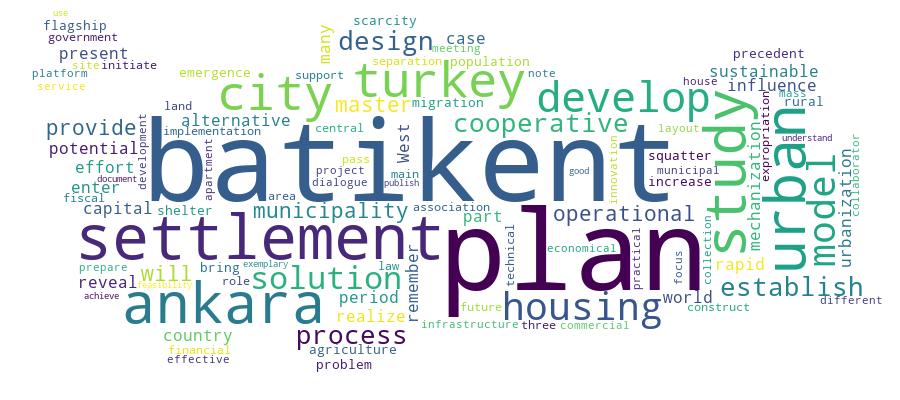
    The present study is an effort to remember and reveal the potentials of Batikent settlement which was realized in the west part of the capital city of Turkey, Ankara in 1980s. In the period after 2nd World War, big cities in Turkey, like many other countries, entered in the process of rapid urbanization under the influence of mechanization in agriculture and migration from rural to urban areas. Increase in the population of cities and scarcity of shelter brought with the emergence of squatter areas. Batikent settlement was developed as a flagship solution to this housing problem and established a precedent with its model of implementation for future urban cohabitations. Batikent, as a new settlement area, was initiated by Municipality of Ankara and developed a never-before-seen operational model with three main collaborators: central government, municipality and association of housing cooperatives (Kent-Koop). Separation of roles - such as passing fiscal and housing laws, providing financial support, expropriation of land, constructing technical infrastructure, establishing municipal and commercial services, preparing master plan and designing site and house plans - through these collaborators provided this new mass development project with effective, practical and economical solutions. This study will focus on how Batikent was developed as a platform for innovation with the operational model based on dialogue between different parties. Collection of plans from master plans to layouts of apartments, meeting notes and feasibility studies documented and published by Kent-Koop will be used in this study to achieve a better understanding of the planning process of this exemplary quarter.