Bayraktar, Nurhan

Loading...
Profile Picture
Name Variants
Nurhan, Bayraktar
B.,Nurhan
B., Nurhan
Bayraktar N.
Bayraktar,N.
Bayraktar, Nurhan
N., Bayraktar
Bayraktar,Nurhan
Nurhan Bayraktar
N.,Bayraktar
Job Title
Profesör Doktor
Email Address
nurhan.bayraktar@atilim.edu.tr
Main Affiliation
Nursing
Status
Website
Scopus Author ID
Turkish CoHE Profile ID
Google Scholar ID
WoS Researcher ID

Sustainable Development Goals

NO POVERTY1
NO POVERTY
0
Research Products
ZERO HUNGER2
ZERO HUNGER
0
Research Products
GOOD HEALTH AND WELL-BEING3
GOOD HEALTH AND WELL-BEING
1
Research Products
QUALITY EDUCATION4
QUALITY EDUCATION
2
Research Products
GENDER EQUALITY5
GENDER EQUALITY
1
Research Products
CLEAN WATER AND SANITATION6
CLEAN WATER AND SANITATION
0
Research Products
AFFORDABLE AND CLEAN ENERGY7
AFFORDABLE AND CLEAN ENERGY
0
Research Products
DECENT WORK AND ECONOMIC GROWTH8
DECENT WORK AND ECONOMIC GROWTH
0
Research Products
INDUSTRY, INNOVATION AND INFRASTRUCTURE9
INDUSTRY, INNOVATION AND INFRASTRUCTURE
0
Research Products
REDUCED INEQUALITIES10
REDUCED INEQUALITIES
0
Research Products
SUSTAINABLE CITIES AND COMMUNITIES11
SUSTAINABLE CITIES AND COMMUNITIES
0
Research Products
RESPONSIBLE CONSUMPTION AND PRODUCTION12
RESPONSIBLE CONSUMPTION AND PRODUCTION
0
Research Products
CLIMATE ACTION13
CLIMATE ACTION
0
Research Products
LIFE BELOW WATER14
LIFE BELOW WATER
0
Research Products
LIFE ON LAND15
LIFE ON LAND
0
Research Products
PEACE, JUSTICE AND STRONG INSTITUTIONS16
PEACE, JUSTICE AND STRONG INSTITUTIONS
0
Research Products
PARTNERSHIPS FOR THE GOALS17
PARTNERSHIPS FOR THE GOALS
0
Research Products
Documents

31

Citations

607

h-index

14

This researcher does not have a WoS ID.
Scholarly Output

15

Articles

12

Views / Downloads

43/28

Supervised MSc Theses

3

Supervised PhD Theses

0

WoS Citation Count

64

Scopus Citation Count

85

Patents

0

Projects

0

WoS Citations per Publication

4.27

Scopus Citations per Publication

5.67

Open Access Source

9

Supervised Theses

3

JournalCount
Anesthesiology and Pain Medicine1
Cyprus Journal of Medical Sciences1
Global Nursing Insights1
Journal of Multidisciplinary Healthcare1
Journal of Perianesthesia Nursing1
Current Page: 1 / 3

Scopus Quartile Distribution

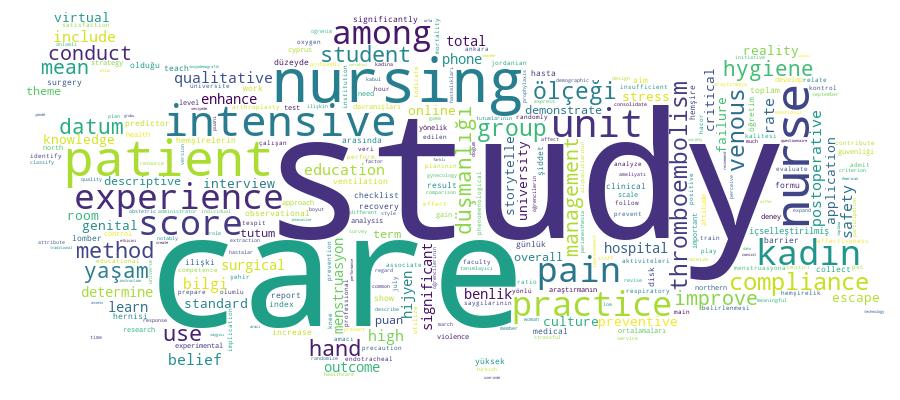
Competency Cloud

GCRIS Competency Cloud

Scholarly Output Search Results

Now showing 1 - 2 of 2
  • Article
    Citation - Scopus: 7
    Predictors of Non-Invasive Ventilation Failure and Associated Factors Among the Covid-19 Patients Admitted To Intensive Care Unit
    (Brieflands, 2023) Varpaei,H.A.; Bayraktar,N.; Mohammadi,M.
    Background: Non-invasive ventilation (NIV) is a method of oxygenation supply that utilizes a face mask and eliminates the need for an endotracheal airway. Non-invasive ventilation failure is defined as the necessity for endotracheal intubation or death during the NIV trial. Objectives: This study aimed to identify the predictors and associated factors of NIV failure in coronavirus disease 2019 (COVID-19) patients admitted to an intensive care unit (ICU). Methods: This retrospective, longitudinal cohort study utilized electronic medical records of COVID-19 patients admitted to the ICU. A total of 150 patients were included in the study. Patient demographics, medical history, laboratory tests, partial pressure of carbon dioxide (PCO2), oxygen saturation (SpO2), heart rate, acidosis, consciousness, oxygenation, and respiratory rate (HACOR score), and the ratio of oxygen saturation (ROX) index (the SpO2/fraction of inspired oxygen [FIO2] to respiratory rate [SF] ratio) were recorded. Non-invasive ventilation failure was determined based on the need for endotracheal intubation or cardiac-respiratory arrest while on NIV. Statistical analysis was conducted using SPSS software (version 26). Results: Of the patients, 55.3% were male (mean age: 55.9 years), with an NIV failure rate of 67.3%, a mortality rate of 66.7%, and 3.3% of patients requiring tracheostomy after NIV failure. The ROX index consistently decreased over time, and an increase in the HACOR score and PCO2 after 6 hours of commencing NIV were the predictors of NIV failure. Additionally, higher levels of lactate dehydrogenase, lower SF ratios, and higher APACHE scores upon ICU admission were significantly associated with NIV failure. Notably, the erythrocyte sedimentation rate (ESR) as an inflammatory index, SF ratio upon ICU admission, HACOR score, ROX index, and PCO2 after 12 hours were significant predictors of in-hospital mortality in patients receiving NIV. Conclusions: The ROX index, HACOR scale, and PCO2 are significant predictors of both NIV failure and in-hospital mortality. © 2023, Varpaei et al.
  • Article
    Citation - Scopus: 5
    A qualitative study of medical-surgical intensive care unit nurses’ experiences in caring for critical patients; ; [Un estudio cualitativo sobre las experiencias de enfermeros de una unidad de cuidados intensivos médico-quirúrgicos en la atención al paciente crítico]
    (Escola de Enfermagem de Universidade de Sao Paulo, 2022) Dikmen,B.T.; Bayraktar,N.; Yılmaz,Ü.D.
    Objective: To describe the meaning attributed to nurses’ clinical experience in a medicalsurgical intensive care unit in Northern Cyprus. Method: The qualitative study was conducted in two medical-surgical intensive care units at a university hospital. Data were collected through in-depth interviews with 17 nurses. Giorgi’s descriptive phenomenological approach was used to analyze nurses’ experiences. The consolidated criteria for reporting a qualitative research checklist were followed in this study. Results: The data analysis led to the extraction of the 5 themes and 19 subthemes. The themes identified for the study were competence, the emotional universe, stress resources, the meaning of nursing care, and profoundly affecting events. The study results show that the nurses expressed that having gained much experience in intensive care units and working there has contributed significantly to their professional development. Conclusion: It was indicated that the nurses had meaningful, caring experiences in intensive care units, which were perceived, however, as stressful experiences as well. The study has important implications for nurses, faculty members, and administrators to gain positive care experiences in terms of intensive care units. © This is an open-access article distributed under the terms of the Creative Commons Attribution License.