
Baturay, Meltem Huri
Loading...

Profile URL
Name Variants
B.,Meltem Huri
B., Meltem Huri
Baturay,M.H.
M.,Baturay
Meltem Huri, Baturay
M., Baturay
M.H.Baturay
Baturay, Meltem Huri
B., Meltem Huri
Baturay,M.H.
M.,Baturay
Meltem Huri, Baturay
M., Baturay
M.H.Baturay
Baturay, Meltem Huri
Job Title
Profesör Doktor
Email Address
meltem.baturay@atilim.edu.tr
Main Affiliation
Justice Program
Status
Former Staff
Website
ORCID ID
Scopus Author ID
Turkish CoHE Profile ID
Google Scholar ID
WoS Researcher ID
Sustainable Development Goals
 1
1NO POVERTY
0
Research Products
 2
2ZERO HUNGER
0
Research Products
 3
3GOOD HEALTH AND WELL-BEING
0
Research Products
 4
4QUALITY EDUCATION
5
Research Products
 5
5GENDER EQUALITY
0
Research Products
 6
6CLEAN WATER AND SANITATION
0
Research Products
 7
7AFFORDABLE AND CLEAN ENERGY
0
Research Products
 8
8DECENT WORK AND ECONOMIC GROWTH
0
Research Products
 9
9INDUSTRY, INNOVATION AND INFRASTRUCTURE
2
Research Products
 10
10REDUCED INEQUALITIES
0
Research Products
 11
11SUSTAINABLE CITIES AND COMMUNITIES
0
Research Products
 12
12RESPONSIBLE CONSUMPTION AND PRODUCTION
0
Research Products
 13
13CLIMATE ACTION
0
Research Products
 14
14LIFE BELOW WATER
0
Research Products
 15
15LIFE ON LAND
0
Research Products
 16
16PEACE, JUSTICE AND STRONG INSTITUTIONS
0
Research Products
 17
17PARTNERSHIPS FOR THE GOALS
0
Research Products

This researcher does not have a Scopus ID.

This researcher does not have a WoS ID.

Scholarly Output
12
Articles
10
Views / Downloads
3/0
Supervised MSc Theses
0
Supervised PhD Theses
0
WoS Citation Count
108
Scopus Citation Count
216
Patents
0
Projects
0
WoS Citations per Publication
9.00
Scopus Citations per Publication
18.00
Open Access Source
6
Supervised Theses
0
| Journal | Count |
|---|---|
| Participatory Educational Research | 3 |
| International Journal of Educational Technology in Higher Education | 2 |
| Education and Information Technologies | 1 |
| Springer Briefs in Education | 1 |
| Turkish Online Journal of Distance Education | 1 |
Current Page: 1 / 2
Scopus Quartile Distribution
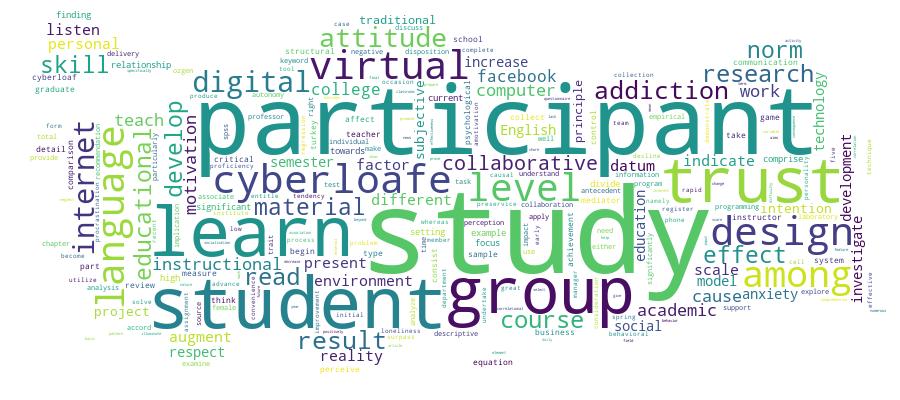
Competency Cloud
5 results
Scholarly Output Search Results
Now showing 1 - 5 of 5
Article Citation - WoS: 10The Comparison of Trust Development in Virtual and Face-To Collaborative Learning Groups(Anadolu Univ, 2019) Baturay, Meltem Huri; Toker, SacipThe study investigates the effect of delivery types of (virtual and face-to-face) collaborative learning environments on the development of trust among group members in a graduate course. For this aim, a quasi-experimental, non-equivalent group comparison was used. It comprised a total of 64 participants 21 in the face-to-face group, and 43 in the virtual group. Study participants were comprised of students registered in a course entitled 'Web-based Education: Principles of Design and Implementation' in the spring semester as part of either a virtual or traditional face-to-face graduate program in Information Systems at an institute of higher education in Turkey in 2010. Trust levels were measured at two different occasions, namely in the beginning and end of the semester, for both study groups. The participants completed a web-based course material design project as a collaborative group activity. The results indicate that trust increases over time among virtual participants, but declines among face-to-face participants. While levels of trust among virtual course participants are lower than those of face-to-face course participants in the beginning of the semester, trust levels of virtual participants surpass those of faceto-face participants by the end of the semester. This study demonstrates that trust can develop in virtual learning environments. The initial level of trust should be taken into consideration by instructors or managers before forming groups.Article Citation - WoS: 59Citation - Scopus: 76Internet Addiction Among College Students: Some Causes and Effects(Springer, 2019) Baturay, Meltem Huri; Toker, SacipInternet addiction among college students in terms of causes and effects are investigated. Correlation study method is utilized; structural equation modelling is applied to analyze the data. There are fifteen hypotheses generated for the model. The data is collected via numerous instruments proven as reliable and valid by the previous studies. There are 159 undergraduate students as participants of the study. Antecedent variables are game addiction, bad relationships with friends, family and professors, neglecting daily chores, hindrance of sleep pattern, use internet for researching, weekly internet use hours, leisure time activities, reading and playing computer games. Consequence variables are self-esteem, self-confidence, social self-efficacy, loneliness, and academic self-efficacy. The results indicates that game addiction, neglecting daily chores, bad relationships with professors are significantly associated with internet addiction. Internet addiction decreases one's self-esteem, self-confidence, social self-efficacy, academic self-efficacy and triggers loneliness. Parents, professors and educational institutions may be illuminated about prevention or monitoring of internet addiction. The current study investigates Internet addiction with respect to its implications for social behavioral, and psychological phenomenon but not in a clinical sense. Hence, studies on Internet addiction merely concentrate on antecedents and features that may cause more addiction; however, both antecedents and consequences are not examined. The value of the current study is to provide more systematic, comprehensive, and theory-based empirical causations via structural equation models. The model may help to diagnose Internet Addiction and illuminate college students its potential harmful socio-psychological consequences.Article Citation - WoS: 20Citation - Scopus: 33What foresees college students' tendency to use facebook for diverse educational purposes?(Springer, 2019) Toker, Sacip; Baturay, Meltem HuriThe present study investigates some factors affecting college students' tendency to use Facebook for different educational purposes. We reached 120 participants who were college students. Our sample comprised of 63 (52.5%) females and 57 (47.5%) males. We applied convenience sampling technique and an online questionnaire to collect data. Descriptive statistics, multiple regression analysis, and Structural Equation Modelling using IBM SPSS AMOS were utilized. The findings provide that GPA, Personal Use of Facebook for Studying and Socialization, Autonomy Psychological Need, and Academic Procrastination foresee college students' willingness to use Facebook in their courses. GPA and Personal Use of Facebook for studying are the most influential factors while Autonomy Psychological Need is the least impactful. We also examined the impact of these factors on different educational use types of Facebook: communication, collaboration, resources and material sharing. The results are discussed, and further recommendations for future research and implications are presented in the current study.Book Part Reading To Learn Developing Advanced Reading Skills in Traditional and Digital Environments(John Benjamins B V Publ, 2018) Baturay, Meltem Huri; Toker, Sacip; Sendag, Serkan; Akbulut, YavuzRapid advances in digital technologies are transforming patterns of learning to read, as well as 'reading to learn'. The latter refers to the process of reading in the service of learning, in school and beyond, and is a major purpose for reading beyond the earliest school years. When reading to learn, contemporary e-learning trends either promote the supplementary use of ICT in face-to-face settings or the use of such environments for comprehensive delivery of learning materials. Such changes make it imperative to understand the basic elements of reading in digital environments to support learning. In this chapter we first introduce the basic elements that can be used to build an effective digital reading environment to improve learning. The chapter then considers the instructional design principles that best promote learning through digital reading and explores the impact of digital interfaces on traditional reading-to-learn strategies.Article Citation - Scopus: 12The Comparison of Trust Development in Virtual and Face-To Collaborative Learning Groups(Anadolu Universitesi, 2019) Baturay,M.H.; Toker,S.The study investigates the effect of delivery types of (virtual and face-to-face) collaborative learning environments on the development of trust among group members in a graduate course. For this aim, a quasi-experimental, non-equivalent group comparison was used. It comprised a total of 64 participants - 21 in the face-to-face group, and 43 in the virtual group. Study participants were comprised of students registered in a course entitled 'Web-based Education: Principles of Design and Implementation' in the spring semester as part of either a virtual or traditional face-to-face graduate program in Information Systems at an institute of higher education in Turkey in 2010. Trust levels were measured at two different occasions, namely in the beginning and end of the semester, for both study groups. The participants completed a web-based course material design project as a collaborative group activity. The results indicate that trust increases over time among virtual participants, but declines among face-to-face participants. While levels of trust among virtual course participants are lower than those of face-to-face course participants in the beginning of the semester, trust levels of virtual participants surpass those of face-to-face participants by the end of the semester. This study demonstrates that trust can develop in virtual learning environments. The initial level of trust should be taken into consideration by instructors or managers before forming groups. © 2019 Anadolu Universitesi.
