
Boztepe, Handan
Loading...

Profile URL
Name Variants
H., Boztepe
Boztepe,H.
H.,Boztepe
Handan, Boztepe
Boztepe, Handan
B., Handan
B.,Handan
Boztepe,H.
H.,Boztepe
Handan, Boztepe
Boztepe, Handan
B., Handan
B.,Handan
Job Title
Doçent Doktor
Email Address
handan.boztepe@atilim.edu.tr
Main Affiliation
Nursing
Status
Former Staff
Website
ORCID ID
Scopus Author ID
Turkish CoHE Profile ID
Google Scholar ID
WoS Researcher ID
Sustainable Development Goals
 1
1NO POVERTY
0
Research Products
 2
2ZERO HUNGER
0
Research Products
 3
3GOOD HEALTH AND WELL-BEING
7
Research Products
 4
4QUALITY EDUCATION
3
Research Products
 5
5GENDER EQUALITY
0
Research Products
 6
6CLEAN WATER AND SANITATION
0
Research Products
 7
7AFFORDABLE AND CLEAN ENERGY
1
Research Products
 8
8DECENT WORK AND ECONOMIC GROWTH
0
Research Products
 9
9INDUSTRY, INNOVATION AND INFRASTRUCTURE
0
Research Products
 10
10REDUCED INEQUALITIES
0
Research Products
 11
11SUSTAINABLE CITIES AND COMMUNITIES
0
Research Products
 12
12RESPONSIBLE CONSUMPTION AND PRODUCTION
0
Research Products
 13
13CLIMATE ACTION
0
Research Products
 14
14LIFE BELOW WATER
0
Research Products
 15
15LIFE ON LAND
0
Research Products
 16
16PEACE, JUSTICE AND STRONG INSTITUTIONS
1
Research Products
 17
17PARTNERSHIPS FOR THE GOALS
3
Research Products

This researcher does not have a Scopus ID.

This researcher does not have a WoS ID.

Scholarly Output
37
Articles
33
Views / Downloads
235/660
Supervised MSc Theses
4
Supervised PhD Theses
0
WoS Citation Count
104
Scopus Citation Count
107
Patents
0
Projects
0
WoS Citations per Publication
2.81
Scopus Citations per Publication
2.89
Open Access Source
16
Supervised Theses
4
| Journal | Count |
|---|---|
| Journal of Pediatric Nursing | 4 |
| Sağlık ve Toplum | 3 |
| Comprehensive Child and Adolescent Nursing | 2 |
| Acıbadem Üniversitesi Sağlık Bilimleri Dergisi | 2 |
| Balıkesir Sağlık Bilimleri Dergisi (BSBD) | 2 |
Current Page: 1 / 5
Scopus Quartile Distribution
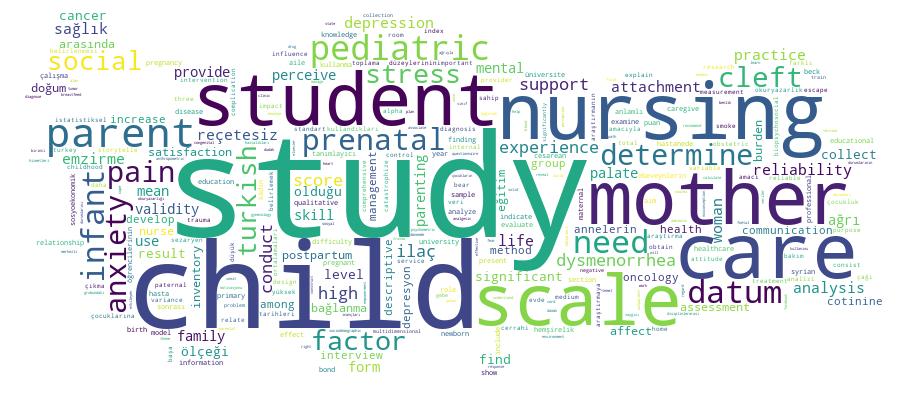
Competency Cloud
30 results
Scholarly Output Search Results
Now showing 1 - 10 of 30
Article Çocuğu Hastanede Yatan Ebeveynlerin Aile Merkezli Bakım Alma Durumlarını Etkileyen Faktörlerin Belirlenmesi(2019) Boztepe, Handan; Yıldız, Gizem Kerimoğlu; Çınar, Sevil; Ay, AyşeAmaç: Bu araştırmanın amacı, çocuğu hastanede yatan ebeveynlerin, aile merkezli bakım uygulamalarına katılma durumları veetkileyen faktörleri belirlemektir.Hastalar ve Yöntem: Bu kesitsel araştırma bir çocuk hastanesinin yataklı servislerinde çocuklarına refakat eden ebeveynler ileTemmuz 2014- Nisan 2015 tarihleri arasında gerçekleştirilmiştir. Araştırmanın örneklem grubunu araştırmaya katılmayı kabuleden 303 ebeveyn oluşturmuştur.Bulgular: Ebeveynlerin çoğunluğunun (%95) hastanede çocuklarının bakımına katıldıkları, en çok bakımına katıldıkları uygulamaların çocuğun temel fiziksel bakımını karşılamaya yönelik uygulamalar (yemek yeme, hijyen gereksinimlerini karşılama) veilaç uygulaması olduğu (%37,6) belirlendi. Çocukları planlı bir şekilde hastaneye yatırılan ebeveynlerin sağlık profesyonellerinedaha fazla soru sorabildiği belirlenmiştir (p<0,05). Ebeveynlerin çoğunluğunun (%72.6) teslimlere katılmak istedikleri belirlendi. Ebeveynlerin eğitim seviyeleri ve çocuklarının hastalığını, hastanede aldıkları tedavi protokolünü, çocuklarına yapılanuygulamaların nedenlerini ve yatak başı hemşire teslimlerini anlama durumları arasında istatistiksel olarak anlamlı bir farkolduğu bulundu (p<0.05).Sonuç: Bu araştırmanın sonucunda, çocukları hastanede yatan ebeveynlerin aile merkezli bakım sürecine katılmalarını planlarken; ebeveynlerin eğitim seviyesi ve çocukların hastaneye yatış şekli gibi özelliklerin, sağlık profesyonelleri tarafından dikkatealınması gerekliliği sonucu ortaya çıkmıştır.Article Communication Experiences of Nursing Students With Children and Their Families: a Qualitative Study(2023) Boztepe, Handan; Çınar, Sevil; Özbay, Sevıl ÇınarBackground: The clinical setting is often a stressful and anxiety-provoking environment. In particular, caring for pediatric patients causes students to experience anxiety in the clinic. It is extremely important to learn how to communicate effectively with the child’s parents and family members in overcoming this difficulty and providing effective care. Aim: The aim of this study is to determine the communication experiences of students with children and their parents during the clinical education of pediatric nursing course. Methods: The phenomenological approach, which is a qualitative research method, was used in the study. The population of the study comprised fourth-year students from the Faculty of Nursing, who accomplished the pediatric nursing course. The study was con ducted with 15 students, who agreed to participate voluntarily, via in-depth interviews. Results: The themes emerging as a result of the interviews conducted with the students were “difficulties and facilitators,” “family-centered care experiences,” and “acquisitions.” In the study, most of the student nurses stated that they felt fear, restlessness, and anxiety when they first came to the service, and they had difficulty in communicating with the hos pitalized child and the family. The students stated that they had difficulties in communica tion especially due to the age and diagnosis of the children. Conclusion: The study revealed that it is necessary to develop students’ skills of commu nication with children and their families. Accordingly, it is necessary to increase the com munication skills of student nurses by organizing trainings. It is recommended to create interactive environments where student nurses can express their difficulties.Article Citation - WoS: 8Unexpected Event: Having an Infants With Cleft Lip And/Or Palate(Wiley, 2021) Cinar, Sevil; Ay, Ayse; Boztepe, Handan; Gurlen, EdaThis study aimed to determine the difficulties that the mothers of infants with a cleft lip and/or palate (CL/P) go through, the problems they encounter in this process, and how they perceive the support of healthcare professionals, families, and friends. The study used a phenomenological approach from qualitative research methods. The study sample included 18 mothers of 0 to 3-month-old infants with CL/P. The data were collected using socio-demographic information form and semi-structured interview form. The data obtained from the interviews were evaluated using content and thematic analysis approaches. On the basis of the interviews conducted with mothers of infants with CL/P, the following themes emerged: (a) "unexpected event: having an infant with CL/P," (b) "using social media," (c) "stigma," and (d) "uncertainty of long-term treatment." In this study, it was determined that mothers experienced shock, confusion, sadness, and disappointment in this process; therefore, they used social media to seek support from the families as well as conducted research on the disease that involved a lot of uncertainty due to long-term treatments. The present study can help healthcare professionals, who play a role in the care and treatment of infants with CL/P, to understand and know what mothers need in the preoperative period.Article Citation - Scopus: 5Determining the Factors Affecting Chemotherapy-Induced Nausea and Vomiting in Children With Cancer(W.B. Saunders, 2023) Ay,A.; Boztepe,H.; Özbay,S.Ç.; Yılmaz,P.; Karadavut,B.; Burhanoğulları,D.; Akyüz,C.Purpose: We evaluated the factors affecting chemotherapy-induced nausea and vomiting (CINV) in children with cancer. Design and methods: This cross-sectional study was conducted with 62 children aged 9 to 18 years old with a solid tumor who received chemotherapy for the first time, and their parents. Data were collected using a data collection form, the State-Trait Anxiety Inventory for Children, the Beck Anxiety Inventory, the Spielberger State-Trait Anxiety Inventory, and the Baxter Retching Faces Scale. Data were analyzed using Spearman's correlation and logistic regression analyses. Results: Risk factors related to the child, treatment, and parent were examined. Child-related factors were determined as diagnosis (odds ratio [OR] = 5.5), time since diagnosis (OR = 1.9, OR = 4.7), pretreatment anxiety of the child (r = 0.439, r = 0.422), and past experience of nausea and vomiting before treatment (OR = 1.2). Treatment-related factors involved anti-emetic prophylaxis (OR = 4.9, OR = 9.2). Parent-related factors included pretreatment anxiety of the parent (r = 0.271, r = 0.287), accommodation (OR = 5.5), not eating (OR = 1.2, OR = 1.3), and bad smell (OR = 1.2), which were described amongst parents' as factors that trigger CINV. Conclusions: The occurrence of CINV is significantly affected by child-, treatment-, and parent-related risk factors. Practice implications: Pediatric nurses should create an environment for children and their parents to reduce their anxiety and provide basic knowledge and skills about the management of CINV. © 2023 Elsevier Inc.Article Inequality Among Adolescents in the Developing Countries is the Main Determinant of E-Health Literacy(2022) Çınar, Sevil; Boztepe, Handan; Özcebe, Hilal; Özbay, Sevıl ÇınarAmaç: Bu çalışmada, adölesan yaş grubundaki e-sağlık okuryazarlık düzeylerinin, adölesan karar verme süreçleri ile\radölesanların ve ebeveynlerin sosyal ve ekonomik belirleyicileri ile ilişkisinin ortaya çıkarılması amaçlanmıştır.\rMethods: Katılımcılar Türkiye’deki farklı sosyoekonomik yerleşimlerdeki liselerin 9-12. sınıflarında okuyan 14-18 yaş\rgrubudur. Veriler, adölesanların ve ebeveynlerinin sosyo-demografik özelliklerine ilişkin sorulardan oluşan veri toplama\rformu, Ergen Karar Verme Ölçeği ve Adölesanlar için E-Sağlık Okuryazarlığı Ölçeği kullanılarak toplanmıştır. Veriler, 14 ila\r18 yaşları arasındaki 1.082 adölesandan toplanmıştır.\r Results: Adölesanların yaşı, ailenin aylık geliri, karar verme puanları arttıkça e-sağlık okuryazarlığı düzeyi artmaktadır.\rAdolesanların ekonomik durumu ve yaşı, e-sağlık okuryazarlığını oluşturan temel faktörlerdir.\rConclusions: Adölesanlara güvenilir sağlık bilgilerini nasıl bulacaklarını ve kendi sağlıklarını korumak için uygun\rkararları nasıl alacaklarını öğretmeyi amaçlayan e-sağlık okuryazarlığı eğitiminin acilen iyileştirilmesine ihtiyaç vardır.\rGelişmekte olan ülkelerde hükümetlerin sosyal politikaları olarak düşük sosyoekonomik statüdeki ergenlere e-sağlık bilgi\rokuryazarlığı ve hizmetleri sağlanmalıdırArticle Citation - Scopus: 1Anxiety and Depression After Cesarean: Non-Pharmacological Evidence Based Practices;(Dokuz Eylul University, 2022) Terzioğlu,F.; Gençbaş,D.; Boztepe,H.; Doğu,N.; Akdeniz,C.; Yüceer,B.The purpose of this review is to examine the non-pharmacological evidence-based practices of anxiety and depression after a cesarean section delivery. Postpartum anxiety and depression have increased in the last decade, the rates of postpartum depression are around 13% worldwide. In the postpartum period, women may experience anxiety and depression due to the operation they have undergone; such as being in an unfamiliar environment, facing new technological equipment and encounters with the medical teams, the post-operative pain, the new roles women undertake as mothers. One of the factors that increase anxiety and depression in the postpartum period is the type of delivery. In Turkey, the rate of cesarean delivery is comparatively high, which is approximately 52%. Anxiety and depression after cesarean section develop due to fear and concern such as the complications that may occur during and after the mother's anesthesia, the possibility delaying breastfeeding her baby, and experiencing pain. Non-pharmacological evidence-based applications such as reiki, acupressure, hand and foot massage, yoga, reflexology, aromatherapy, skin to skin care, nursing care protocols were found to be effective in studies conducted to reduce anxiety and depression after cesarean-section. Nurses who have critical roles and responsibilities in pre-and post-cesarean care practices are recommended to include these evidence-based non-pharmacological practices in routine care practices. © 2022, Dokuz Eylul University. All rights reserved.Article Citation - WoS: 5Citation - Scopus: 5Development and Psychometric Analysis of a Pediatric Oncology Nurses' Educational Needs Scale(Wiley, 2023) Kudubes, Asli Akdeniz; Semerci, Remziye; Ozbay, Sevil Cinar; Ay, Ayse; Boztepe, HandanBackground/objectivesIt is important to determine the educational needs of pediatric oncology nurses in order to maximize and implement nursing care interventions. Therefore, this study aims to develop a valid and reliable measurement tool to determine pediatric oncology nurses' educational needs and examine its psychometric properties. Design/methodsThis methodological study was conducted with 215 pediatric oncology nurses in Turkey between December 2021 and July 2022. Data were collected with the "Nurse Information Form" and "Pediatric Oncology Nurses' Educational Needs Scale." IBM SPSS 21.0 and IBM AMOS 25.0 software programs were used for data analysis, and descriptive statistics were used to analyze numeric variables. Exploration and confirmatory factor analyses were performed to determine the scale's factorial structure. ResultsThe factorial analysis was used to test the structural validity of the scale. A five-factor structure consisting of 42 items was developed. The Cronbach's alpha coefficient for "Illness" was .978, "Chemotherapy and Side Effect" was .978, "Another Therapy and Side Effect" was .974, "Palliative Care" was .967, "Supportive Care" was .985, and the total score was .990. Fit indices resulting from the study were chi(2)/SD: 3.961, root mean square error of approximation (RMSEA): 0.072, goodness-of-fit index (GFI): 0.95, comparative-of-fit index (CFI): 0.96, and normed fit index (NFI): 0.95. ConclusionThe Pediatric Oncology Nurses' Educational Needs Scale is a valid and reliable scale for pediatric oncology nurses to determine their educational needs.Review Pediatri Hemşireliği Eğitiminde Standart Hasta Kullanımı(2021) Çınar, Sevil; Yıldız, Gizem; Boztepe, Handan; Özbay, Sevıl ÇınarHemşirelik eğitimi süresince öğrencilerin, klinik uygulamalar içingerekli olan becerileri kazanmaları beklenmektedir. Psikomotorbecerilerin öğretilmesinde kullanılan bir eğitim yöntemi ise standarthastadır. Bebeklik döneminden adölesan döneme kadar olançocuk standart hastalar, pediatrik Objektif Yapılandırılmış KlinikSınavlarında çeşitli oranlarında kullanılmaktadır. Tıp ve hemşirelikeğitiminde çocuklar standart hasta olarak 20 yılı aşkın bir süredirkullanılmaktadır ve yapılan çalışmalarda pediatrik standart hastakullanımının olumlu etkileri olduğu belirlenmiştir. Bununla birlikte,pediatride standart hasta kullanımının birçok etik sorunu içerdiğive geçerlilik, güvenirlik, uygulanabilirlik açısından tartışmaya açıkolduğu düşünülmektedir. Yaş önemli etik konulardan biridir. Çocuklargenellikle standart hasta olarak kendilerinden ne beklendiğinianlayabilecek kadar yeterli bilişsel düzeye sahip olmayabilirler. Çocukstandart hasta kullanmanın faydaları içerisinde hemşirelik öğrencilerininetkili iletişim becerilerinin geliştirilmesi, hasta bakımınplanlanması ve değerlendirmesi yer almaktadır.Article Citation - WoS: 6Citation - Scopus: 6Maternal Pain Management at Home in Children with Cancer: A Turkish Sample(Elsevier Science inc, 2020) Boztepe, Handan; Ay, Ayse; Akyuz, CananPurpose: The purpose of the present study was to examine maternal pain management in children with cancer and the associated factors. Design and methods: The present work is a descriptive and cross-sectional study. Data for the study were obtained from mothers of children in the age group of 0 to 18 years undergoing treatment for solid tumors in Pediatric Oncology Service and Outpatient Clinics (n = 112 ). We used a questionnaire on parental pain management practices at home, the knowledge about pain and analgesic drugs, Spielberger State-Trait Anxiety Inventory (STAI), and Pain Catastrophizing Scale (PCS) to collect the data. Results: Several mothers taking part in the study reported various misconceptions about the assessment of children's pain, analgesic drugs, and usage of limited non-pharmacological methods for managing pain in children with cancer. No significant relationships were found between mothers' pain management practices, knowledge of pain assessment and analgesic drugs, and mothers' and children's sociodemographic characteristics or mothers' pain catastrophizing and anxiety about their own pain. Conclusions: The findings of the study revealed that the majority of mothers of children with cancer had misconceptions regarding knowledge of pain assessment and analgesic drugs; these misconceptions potentially lead to manage children's pain associated with cancer ineffectively. Findings indicate mothers' information and support needs for children's cancer pain management in the home settings. Practice implications: A further understanding of barriers to parental pain management in children with cancer in the home setting will contribute immensely in developing appropriate management practices. (C) 2019 Elsevier Inc. All rights reserved.Article Citation - WoS: 1Citation - Scopus: 1Does the Immigration Affect Prenatal Attachment Levels?(Routledge Journals, Taylor & Francis Ltd, 2023) Tekmen, Ezgi Kubra; Boztepe, Handan; Topal, Cansu Akdag; Akdağ Topal, CansuPregnancy is an important period in which mother-infant attachment begins, includes bio-psychological changes, and has physical and psychological effects on the future life of the fetus. This study aims to evaluate the prenatal attachment levels of Syrian refugee and Turkish mothers in Turkey and to determine the variables that affect these. This cross-sectional study conducted in the obstetric outpatient clinics with 397 pregnant women 197 Syrian and 200 native women. Inclusion criteria were a pregnancy of at least 20 weeks, no communication or mental disorders, no chronic diseases, no diagnosis of high -risk pregnancy, literacy in the pregnant Turkish women, Turkish language proficiency in the pregnant Syrian women, and residence in Turkey for at least three years. Data were collected using a Sociodemographic form and The Prenatal Attachment Inventory (PAI). The data were analyzed by conduct-ing independent t-tests, and hierarchical multiple linear regression analysis. The mean prenatal attachment score of Turkish pregnant women (61.79 +/- 8.55) was higher than Syrian women (48.38 +/- 10.39) (p < .05). Education level, pre-pregnancy counseling, regular checkup, support from spouses, relatives, and friends, and being a refugee of pregnant women were determined as predictors of prenatal attachment. The results showed that 67 percent of the total variance in the prenatal attachment levels could be explained in model 2 (F = 35.524, R2 variation = .673, p = .001). The low prenatal attachment level of Syrian pregnant women was a result of the detrimental impacts of being a refugee on pregnancy. The integration of transcultural knowledge, culture-specific perspectives, and cross-cultural theories into clinical practices is essen-tial for immigrant women.

- «
- 1 (current)
- 2
- 3
- »