Korkmaz Özkan, Filiz

Loading...
Profile Picture
Name Variants
Korkmaz Ozkan,Filiz
K.,Filiz
F.,Korkmaz Ozkan
Filiz, Korkmaz Özkan
Korkmaz Ozkan,F.
K.Ö.Filiz
Korkmaz Özkan,F.
K. O. Filiz
Korkmaz F.
F.,Korkmaz Özkan
F., Korkmaz Ozkan
Filiz, Korkmaz Ozkan
Filiz Korkmaz Özkan
F., Korkmaz Özkan
Korkmaz Ozkan, Filiz
Korkmaz Özkan, Filiz
K. Ö. Filiz
K., Filiz
Özkan, Filiz Korkmaz
Korkmaz, Filiz
Job Title
Profesör Doktor
Email Address
filiz.korkmaz@atilim.edu.tr
Main Affiliation
Physics Group
Status
Website
Scopus Author ID
Turkish CoHE Profile ID
Google Scholar ID
WoS Researcher ID

Sustainable Development Goals

5

GENDER EQUALITY
GENDER EQUALITY Logo

0

Research Products

14

LIFE BELOW WATER
LIFE BELOW WATER Logo

0

Research Products

10

REDUCED INEQUALITIES
REDUCED INEQUALITIES Logo

0

Research Products

3

GOOD HEALTH AND WELL-BEING
GOOD HEALTH AND WELL-BEING Logo

3

Research Products

2

ZERO HUNGER
ZERO HUNGER Logo

0

Research Products

9

INDUSTRY, INNOVATION AND INFRASTRUCTURE
INDUSTRY, INNOVATION AND INFRASTRUCTURE Logo

0

Research Products

16

PEACE, JUSTICE AND STRONG INSTITUTIONS
PEACE, JUSTICE AND STRONG INSTITUTIONS Logo

0

Research Products

11

SUSTAINABLE CITIES AND COMMUNITIES
SUSTAINABLE CITIES AND COMMUNITIES Logo

0

Research Products

8

DECENT WORK AND ECONOMIC GROWTH
DECENT WORK AND ECONOMIC GROWTH Logo

0

Research Products

13

CLIMATE ACTION
CLIMATE ACTION Logo

0

Research Products

4

QUALITY EDUCATION
QUALITY EDUCATION Logo

0

Research Products

6

CLEAN WATER AND SANITATION
CLEAN WATER AND SANITATION Logo

3

Research Products

1

NO POVERTY
NO POVERTY Logo

0

Research Products

15

LIFE ON LAND
LIFE ON LAND Logo

2

Research Products

17

PARTNERSHIPS FOR THE GOALS
PARTNERSHIPS FOR THE GOALS Logo

0

Research Products

7

AFFORDABLE AND CLEAN ENERGY
AFFORDABLE AND CLEAN ENERGY Logo

0

Research Products

12

RESPONSIBLE CONSUMPTION AND PRODUCTION
RESPONSIBLE CONSUMPTION AND PRODUCTION Logo

0

Research Products
Documents

24

Citations

665

h-index

9

Documents

0

Citations

0

Scholarly Output

27

Articles

22

Views / Downloads

6/0

Supervised MSc Theses

4

Supervised PhD Theses

0

WoS Citation Count

600

Scopus Citation Count

619

WoS h-index

9

Scopus h-index

8

Patents

0

Projects

0

WoS Citations per Publication

22.22

Scopus Citations per Publication

22.93

Open Access Source

9

Supervised Theses

4

Google Analytics Visitor Traffic

JournalCount
Scientific Reports4
Spectrochimica Acta Part A: Molecular and Biomolecular Spectroscopy2
Physica B: Condensed Matter2
Archives of Biochemistry and Biophysics2
Journal of Biomolecular Structure and Dynamics1
Current Page: 1 / 4

Scopus Quartile Distribution

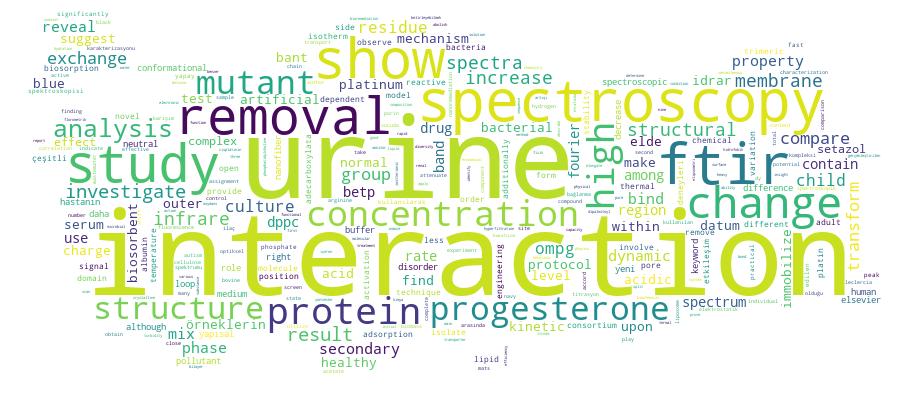
Competency Cloud

GCRIS Competency Cloud

Scholarly Output Search Results

Now showing 1 - 2 of 2
  • Article
    Citation - WoS: 3
    Citation - Scopus: 4
    Nanoremediation of Toxic Dyes Using a Bacterial Consortium Immobilized on Cellulose Acetate Nanofiber Mats
    (Wiley, 2024) Erkoc, Esra; Tuzun, Imre; Korkmaz, Filiz; San Keskin, Nalan Oya; Kocberber Kilic, Nur
    Stenotrophomonas maltophilia and Ochrobactrum sp. demonstrated the highest rates of dye bioremediation. The trials were performed at pH 8, which resulted in the highest bioremediation rate of 64.6% in media containing 21.2 mg L-1 dye. As the dye concentration increased, the pollutant removal decreased, with the maximum bioremoval rate of 70.3%. The removal capacity was increased with an increase in biomass concentration; the highest yield of 91.3% was obtained in media containing 14.2 mg L-1 dye and 12% (v/v) biomass. In nanoremediation studies, the bacterial consortium was immobilized on cellulose acetate nanofiber mats (CA-NFM). Scanning electron microscopic micrographs showed that bead-free nanofiber mats were effective in immobilizing bacterial cells. Moreover, nanofiber structures were capable of supporting exopolysaccharides formation, as confirmed by Fourier transform & imath;nfrared spectroscopy. The bacterial consortium immobilized on CA-NFM showed a maximum bioremoval rate of 56.5%. Reusability tests demonstrated that the consortium immobilized CA-NFM could be used at least five times. Furthermore, after leaving the mat for 1 month at 4 degrees C, it was still usable, and the removal efficiency was found to be 45.4%. Based on our findings, bacteria immobilized on CA-NFM have the potential to be used as highly effective and versatile nanobiotechnological biological sorbents in the treatment of wastewater containing dyes.
  • Article
    Simultaneous Removal of Setazol Navy Blue and Cr(vi) by Mixed Microbial Culture Isolated From the Çubuk Stream
    (Springer int Publ Ag, 2024) Gunduz, A. Irem; Erkoc, Esra; Korkmaz, Filiz; Kilic, Nur Kocberber
    Water samples taken from the & Ccedil;ubuk Stream (Ankara, Turkey) were inoculated into nutrient broth media containing Setazol Navy Blue SBG (SNB), an organic pollutant, and heavy metal Cr(VI), an inorganic pollutant, to obtain a pollutant-resistant mixed microbial culture. Experiments were conducted with this culture to remove SNB and heavy metal. The optimum conditions, where the mixed bacterial culture removed the pollutants most effectively, were determined, showing that the highest capacity for removal took place at pH 8 with removal percentages 96.3% for Cr(VI) and 78.5% for SNB. In media with 50.4 mg/L SNB and 9.7 mg/L Cr(VI), the SNB removal was 87.3%, and the Cr(VI) removal was 96.6% at the end of the 7-day incubation period. The highest removal was observed with a biomass concentration of 8% (v/v) of mixed culture [50 mg/L SNB dye+25 mg/L Cr(VI)]. The removal was 100% for both Cr(VI) and the SNB dye. The bacteria with the highest removal were isolated and identified using 16S rDNA gene sequence analysis as Microbacterium oxydans and Leucobacter aridicollis. The role of various functional groups and the structures of the microorganisms that might be involved in the removal mechanisms were discussed using their FTIR spectra. This report is the first study that investigates a mixed bacterial culture and pure cultures (M. oxydans and L. aridicollis) isolated from that mixed culture, removing both SNB and Cr(VI) simultaneously.