Özbayoğlu, Gülhan

Loading...
Profile Picture
Name Variants
Gulhan, Ozbayoglu
O.,Gulhan
O., Gulhan
Ö.,Gülhan
Ozbayoglu,G.
G., Ozbayoglu
Özbayoğlu,G.
G.,Özbayoğlu
Özbayoğlu, Gülhan
G.,Ozbayoglu
Ozbayoglu, Gulhan
Gülhan, Özbayoğlu
Ozbayoglu, G.
Job Title
Profesör Doktor
Email Address
Main Affiliation
Energy Systems Engineering
Status
Former Staff
Website
ORCID ID
Scopus Author ID
Turkish CoHE Profile ID
Google Scholar ID
WoS Researcher ID

Sustainable Development Goals

2

ZERO HUNGER
ZERO HUNGER Logo

0

Research Products

11

SUSTAINABLE CITIES AND COMMUNITIES
SUSTAINABLE CITIES AND COMMUNITIES Logo

1

Research Products

14

LIFE BELOW WATER
LIFE BELOW WATER Logo

1

Research Products

6

CLEAN WATER AND SANITATION
CLEAN WATER AND SANITATION Logo

0

Research Products

1

NO POVERTY
NO POVERTY Logo

0

Research Products

5

GENDER EQUALITY
GENDER EQUALITY Logo

0

Research Products

9

INDUSTRY, INNOVATION AND INFRASTRUCTURE
INDUSTRY, INNOVATION AND INFRASTRUCTURE Logo

0

Research Products

16

PEACE, JUSTICE AND STRONG INSTITUTIONS
PEACE, JUSTICE AND STRONG INSTITUTIONS Logo

0

Research Products

17

PARTNERSHIPS FOR THE GOALS
PARTNERSHIPS FOR THE GOALS Logo

0

Research Products

15

LIFE ON LAND
LIFE ON LAND Logo

0

Research Products

10

REDUCED INEQUALITIES
REDUCED INEQUALITIES Logo

0

Research Products

7

AFFORDABLE AND CLEAN ENERGY
AFFORDABLE AND CLEAN ENERGY Logo

0

Research Products

8

DECENT WORK AND ECONOMIC GROWTH
DECENT WORK AND ECONOMIC GROWTH Logo

0

Research Products

4

QUALITY EDUCATION
QUALITY EDUCATION Logo

0

Research Products

12

RESPONSIBLE CONSUMPTION AND PRODUCTION
RESPONSIBLE CONSUMPTION AND PRODUCTION Logo

0

Research Products

3

GOOD HEALTH AND WELL-BEING
GOOD HEALTH AND WELL-BEING Logo

0

Research Products

13

CLIMATE ACTION
CLIMATE ACTION Logo

0

Research Products
This researcher does not have a Scopus ID.
This researcher does not have a WoS ID.
Scholarly Output

12

Articles

8

Views / Downloads

33/0

Supervised MSc Theses

0

Supervised PhD Theses

0

WoS Citation Count

117

Scopus Citation Count

133

WoS h-index

6

Scopus h-index

7

Patents

0

Projects

0

WoS Citations per Publication

9.75

Scopus Citations per Publication

11.08

Open Access Source

0

Supervised Theses

0

Google Analytics Visitor Traffic

JournalCount
Physicochemical Problems of Mineral Processing3
26th International Mineral Processing Congress, IMPC 2012: Innovative Processing for Sustainable Growth - Conference Proceedings -- 26th International Mineral Processing Congress, IMPC 2012: Innovative Processing for Sustainable Growth -- 24 September 2012 through 28 September 2012 -- New Delhi -- 976541
International Journal of Coal Preparation and Utilization1
Journal of Alloys and Compounds1
Journal of Rare Earths1
Current Page: 1 / 2

Scopus Quartile Distribution

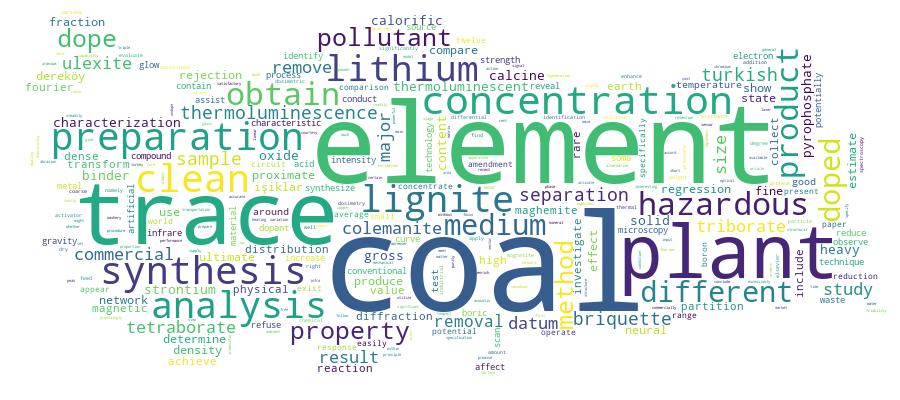
Competency Cloud

GCRIS Competency Cloud

Scholarly Output Search Results

Now showing 1 - 8 of 8
  • Article
    Citation - WoS: 22
    Citation - Scopus: 21
    Synthesis and Thermoluminescence Properties of Rare Earth Oxides (y, Ce-Lu) Doped Lithium Triborate
    (Elsevier Science Bv, 2011) Depci, Tolga; Ozbayoglu, Gulhan; Yilmaz, Aysen
    Lithium triborate (LiB(3)O(5)) was synthesized by high temperature solid-state reaction method, and then rare earth oxides were doped into LiB(3)O(5) to enhance its thermoluminescent (TL) properties. The identification and characteristics of the obtained compounds were determined by X-ray diffraction (XRD), Fourier transform infrared (FTIR) analyses, differential thermal analyses (DTA) and scanning electron microscopy (SEM). The glow curves were obtained using a thermoluminescent (TL) reader. The results revealed that all the rare earth oxides were not good activators for lithium triborate and the obtained compounds could not be used for dosimetric applications.
  • Article
    Citation - Scopus: 10
    Removal of hazardous air pollutants based on commercial coal preparation plant data
    (2013) Ozbayoglu,G.
    This paper investigates the concentration, distribution, and rejection of hazardous air pollutants, specifically identified by the US Clean Air Act Amendments of 1990, based on commercial coal preparation plant data obtained on-site. The samples were collected from the products of the different cleaning circuits of the operating plant. The concentrations of twelve potentially hazardous trace elements, including As, Cd, Co, Cr, Hg, Mn, Ni, Pb, Se, Th and U in those samples were determined. Compared with the average concentration of the trace elements in Turkish coals, the run-of-mine coal fed to the existing plant appears to contain higher concentrations of Cd, Hg, Mn, Th and V. However, the concentrations of As, Cd, Cr, Mn, Se, Th, U and V of the run-of-mine coal are above the world averages. Cd, Cr, Hg, Mn, Pb and Th concentrations of run-of-mine coal were easily removed at commercial coal preparation plant refuse in the range of 51.8% to 77.4 %, while only a small reduction was achieved for U and V as they were concentrated in clean coals. The present study reveals that conventional coal preparation technologies could significantly reduce hazardous air pollutants concentrations in coal.
  • Article
    Citation - WoS: 6
    Removal of Hazardous Air Pollutants Based on Commercial Coal Preparation Plant Data
    (oficyna Wydawnicza Politechniki Wroclawskiej, 2013) Ozbayoglu,G.
    This paper investigates the concentration, distribution, and rejection of hazardous air pollutants, specifically identified by the US Clean Air Act Amendments of 1990, based on commercial coal preparation plant data obtained on-site. The samples were collected from the products of the different cleaning circuits of the operating plant. The concentrations of twelve potentially hazardous trace elements, including As, Cd, Co, Cr, Hg, Mn, Ni, Pb, Se, Th and U in those samples were determined. Compared with the average concentration of the trace elements in Turkish coals, the run-of-mine coal fed to the existing plant appears to contain higher concentrations of Cd, Hg, Mn, Th and V. However, the concentrations of As, Cd, Cr, Mn, Se, Th, U and V of the run-of-mine coal are above the world averages. Cd, Cr, Hg, Mn, Pb and Th concentrations of run-of-mine coal were easily removed at commercial coal preparation plant refuse in the range of 51.8% to 77.4 %, while only a small reduction was achieved for U and V as they were concentrated in clean coals. The present study reveals that conventional coal preparation technologies could significantly reduce hazardous air pollutants concentrations in coal.
  • Article
    Citation - WoS: 4
    Citation - Scopus: 8
    Partitioning of major and trace elements of a Turkish lignite with size and density
    (oficyna Wydawnicza Politechniki Wroclawskiej, 2011) Ozbayoglu, Gulhan; Energy Systems Engineering
    This research was devoted to determine the concentration and distribution of major and trace elements in a Turkish lignite and to investigate the partitioning behaviour of them in various size and density fractions to estimate the possibility of removal of trace elements by conventional coal cleaning. Three size fractions which were used in industrial coal cleaning processes were chosen. Each size fraction was separated into various density fractions by float and sink tests, which were evaluated for major and trace elements. These tests showed that by applying the same size and density fractions of industrial coal cleaning processes, more than 70% of Mo, Nb, Nd, W, Hg and Zr could be removed, which were approximately equal to the result achieved for ash removal.
  • Article
    Citation - WoS: 50
    Citation - Scopus: 54
    The Effect of Synthesis and Doping Procedures on Thermoluminescent Response of Lithium Tetraborate
    (Elsevier Science Sa, 2011) Pekpak, E.; Yilmaz, A.; Ozbayoglu, G.
    Lithium tetraborate has been a scientific focus since 1960s by the courtesy of the thermoluminescence property it possesses. Moreover, it is utilized in surface acoustic wave apparatuses, in sensor sector and in laser technology owing to its non-linear optical characteristics. For the uses in thermoluminescence dosimetry lithium tetraborate is activated by addition of a variety of metals as dopants. This study includes the synthesis of lithium tetraborate by two methods (high temperature solid state synthesis and water/solution assisted synthesis), doping of activators into the matrix material synthesized and characterization of the products. Lithium tetraborate is readily commercially available in TL (Themoluminescence) dosimetry; hence, the main aim in this study was to specify the effect of synthesis and doping methods on the TL response. The heating temperature for the synthesis was 750 degrees C and the retention time as selected as 4 h for both methods. The synthesis stages were followed by doping step where the compounds of Cu, Ag and In in different proportions were doped in lithium tetraborate by solid state and solution assisted doping techniques. Characterization of the product was achieved by X-ray diffraction (XRD). Fourier transform Infra Red Spectroscopy (FT-IR) and Scanning Electron Microscopy (SEM) techniques. All samples prepared displayed TL response and the best TL signal was obtained from the sample produced by solid state synthesis and doped by solution assisted method with 0.1% Cu and 0.004% Ag. (C) 2010 Elsevier B.V. All rights reserved.
  • Article
    Citation - WoS: 6
    Citation - Scopus: 8
    Potential of Removing Trace Elements From a Turkish Lignite
    (Taylor & Francis inc, 2010) Ozbayoglu, Gulhan
    Lignite is a significant source for producing electricity in Turkey. However, the hazardous trace elements content, namely, vanadium (V), chromium (Cr), copper (Cu), arsenic (As), thorium (Th), and uranium (U), are much higher than those observed around the world. In this article, the potential of removing the trace elements from the Lignite obtained from the Soma mine using the gravity separation principles is discussed. The float-sink studies conducted using heavy liquid of 1.3 and 1.9 specific gravities identified that removal of the trace elements from the Soma lignite ranged from 15% to 83%.
  • Article
    Citation - WoS: 22
    Citation - Scopus: 23
    Comparison of Different Synthesis Methods To Produce Lithium Triborate and Their Effects on Its Thermoluminescent Property
    (Springer, 2010) Depci, Tolga; Özbayoğlu, Gülhan; Ozbayoglu, Gulhan; Yilmaz, Aysen; Özbayoğlu, Gülhan; Energy Systems Engineering; Energy Systems Engineering
    Lithium triborate (LiB3O5) was produced by different synthesis methods, which included high-temperature solid-state reaction, microwave-assisted high-temperature solid-state reaction, and precipitation-assisted high-temperature solid-state reaction. After the synthesis, metal oxides (CuO and Al2O3) were doped into LiB3O5 to enhance its thermoluminescent (TL) properties, and the TL intensities were compared with each other. The identification and characteristics of undoped and doped LiB3O5 were determined by X-ray diffraction (XRD), Fourier transform infrared (FTIR) analyses, differential thermal analyses (DTA), scanning electron microscopy (SEM), and particle size analyzer. The glow curves were obtained by using a TL reader. The results showed that synthesis routes affected the physical and structural properties of lithium triborate, which have an important effect on its TL intensity.
  • Article
    Use of Boric Acid as a Binder for Briquetting Some Boron Mine Wastes and Their Calcined Products
    (Parlar Scientific Publications (p S P), 2010) Sener, Savas; Özbayoğlu, Gülhan; Ozbayoglu, Gulhan; Ozdemir, Zeynep; Özbayoğlu, Gülhan; Energy Systems Engineering; Energy Systems Engineering
    In this study, boric acid as a binder for briquetting some boron mine wastes, such as colemanite and ulexite fines and calcined products, which do not meet the market specifications with respect to particle size, were investigated. Effects of water and binder contents, applied pressure, and curing and drying conditions on the briquette quality were evaluated in terms of mechanical strength, water-proofing characteristics and wearing resistance. The best briquettes were obtained at 62.4 MPa pressure (cured at ambient temperature for 24 h and dried at 105 C for 2 h). Only binder free briquettes of uncalcined ulexite gave satisfactory result. The briquette strength increased with an increase in the percentage of binder. The optimum binder content was found to be 5 % by weight for uncalcined ulexite and colemanite as well as calcined colemanite, but 10 To by weight for calcined ulexite. The water-proof briquettes of ulexite and calcined products of ulexite and colemanite fines could be produced. According to wearing resistance, ulexite and colemanite fines as well as calcined product of colemanite showed resistance to abrasion action during transportation and loading.