Tülek, Necla
Loading...

Profile URL
Name Variants
Tülek,N.
N.,Tulek
Tülek, Necla
Eren Tülek N.
T., Necla
Tulek,Necla
Necla, Tulek
Necla, Tülek
N., Tülek
Necla Tülek
Tulek,N.
Tulek, Necla
Tulek N.
T.,Necla
N., Tulek
Tülek N.
N.,Tülek
N.,Tulek
Tülek, Necla
Eren Tülek N.
T., Necla
Tulek,Necla
Necla, Tulek
Necla, Tülek
N., Tülek
Necla Tülek
Tulek,N.
Tulek, Necla
Tulek N.
T.,Necla
N., Tulek
Tülek N.
N.,Tülek
Job Title
Profesör Doktor
Email Address
necla.tulek@atilim.edu.tr
Main Affiliation
Basic Sciences
Status
Website
ORCID ID
Scopus Author ID
Turkish CoHE Profile ID
Google Scholar ID
WoS Researcher ID
Sustainable Development Goals
1NO POVERTY
0
Research Products
2ZERO HUNGER
0
Research Products
3GOOD HEALTH AND WELL-BEING
13
Research Products
4QUALITY EDUCATION
0
Research Products
5GENDER EQUALITY
0
Research Products
6CLEAN WATER AND SANITATION
0
Research Products
7AFFORDABLE AND CLEAN ENERGY
0
Research Products
8DECENT WORK AND ECONOMIC GROWTH
0
Research Products
9INDUSTRY, INNOVATION AND INFRASTRUCTURE
0
Research Products
10REDUCED INEQUALITIES
0
Research Products
11SUSTAINABLE CITIES AND COMMUNITIES
0
Research Products
12RESPONSIBLE CONSUMPTION AND PRODUCTION
0
Research Products
13CLIMATE ACTION
0
Research Products
14LIFE BELOW WATER
0
Research Products
15LIFE ON LAND
0
Research Products
16PEACE, JUSTICE AND STRONG INSTITUTIONS
0
Research Products
17PARTNERSHIPS FOR THE GOALS
0
Research Products

This researcher does not have a Scopus ID.

Documents
125
Citations
1713

Scholarly Output
17
Articles
12
Views / Downloads
26/11
Supervised MSc Theses
0
Supervised PhD Theses
0
WoS Citation Count
19
Scopus Citation Count
19
Patents
0
Projects
0
WoS Citations per Publication
1.12
Scopus Citations per Publication
1.12
Open Access Source
13
Supervised Theses
0
| Journal | Count |
|---|---|
| Indian Pediatrics | 3 |
| Flora the Journal of Infectious Diseases and Clinical Microbiology | 2 |
| Clinical Microbiology and Infection | 1 |
| Flora İnfeksiyon Hastalıkları ve Klinik Mikrobiyoloji Dergisi | 1 |
| Infectious Diseases and Clinical Microbiology | 1 |
Current Page: 1 / 3
Scopus Quartile Distribution
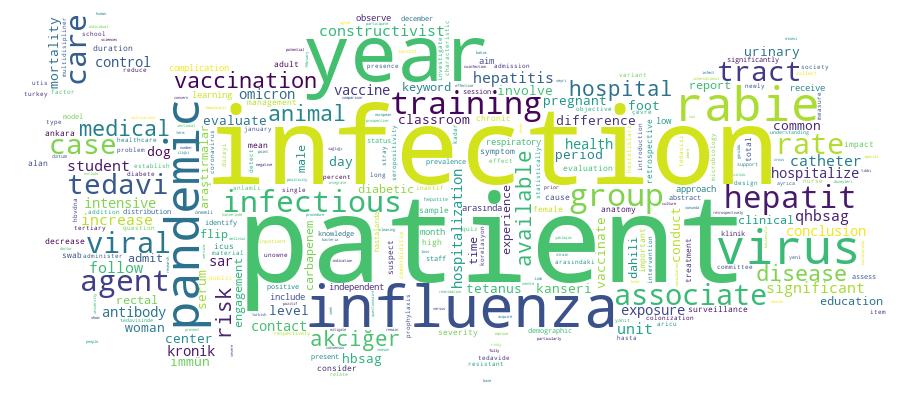
Competency Cloud

4 results
Scholarly Output Search Results
Now showing 1 - 4 of 4
Review Hepatit B İnfeksiyonlarının İmmünopatogenezi(Bilimsel Tip Yayinevi, 2019) Tülek, NeclaHepatit B infeksiyonları tüm dünyada majör sağlık problemleri arasında olup, siroz ve hepatoselüler karsinomanın en önemli nedenidir.Tedavide gelişmelere rağmen henüz kronik hepatit B infeksiyonunda kür sağlanamamaktadır. Hepatit B infeksiyonlarında klinik sonuçinfeksiyonun alınma yaşı, viral yük ve konağın immün yanıtına bağlıdır. Akut hepatitlerde klinik seyir subklinik hastalıktan, anikterikhepatite, ikterik hepatite ve fulminant hepatite kadar değişebilirken, kronik hepatitlerde hastalığın seyri asemptomatik inaktif durumdankronik hepatite, siroz ve hepatoselüler karsinomaya kadar değişebilir. Hepatit B virüsü hepatositlerde sitopatik olmayarak çoğalır veklinik sendromların çoğu immün yanıt ile ilişkilidir. İmmün sistem aktivasyonu virüsün eliminasyonunu sağladığı gibi karaciğer hasarınada neden olur. Hepatit B patogenezinde hücresel immün yanıt özellikle de CD8+ T hücreler santral olmasına rağmen immün sistemindiğer komponentleri de katkıda bulunur. Kronik hepatitli hastalarda hem doğal hem de adaptif immün yanıt zayıflamış ve T hücreyanıtı tükenmiş durumdadır. İmmünopatolojideki mekanizmaların daha iyi anlaşılması, yeni etkin tedavi stratejilerinin geliştirilmesindeyararlı olacaktır.Article Citation - WoS: 4Citation - Scopus: 3Management of Chronic Hepatitis B in Special Patient Groups: a Consensus Report of the Study Group for Viral Hepatitis of the Turkish Society of Clinical Microbiology and Infectious Diseases-2023(Doc design informatics Co Ltd, 2023) Tekin, Sueda; Karakecili, Faruk; Binay, Umut Devrim; Celik, Ilhami; Tulek, Necla; Tutuncue, Ediz; Demirturk, Nese; Tütüncü, Ediz; Yılmaz, EmelTurkish Society of Clinical Microbiology and Infectious Diseases Viral Hepatitis Working Group updated the consensus report on the management of chronic hepatitis B (CHB) in private hosts and special situations. Relevant literature and international guidelines are reviewed, and agreed recommendations are presented at the end of each chapter. In the report, treatment of hepatitis B virus (HBV) and human immunodeficiency virus (HIV) coinfection, management of HBV and hepatitis C virus (HCV) coinfection, management of CHB in severe COVID-19 patients, non-transplant immunocompromised patients.Article Tedavi Alan Kronik Hepatit B Hastalarında Serum Kantitatif Hbsag Düzeyi ile Viral Yük Arasındaki İlişkinin Araştırılması(Pamukkale University, 2020) Demirelli, Meryem; Tülek, Necla; Temoçin, Fatih; Yücel, Doğan; Erdinç, Fatma Şebnem; Ertem, Günay; Erdinc, SebnemAmaç: Yakın geçmişe kadar HBsAg sadece hepatit B enfeksiyonun tanısında kullanılırken, günümüzde serum HBsAg kantitasyonu (qHBsAg)’nun, hepatit B virüsü (HBV) enfeksiyonunun viral monitörizasyonunda kullanılabileceğine dair veriler artmaya başlamıştır. Bu çalışmada inaktif hepatit B taşıyıcıları ile kronik aktif hepatit B hastaları arasındaki qHBsAg ile HBV DNA düzeyleri karşılaştırılmış ve tedavi başlanmış hastalarda tedavi süresince qHBsAg ile HBVDNA seyri izlenerek aralarındaki ilişki değerlendirilmiştir. Gereç ve yöntem: Çalışma Ankara Eğitim ve Araştırma Hastanesi Enfeksiyon Hastalıkları ve Klinik Mikrobiyoloji Kliniği’nde yapılmıştır. Kronik hepatit B (KHB) tanısıyla tedavi alan 71 hasta ve inaktif HBsAg taşıyıcısı 74 hasta çalışmaya dahil edildi. Bu hastalarda serum qHBsAg düzeyleri Elecsys HBsAg II cihazı ile çalışıldı. Bulgular: Nükleoz(t)id analoğu ile tedavi edilen hastalarda 6. ve 12. aydaki serum qHBsAg düzeyi ile HBVDNA arasında pozitif yönde bir korelasyon görüldü ve her iki parametrenin altı ay ve bir yıllık izlemindeki düşüş istatiksel olarak anlamlı bulundu (qHBsAg 6ay p=0,03, qHBsAg 12 ay p=0,001, HBV DNA 6 ay p=0,001, HBV DNA 12 ay p=0,001). Peg-IFN tedavisi alan kronik hepatit B hastalarında ise serum qHBsAg düzeyi ile HBVDNA arasında tedavi başlangıcı ve 6. ayında anlamlı bir ilişki olmayıp tedavi sonunda pozitif yönde korelasyon görüldü. PEG-IFN tedavisi alan hasta grubunda ise qHBsAg seviyeleri ile HBV DNA arasındaki korelasyon tedavi sonunda anlamlı (p=0,01) olarak saptandı.Article Risk Factors for Rectal Colonization with Carbapenemase Producing Enterobacteriaceae(Bilimsel Tip Yayinevi, 2021) Hekimoglu, Sirin; Ertem, Gunay; Yucel, Mihriban; Basar, Hulya; Kaya Kilic, Esra; Ozcan, Ayse; Tulek, Necla; Kılıç, Esra Kaya; Erdınc, Fatma SebnemIntroduction: Carbapenem-resistant Enterobacteriaceae (CRE) is the most common pathogens acquired in intensive care units (ICU). Materials and Methods: This study was designed as prospective observational study at the Ankara Healthcare Application and Research Center of the University of Health Sciences. The study was conducted between September 2017 and May 2018 in the tertiary Anesthesiology and Reanimation ICU. Rectal swab samples were taken from each hospitalized patient during hospitalization and weekly thereafter. Sixty-five patients with CRE colonization were considered as the study group and 65 patients without CRE colonization were considered as the control group. Results: The 51% of the cases are male and 49% are females. The mean age of all cases was 69.1 +/- 17.6 and the median age was 73. The majority of bacteria grown in rectal swabs are constituted by Klebsiella pneumoniae (43-58.1%) and Escherichia colt (16-21.6%). Duration of hospitalization in the ICU was 19.6 +/- 15.8 in the control group and 48.5 +/- 38.2 in the study group. Duration of hospitalization in CRE-infected patients were longer than non-infected patients (p<0.001). The use of a central venous catheter and tracheostomy showed statistically significant difference between the groups (p< 0.05). Nineteen cases (29.2%) had CRE positivity at their admission to the ICU. Eighteen of these patients came from another clinical service or hospital (p< 0.005). In the control group, carbapenem was used in a mean of 11.9 +/- 9.9 days and in the study group a mean of 16.3 +/- 8.5 days (p= 0.002). In multivariate analysis of risk factors, duration of hospitalization in the ICU increases the risk of CRE positivity in rectal culture 1.04 (95%GA, 1,005-1,072, p= 0.024) times more. Conclusion: In our study, it can be said that it is important to question the indications of invasive procedures to be applied to the patients. We recommend that patients should be admitted to service follow-up when the ICU follow-up and treatment indications are terminated. Carbapenem treatment times should be shortened. As a result, it would be wise to take rectal surveillance cultures in ICUs to detect and control carbapenem-resistant strains.