Melikoğlu, Mehmet

Loading...
Profile Picture
Name Variants
M.,Melikoğlu
M., Melikoglu
Melikoglu,M.
Melikoğlu, Mehmet
Melikoğlu,M.
M.,Mehmet
M.,Melikoglu
Melikoglu, Mehmet
Mehmet, Melikoglu
Mehmet, Melikoğlu
M., Mehmet
Job Title
Doktor Öğretim Üyesi
Email Address
Main Affiliation
Energy Systems Engineering
Status
Former Staff
Website
ORCID ID
Scopus Author ID
Turkish CoHE Profile ID
Google Scholar ID
WoS Researcher ID

Sustainable Development Goals

2

ZERO HUNGER
ZERO HUNGER Logo

0

Research Products

11

SUSTAINABLE CITIES AND COMMUNITIES
SUSTAINABLE CITIES AND COMMUNITIES Logo

3

Research Products

14

LIFE BELOW WATER
LIFE BELOW WATER Logo

0

Research Products

6

CLEAN WATER AND SANITATION
CLEAN WATER AND SANITATION Logo

0

Research Products

1

NO POVERTY
NO POVERTY Logo

0

Research Products

5

GENDER EQUALITY
GENDER EQUALITY Logo

0

Research Products

9

INDUSTRY, INNOVATION AND INFRASTRUCTURE
INDUSTRY, INNOVATION AND INFRASTRUCTURE Logo

1

Research Products

16

PEACE, JUSTICE AND STRONG INSTITUTIONS
PEACE, JUSTICE AND STRONG INSTITUTIONS Logo

0

Research Products

17

PARTNERSHIPS FOR THE GOALS
PARTNERSHIPS FOR THE GOALS Logo

1

Research Products

15

LIFE ON LAND
LIFE ON LAND Logo

0

Research Products

10

REDUCED INEQUALITIES
REDUCED INEQUALITIES Logo

1

Research Products

7

AFFORDABLE AND CLEAN ENERGY
AFFORDABLE AND CLEAN ENERGY Logo

7

Research Products

8

DECENT WORK AND ECONOMIC GROWTH
DECENT WORK AND ECONOMIC GROWTH Logo

5

Research Products

4

QUALITY EDUCATION
QUALITY EDUCATION Logo

0

Research Products

12

RESPONSIBLE CONSUMPTION AND PRODUCTION
RESPONSIBLE CONSUMPTION AND PRODUCTION Logo

2

Research Products

3

GOOD HEALTH AND WELL-BEING
GOOD HEALTH AND WELL-BEING Logo

0

Research Products

13

CLIMATE ACTION
CLIMATE ACTION Logo

6

Research Products
This researcher does not have a Scopus ID.
This researcher does not have a WoS ID.
Scholarly Output

11

Articles

9

Views / Downloads

79/0

Supervised MSc Theses

0

Supervised PhD Theses

0

WoS Citation Count

809

Scopus Citation Count

914

WoS h-index

11

Scopus h-index

10

Patents

0

Projects

0

WoS Citations per Publication

73.55

Scopus Citations per Publication

83.09

Open Access Source

1

Supervised Theses

0

Google Analytics Visitor Traffic

JournalCount
Renewable and Sustainable Energy Reviews3
Renewable Energy2
Food and Bioproducts Processing1
3rd International Conference on Nuclear and Renewable Energy Resources (NURER) -- MAY 20-23, 2012 -- Istanbul, TURKEY1
Open Engineering1
Current Page: 1 / 2

Scopus Quartile Distribution

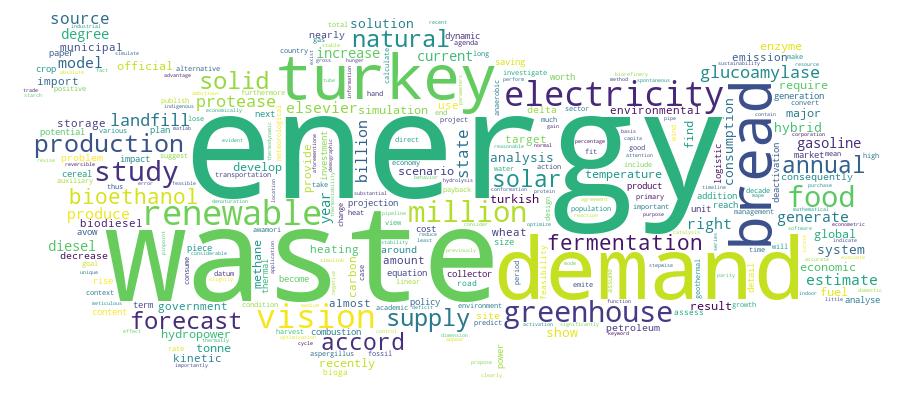
Competency Cloud

GCRIS Competency Cloud

Scholarly Output Search Results

Now showing 1 - 2 of 2
  • Review
    Citation - WoS: 39
    Citation - Scopus: 43
    Hydropower in Turkey: Analysis in the View of Vision 2023
    (Pergamon-elsevier Science Ltd, 2013) Melikoglu, Mehmet
    Turkey is a recently developed country, a regional power in the Middle East and an economic powerhouse of the region. Turkey's electricity demand is continuously increasing due to fast economic growth coupled with the country's vibrant young population. It is envisaged that this demand would keep on increasing almost exponentially in the next decade according to the recently avowed Vision 2023 agenda. According to which, the Turkish government ambitiously wants to provide 30.0% of the country's electricity demand from renewable energy sources by 2023. Turkey has vast renewable energy potential including hydro, geothermal, solar and wind. However, historically there is only one playmaker that is hydropower. Thus a detailed review of the current status and future prospects of Turkish hydropower market is urgently needed to generate a roadmap for the Vision 2023 agenda. This paper was intended to provide that vital information. Currently, more than 25.0% or 57.5 TWh of the country's electricity demand is supplied from hydropower. According to official projections this would increase to approximately 116.0 TWh in 2023. In this study, hydropower's supply rate of Turkey's annual electricity demand was assessed based on the official projections and a forecast was generated. Results showed that between 22.0% and 27.0% of Turkey's annual electricity demand should be supplied from hydropower in 2023. Therefore, between 22.5 TWh and 45.0 TWh of electricity should be generated from renewable energy sources other than hydropower to provide a total of 30.0% renewable energy based electricity generation in 2023. (C) 2013 Elsevier Ltd. All rights reserved.
  • Article
    Citation - WoS: 64
    Vision 2023: Feasibility Analysis of Turkey's Renewable Energy Projection
    (Pergamon-elsevier Science Ltd, 2013) Melikoglu, Mehmet
    Electricity consumption of Turkey at the year 2023 is estimated to be around 530,000 GWh. Turkey plans to supply 30% or 160,000 GWh of this demand from renewable energy sources according to the recently avowed government agenda Vision 2023. However, the current installed renewable energy capacity is around 60,000 GWh. Detailed literature analysis showed that only wind and solar energy potential in Turkey can solely supply this demand. In this study, two different scenarios were generated to analyse the cost and environmental impacts of supplying this demand. Scenario 1, which is derived from the official Vision 2023 targets, suggests supplying this demand from wind, solar, geothermal energy and hydropower. The total projected cost based on Scenario 1 is estimated to be $31.000 billion and annual greenhouse gas emissions of 1.05 million tonnes of CO2 equivalent. According to Scenario 2 or the contrary setup it is assumed that the required demand gap could not be supplied from new renewable energy investments but equally from coal and natural gas. The projected cost is estimated to be around $8.000 billion and annual greenhouse gas emissions at appalling 71.30 million tonnes of CO2 equivalent. Assuming carbon tax at the year 2023 to be $50 per tonne of CO2 emitted, supplying the demand from renewable energy sources according to Scenario 1 would generate savings worth nearly $2.175 billion from environmental taxes annually. Thus, making the payback time of the renewable energy investments less than 15 years. (C) 2012 Elsevier Ltd. All rights reserved.