
Qasrawı, Atef Fayez Hasan
Loading...

Profile URL
Name Variants
Qasrawi, Atef Fayez
Atef Fayez Hasan, Qasrawı
Qasrawı,A.F.H.
Qasrawi,A.F.H.
Q., Atef Fayez Hasan
Q.,Atef Fayez Hasan
Atef Fayez Hasan, Qasrawi
Qasrawi, Atef Fayez Hasan
A.F.H.Qasrawı
A.F.H.Qasrawi
A., Qasrawi
A.,Qasrawı
Qasrawı, Atef Fayez Hasan
Qasrawi, A. F.
Qasrawi,A.F.
Qasrawi, AF
Qasrawi, Atef F.
Qasrawi, Atef A.
Qasrawi, Atef Fayez
Qasrawi, Atef F.
Qasrawi, Atef A.
Qasrawi, Atef
Atef Fayez Hasan, Qasrawı
Qasrawı,A.F.H.
Qasrawi,A.F.H.
Q., Atef Fayez Hasan
Q.,Atef Fayez Hasan
Atef Fayez Hasan, Qasrawi
Qasrawi, Atef Fayez Hasan
A.F.H.Qasrawı
A.F.H.Qasrawi
A., Qasrawi
A.,Qasrawı
Qasrawı, Atef Fayez Hasan
Qasrawi, A. F.
Qasrawi,A.F.
Qasrawi, AF
Qasrawi, Atef F.
Qasrawi, Atef A.
Qasrawi, Atef Fayez
Qasrawi, Atef F.
Qasrawi, Atef A.
Qasrawi, Atef
Job Title
Doçent Doktor
Email Address
atef.qasrawi@atilim.edu.tr
Main Affiliation
Department of Electrical & Electronics Engineering
Status
Former Staff
Website
ORCID ID
Scopus Author ID
Turkish CoHE Profile ID
Google Scholar ID
WoS Researcher ID
Sustainable Development Goals
 1
1NO POVERTY
0
Research Products
 2
2ZERO HUNGER
0
Research Products
 3
3GOOD HEALTH AND WELL-BEING
0
Research Products
 4
4QUALITY EDUCATION
0
Research Products
 5
5GENDER EQUALITY
0
Research Products
 6
6CLEAN WATER AND SANITATION
0
Research Products
 7
7AFFORDABLE AND CLEAN ENERGY
17
Research Products
 8
8DECENT WORK AND ECONOMIC GROWTH
0
Research Products
 9
9INDUSTRY, INNOVATION AND INFRASTRUCTURE
0
Research Products
 10
10REDUCED INEQUALITIES
0
Research Products
 11
11SUSTAINABLE CITIES AND COMMUNITIES
0
Research Products
 12
12RESPONSIBLE CONSUMPTION AND PRODUCTION
0
Research Products
 13
13CLIMATE ACTION
0
Research Products
 14
14LIFE BELOW WATER
0
Research Products
 15
15LIFE ON LAND
0
Research Products
 16
16PEACE, JUSTICE AND STRONG INSTITUTIONS
1
Research Products
 17
17PARTNERSHIPS FOR THE GOALS
0
Research Products

This researcher does not have a Scopus ID.

This researcher does not have a WoS ID.

Scholarly Output
226
Articles
222
Views / Downloads
677/0
Supervised MSc Theses
0
Supervised PhD Theses
0
WoS Citation Count
1894
Scopus Citation Count
1915
Patents
0
Projects
0
WoS Citations per Publication
8.38
Scopus Citations per Publication
8.47
Open Access Source
17
Supervised Theses
0
| Journal | Count |
|---|---|
| Crystal Research and Technology | 16 |
| Journal of Electronic Materials | 15 |
| physica status solidi (a) | 12 |
| Materials Science in Semiconductor Processing | 11 |
| Journal of Alloys and Compounds | 11 |
Current Page: 1 / 11
Scopus Quartile Distribution
Competency Cloud
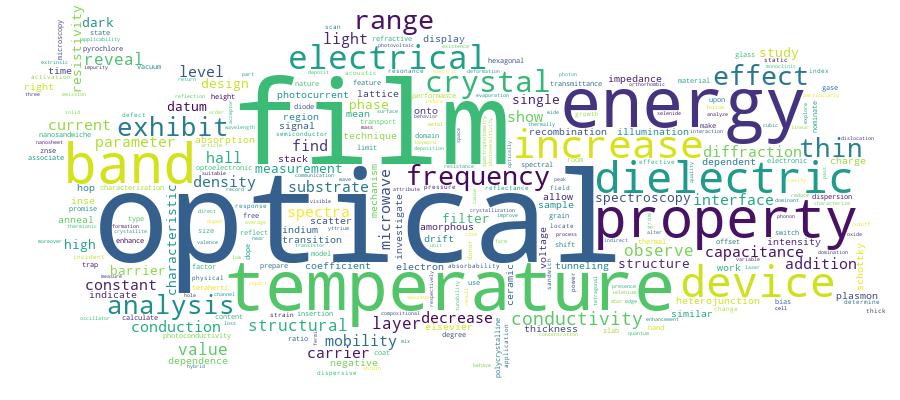
218 results
Scholarly Output Search Results
Now showing 1 - 10 of 218
Article Citation - WoS: 2Citation - Scopus: 2Space-charge-limited currents and photoconductive properties of Tl2InGaSe4 layered crystals(Taylor & Francis Ltd, 2008) Qasrawi, A. F.; Gasanly, N. M.The extrinsic electronic parameters of Tl2InGaSe4 layered crystals were investigated through measurement of the temperature-dependent dark conductivity, space-charge-limited currents and photoconductivity. Analysis of the dark conductivity reveals the existence of two extrinsic energy levels at 0.40 and 0.51 eV below the conduction band edge, which are dominant above and below 260 K, respectively. Current-voltage characteristics show that the one at 0.51 eV is a trapping energy level with a concentration of (4.8-7.7) x 10(10) cm(3). Photoconductivity measurements reveal the existence of another energy level located at 0.16 eV. In the studied temperature range, the photocurrent increases with increasing temperature. The dependence of the photoconductivity on the incident light intensity exhibits a linear recombination character near room temperature and a supralinear character as the temperature decreases. The change in recombination mechanism is attributed to an exchange in the behavior of sensitizing and recombination centres.Article Citation - WoS: 6Citation - Scopus: 6Gold and Ytterbium Interfacing Effects on the Properties of the Cdse/Yb Nanosandwiched Structures(Elsevier Science Bv, 2018) Alharbi, S. R.; Qasrawi, A. F.Owing to the performance of the CdSe as an optoelectronic material used for the production of quantum dots, photosensors and wave traps we here, in this article, report the enhancements in structural and electrical properties that arises from the nanosandwiching of a 40 nm thick Yb film between two films of CdSe (CYbC-40). The CdSe films which were deposited onto glass, Yb and Au substrates are characterized by X-ray diffraction, temperature dependent electrical conductivity and impedance spectroscopy measurements in the frequency range of 10-1800 MHz. The analysis of the XRD patterns have shown that the glass/CdSe/Yb/CdSe films exhibit larger grain size and lower strain, defect density and lower stacking faults compared to the not sandwiched CdSe. In addition, it was observed that the Yb shifts the donor states of the n-type CdSe from 0.44 to 0.29 eV leading to a modification in the built in voltage of the material. On the other hand, the design of the energy band diagram has shown the ability of the formation of the Au/CYbC-40/Yb as Schottky (SB) and the Au/CYbC-40/Au as back to back Schottky barriers (BBSB). While the SB device show low band pass filter characteristics, the BBSB device performed as band stop filters. The BBSB device exhibited negative capacitance effects with filtering features that reveal a return loss of 42 dB at similar to 1440 MHz.Article Citation - WoS: 18Citation - Scopus: 18Fabrication of Al/Mgo and C/Mgo Tunneling Barriers for Tunable Negative Resistance and Negative Capacitance Applications(Elsevier Science Bv, 2013) Qasrawi, A. F.In this work, the design and characterization of magnesium oxide based tunneling diodes which are produced on Al and InSe films as rectifying substrates are investigated. It was found that when Al thin films are used, the device exhibit tunneling diode behavior of sharp valley at 0.15 V and peak to valley current ratio (PVCR) of 11.4. In addition, the capacitance spectra of the Al/MgO/C device show a resonance peak of negative capacitance (NC) values at 44.7 MHz. The capacitance and resistance-voltage characteristics handled at an ac signal frequency of 100 MHz reflected a build in voltage (V-bi) of 1.29 V and a negative resistance (NR) effect above 2.05 V. This device quality factor (Q)-voltage response is similar to 10(4). When the Al substrate is replaced by InSe thin film, the tunneling diode valley appeared at 1.1 V. In addition, the PVCR, NR range, NC resonance peak, Q and lib; are found to be 135, 0.94-2.24 and 39.0 MHz, similar to 10(5) and 1.34 V, respectively. Due to the wide differential negative resistance and capacitance voltage ranges and due to the response of the C/MgO/InSe/C device at 1.0 GHz, these devices appear to be suitable for applications as frequency mixers, amplifiers, and monostable-bistable circuit elements (MOBILE). (c) 2013 Elsevier B.V. All rights reserved.Article Citation - WoS: 5Citation - Scopus: 6Photoelectronic and Electrical Properties of Tl2ingas4< Layered Crystals(Pergamon-elsevier Science Ltd, 2007) Qasrawi, A. F.; Gasanly, N. M.Tl2InGaS4 layered crystals are studied through the dark electrical conductivity, space charge limited current and illumination- and temperature-dependent photoconductivity measurements in the temperature regions of 220-350 K, 300-400 K and 200-350 K, respectively. The space charge limited current measurements revealed the existence of a single discrete trapping level located at 0.44 eV. The dark electrical conductivity showed the existence of two energy levels of 0.32 eV and 0.60 eV being dominant above and below 300 K, respectively. The photoconductivity measurements reflected the existence of two other energy levels located at 0.28 eV and 0.19 eV at high and low temperatures, respectively. The photocurrent is observed to increase with increasing temperature up to a maximum temperature of 330 K. The illumination dependence of photoconductivity is found to exhibit supralinear recombination in all the studied temperature ranges. The change in recombination mechanism is attributed to exchange in the behavior of sensitizing and recombination centers. (C) 2006 Elsevier Ltd. All rights reserved.Article Citation - WoS: 3Citation - Scopus: 4Effects of Ge Substrate on the Structural and Optical Conductivity Parameters of Bi2o3< Thin Films(Elsevier Gmbh, 2019) Alharbi, S. R.; Qasrawi, A. F.In this article the structural, optical and dielectric properties of a 200 nm thick Bi2O3 thin films which are deposited onto amorphous germanium substrate are reported. Both of the Ge and Bi2O3 thin films are prepared by the thermal evaporation technique under vacuum pressure of 10 s mbar. Bi2O3 thin films are found to prefer the monoclinic nature of structure with larger values of microstrain, dislocation density, stacking faults and smaller grain sizes upon replacement of the glass substrate by germanium. Optically, significant redshift in the energy band gap is observed when the films are grown onto Ge. The Ge/Bi2O3 heterojunctions exhibit a conduction and valence band offsets of value of 0.81 and 1.38 eV, respectively. In addition to the enhancement in the dielectric constant near the IR region, the Drude-Lorentz modeling of the Ge/Bi2O3 heterojunctions has shown remarkable effect of the Ge substrate on the optical conductivity parameters of Bi2O3. Particularly, the drift mobility increased by about one order of magnitude, the free hole density decreased by (similar to)24 times and the plasmon frequency ranges extended from 5.21 to 11.0 GHz to 2.59-12.80 GHz when germanium substrate is used. The optical features of the heterojunction nominate it for visible light communication technology.Article Citation - WoS: 11Citation - Scopus: 13Structural, optical, electrical and dielectric properties of Bi1.5Zn0.92Nb1.5-xNixO6.92-3x/2 solid solution(Taylor & Francis Ltd, 2012) Qasrawi, A. F.; Nazzal, E. M.; Mergen, A.The effects of Ni content on the structural, optical, dielectric and electrical properties of Bi1.5Zn0.92Nb1.5O6.92 pyrochlore ceramics have been investigated. Nickel atoms were inserted into pure samples in accordance to the composition Bi1.5Zn0.92Nb1.5-xNixO6.92-3x/2, with x varying from 0.07 to 0.40. The structural analysis revealed that a single phase of the pyrochlore compound can be obtained for x values of 0.07 and 0.10 only. Further increase in Ni caused the appearance of multiple phases. The optical energy band gaps are determined as 3.30, 3.35 and 3.52 eV for Ni content of 0.00, 0.07 and 0.10 respectively. The temperature dependent electrical resistivity and the frequency dependent capacitance are observed to increase with increasing Ni content. The resonance frequency, which was determined from the capacitance-frequency dependence, was observed to shift from 12.14 to 10.47 kHz as the x values increase from 0.00 to 0.10 respectively.Article Citation - WoS: 7Citation - Scopus: 6Temperature-Dependent Structural Transition, Electronic Properties and Impedance Spectroscopy Analysis of Tl2ingas4< Crystals Grown by the Bridgman Method(Elsevier Sci Ltd, 2018) Qasrawi, A. F.; Alkarem, Qotaibah A.; Gasanly, N. M.In this work, we report the temporary structural modifications associated with the in situ heating of the Tl2InGaS4 crystals in the temperature range of 300-420 K. The analysis of the X-ray diffraction patterns revealed the temperature-independent possible phase transformations between the monoclinic and triclinic phases. The temperature analysis of the lattice parameters, crystallite size, strain, dislocation density and stacking faults has shown a temporary enhancement in the crystallinity of this compound above 375 K. Significant increase in the grain size accompanied to decrease in the strain, defect density and stacking faults was observed above this temperature. The scanning electron microscopy imaging has shown that the crystals are layer structured with high quality layers of thicknesses of similar to 12 nm. In addition the energy dispersive X-ray analysis has shown that the crystal comprise no detectable impurity. Moreover, the room temperature optical characterizations has shown that the Tl2InGaS4 exhibit an energy band gap of 2.5 eV. The temperature dependent electrical resistivity measurements indicated highly resistive crystal with activation energy values of 0.84 and 0.19 eV above and below 375 K, respectively. On the other hand, room temperature impedance spectroscopy analysis in the frequency domain of 10-1800 MHz has shown that the crystal exhibits negative resistance and negative capacitance effects below and above 1580 MHz. The crystals are observed also to behave as band stop filter with notch frequency of 1711 MHz.Article Citation - WoS: 9Citation - Scopus: 9Design and Characterization of Au/In4< Field Effect Transistors(Elsevier Science Bv, 2018) Khusayfan, Najla M.; Qasrawi, A. F.; Khanfar, Hazem K.In the current work, the structural and electrical properties of the In4Se3/Ga2S3 interfaces are investigated. The X-ray analysis which concern the structural evolutions that is associated with the substrate type has shown that the hexagonal kappa-In2Se3 and the selenium (rhombohedral) rich orthorhombic In4Se3 phases of InSe are grown onto glass and gold substrates, respectively, at substrate of temperature of 300 degrees C in a vacuum media. The coating of the kappa-In2Se3 and of In4Se3 with amorphous layer of Ga2S3 is accompanied with uniform strain. The In4Se3/Ga2S3 interface is found to be of attractive quantum confinement features as it exhibited a conduction and valence band offsets of 0.20 and 1.86 eV, respectively. When the Au/In4Se3/Ga2S3 interface was contacted with carbon metallic point contact, it reveals a back to back Schottky hybrid device that behaves typically as metal-oxidesemiconductor field effect transition (MOSFET). The depletion capacitance analysis of this device revealed built in voltage values of 1.91 and 1.64 V at the Au and C sides, respectively. The designed MOSFET which is characterized in the frequency domain of 0.01-1.80 GHz is observed to exhibit, resonance-anti-resonance phenomena associated with negative capacitance effect in a wide domain of frequency that nominate it for applications in electronic circuits as parasitic capacitance minimizer, bus switching speed enhancer and low pass/high pass filter at microwave frequencies. (C) 2018 The Authors. Published by Elsevier B.V.Article Citation - WoS: 4Citation - Scopus: 4Mixed Conduction and Anisotropic Single Oscillator Parameters in Low Dimensional Tlinse2 Crystals(Elsevier Science Sa, 2013) Qasrawi, A. F.; Gasanly, N. M.Due to the importance of the TlInSe2 crystal as neutron and gamma-ray detectors, its electrical and dispersive optical parameters have been investigated. Particularly, the anisotropic current conduction mechanism in the temperature region of 100-350 K and the room temperature anisotropic dispersive optical properties were studied by means of electrical conductivity and optical reflectance, respectively. It has been shown that the mixed conduction is the most dominant transport mechanism in the TlInSe2 crystals. Particularly, when the electric field is applied perpendicular to the crystal's c-axis, the main dominant current transport mechanism is due to the mixed conduction and the variable range hopping above and below 160 K, respectively. When the electric field is applied parallel to the crystal's c-axis, the electrical conductivity is dominated by the thermionic emission, mixed conduction and variable range hopping at high, moderate and low temperatures, respectively. The optical reflectivity analysis in the wavelength range 210-1500 nm revealed a clear anisotropy effect on the dispersive optical parameters. Particularly, the static refractive index, static dielectric constant, dispersion energy and oscillator energy exhibited values of 2.50, 6.24, 20.72 eV and 3.96 eV, and values of 3.05, 9.33, 39.27 eV and 4.72 eV for light propagation parallel and perpendicular to the crystal's c-axis, respectively. Moreover, the frequency dependence of the dielectric constant, epsilon(omega), reflected strong dielectric anisotropy that exhibit maximum epsilon(omega) value of 38.80 and 11.40 at frequencies of 11.07 x 10(14) Hz for light propagation parallel and perpendicular to the crystal's c-axis, respectively. The anisotropy in the epsilon(omega) makes the TlInSe2 crystals attractive to be used as nonvolatile static memory devices. (C) 2013 Elsevier B.V. All rights reserved.Article Citation - WoS: 6Citation - Scopus: 6Dielectric Dispersion at the Mn/Znpc Interfaces(Wiley-v C H verlag Gmbh, 2020) Qasrawi, Atef F.; Zyoud, Hadeel M.Herein, the effects of manganese transparent (150 nm) substrates on the structural, nonlinear optical, and dielectric properties of zinc phthalocyanine are explored. ZnPc thin films are observed to exhibit deformed crystal structure associated with remarkable enhancement in the light absorbability by 21 times at 2.62 eV and by 173 times in the near-infrared (NIR) region of light upon replacement of glass by transparent Mn substrates. The Mn layer also causes a redshift in the energy bandgap, allows generation of free carrier absorption process and increases the dielectric constant by more than 169% in the NIR region. The interaction between the manganese substrates with the organic ZnPc thin layers decreases the free holes density, widens the plasmon frequency range, and improves the drift mobility of holes. The nonlinear dielectric response with the highly improved light absorbability in the NIR range of light nominates the Mn/ZnPc thin films for optoelectronic applications.
