
Karaduman, Bilge Duran
Loading...

Profile URL
Name Variants
Duran Karaduman, Bilge
Karaduman, Bilge Duran
K.,Bilge Duran
B., Karaduman
K., Bilge Duran
B.D.Karaduman
Bilge Duran, Karaduman
Karaduman,B.D.
B.,Karaduman
Karaduman, Bilge Duran
K.,Bilge Duran
B., Karaduman
K., Bilge Duran
B.D.Karaduman
Bilge Duran, Karaduman
Karaduman,B.D.
B.,Karaduman
Job Title
Doçent Doktor
Email Address
bilge.durankaraduman@atilim.edu.tr
Main Affiliation
Internal Medical Sciences
Status
Former Staff
Website
ORCID ID
Scopus Author ID
Turkish CoHE Profile ID
Google Scholar ID
WoS Researcher ID
Sustainable Development Goals
 1
1NO POVERTY
0
Research Products
 2
2ZERO HUNGER
0
Research Products
 3
3GOOD HEALTH AND WELL-BEING
10
Research Products
 4
4QUALITY EDUCATION
0
Research Products
 5
5GENDER EQUALITY
0
Research Products
 6
6CLEAN WATER AND SANITATION
0
Research Products
 7
7AFFORDABLE AND CLEAN ENERGY
0
Research Products
 8
8DECENT WORK AND ECONOMIC GROWTH
0
Research Products
 9
9INDUSTRY, INNOVATION AND INFRASTRUCTURE
0
Research Products
 10
10REDUCED INEQUALITIES
0
Research Products
 11
11SUSTAINABLE CITIES AND COMMUNITIES
0
Research Products
 12
12RESPONSIBLE CONSUMPTION AND PRODUCTION
0
Research Products
 13
13CLIMATE ACTION
0
Research Products
 14
14LIFE BELOW WATER
0
Research Products
 15
15LIFE ON LAND
0
Research Products
 16
16PEACE, JUSTICE AND STRONG INSTITUTIONS
0
Research Products
 17
17PARTNERSHIPS FOR THE GOALS
0
Research Products

This researcher does not have a Scopus ID.

This researcher does not have a WoS ID.

Scholarly Output
25
Articles
14
Views / Downloads
6/0
Supervised MSc Theses
0
Supervised PhD Theses
0
WoS Citation Count
78
Scopus Citation Count
89
Patents
0
Projects
0
WoS Citations per Publication
3.12
Scopus Citations per Publication
3.56
Open Access Source
17
Supervised Theses
0
| Journal | Count |
|---|---|
| The Anatolian Journal of Cardiology | 6 |
| Echocardiography | 2 |
| Turkish Journal of Medical Sciences | 2 |
| Türk Kardiyoloji Derneği Arşivi | 2 |
| International Journal of Cardiology | 1 |
Current Page: 1 / 3
Scopus Quartile Distribution
Competency Cloud
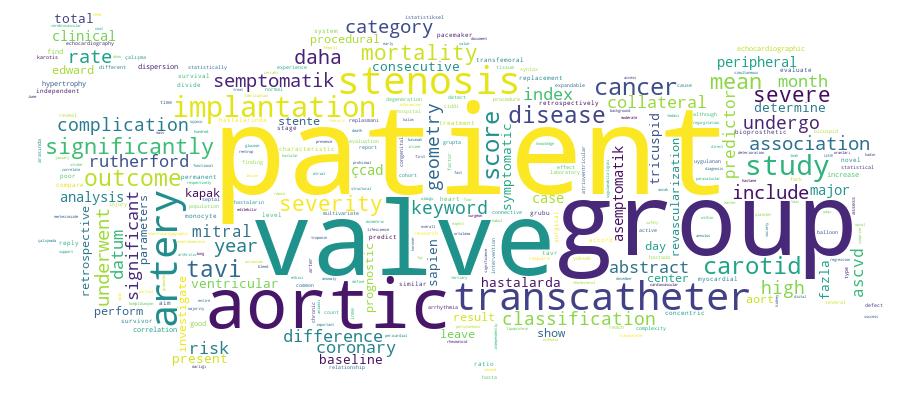
4 results
Scholarly Output Search Results
Now showing 1 - 4 of 4
Article Citation - WoS: 13Citation - Scopus: 14Evaluation of procedural and clinical outcomes of transcatheter aortic valve implantation: A single-center experience(Kare Publ, 2020) Karaduman, Bilge Duran; Kayaoğlu, Hüseyin Ayhan; Keleş, Telat; Bozkurt, Engin; Ayhan, HuseyinObjective: Transcatheter aortic valve implantation (TAVI) is an established alternative to surgical aortic valve replacement. Our study aimed to evaluate the implementation of TAVI at our large-volume center, having an all-comer patient population with short and long-term follow-ups. Methods: This retrospective, single-center analysis included 556 consecutive patients with symptomatic severe aortic stenosis (AS) who underwent TAVI between July 2011 and December 2019. Results: The mean age of the entire population was 77.6±7.9 years, and 54.9% were women. The Society of Thoracic Surgeons (STS) mean score of the cohort was 6.0%±3.5%. The balloon-expandable valve (Sapien XT, Sapien 3; Edwards Lifesciences, Irvine, California) was the most frequently used valves in this cohort (94.6%). Transfemoral access was used in 96.3% of patients. Implantation success was achieved in 96.6% of cases. During the TAVI procedure, 7.2% of patients required permanent pacemaker implantation, with 37.5% in the Lotus valve group needing the most permanent pacemakers. The mean length of hospital stay for the entire cohort was 4.5±2.3 days. Overall, 22 (3.9%) in-hospital deaths occurred before hospital discharge. The mean follow-up period was 15.1±14.9 months for all patients, and a significant improvement was noted in all echocardiographic parameters and functional capacity. Paravalvular leak (PVL) was documented in 18.9% patients, mild in 17.9%, and moderate in 1% at discharge. No cases with severe PVL, necessitating additional procedures. The multiple logistic regression analysis revealed that sex, STS score, baseline SYNTAX score, bicuspid valve morphology, common femoral artery diameter, and post-TAVI PVL were independent predictors of overall mortality. Conclusion: To our knowledge, this study, which is the largest single-center real-world experience of TAVI in Turkey, demonstrated low complication rates with favorable short- and mid-term THV performance in patients undergoing TAVI.Article Citation - WoS: 4Citation - Scopus: 4Semptomatik Çok Ciddi Aort Darlıklı Hastalarda Transkateter Aort Kapak İmplantasyonun Etkisi(Kare Publ, 2021) Karaduman, Bilge Duran; Ayhan, Hüseyin; Keles, Telat; Bozkurt, EnginAmaç: Aort darlığı (AD) ilerleyici bir hastalıktır ve tek tedavi seçeneği olan kapak replasmanı semptomatik hale geldikten sonra ve geri dönüşümsüz miyokardiyal hasar gelişmeden önce yapılmalıdır. Çok ciddi aort darlığı (ÇCAD) hastalarında cerrahi kapak replasmanı asemptomatik olsa bile önerilmektedir. Ancak ÇCAD hastalarında transkateter aortik kapak implantasyonunun (TAVI) etkisi hakkında ayrıntılı bir çalışma yoktur. Bu çalışmada amacımız, semptomatik ÇCAD hastalarında TAVI’nin uygulanabilirliğini ve güvenilirliğini göstermektir. Yöntemler: Merkezimizde TAVI uygulanan toplam 505 ardışık semptomatik AD hastası retrospektif olarak incelendi. Hastaların ortalama yaşı 77.8±7.6 yıl ve %56.4 kadın idi. Hastalar ÇCAD grubu (n: 134 hasta) ve yüksek gradyentli AD grubu (YGAD, n: 371 hasta) olarak iki gruba ayrıldı. Bulgular: ÇCAD grubunda daha fazla kadın cinsiyet, daha yüksek sol ventrikül ejeksiyon (SV) fraksiyonu, daha fazla küçük SV, hipertrofik SV, daha fazla normal koronerler ve daha az koroner arter hastalığı, bypas cerrahisi, miyokard enfarktüsü ve atriyal fibrilasyon öyküsü vardı. Predilatasyon ve Edwards SAPIEN 3 ÇCAD grubunda olarak daha az kullanıldı. VARC-2 kriterlerine göre majör komplikasyonlar ve hastane içi mortalitede (ÇCAD grubu; 5 hasta, YG AD grubu; 16 hasta, p: 0.769) istatistiksel fark saptanmadı. İki grup arasında Cox regresyon modeli sağ kalım eğrisinde ÇCAD lehine istatistiksel olarak anlamlı fark vardı (p<0.001). Sonuç: Bu çalışmamız ile semptomatik çok ciddi aort darlığında TAVI’nin kabul edilebilir komplikasyon ve daha yüksek sağ kalım oranları ile uygulanabilir ve güvenli olduğu gösterilmiştir. Hâlihazırda cerrahi kapak replasmanı endikasyonu olan asemptomatik ÇCAD hastalarında TAVI uygulanabilmesi için daha fazla randomize büyük çalışma gereklidir.Article Citation - WoS: 8Citation - Scopus: 9Impact of Coronary Revascularization on Outcomesof Transcatheter Aortic Valve Implantation(Aves, 2021) Karaduman, Bilge Duran; Ayhan, Hüseyin; Keles, Telat; Bozkurt, EnginObjective: Although the effect of coronary revascularization on clinical outcomes before and after transcatheter valve implantation (TAVI) is debatable, there is currently insufficient data to determine the most appropriate revascularization strategy. In this study, we present our single-center experience of percutaneous coronary intervention (PCI) and its effect on clinical outcomes and mortality in patients undergoing TAVI.Methods: We performed a retrospective analysis of 526 consecutive patients at our center, and 127 patients with obstructive coronary artery disease were included in the study. Patients were divided into two groups: the revascularization group (group 1) and the non-revascularization group (group 2). Procedural complications and long-term all-cause mortality rates were compared between the two groups.Results: Of the 526 patients, group 1 comprised 65 patients (12.3%) who underwent PCI, and group 2 comprised 62 patients (11.7%) who did not undergo revascularization. According to Valve Academic Research Consortium 2 criteria, post-procedural complications, including pericardial effusion, stroke, major vascular complications, major bleeding, and emerging arrhythmias, were similar between the groups. A Kaplan–Meier survival curve analysis showed no significant difference between the revascularization and non-revascularization groups (Overall: 40.0±2.8 month; 95% CI 34.4-45.6 month, p=0.959). After adjustment for basal SYNTAX score, chronic kidney disease stage, previous myocardial infarction, and baseline troponin levels, the long-term survival of group 1 was significantly longer when compared with group 2 (p=0.036). In 75.4% of cases, PCI was performed within 11.0±14.7 days before or after TAVI as a staged procedure. In 13.8% of cases, PCI was performed simultaneously with TAVI. While there was no significant difference in in-hospital, 6-month, and 1-year mortality rates between the simultaneous and staged PCI groups, there was a significant difference in 30-day mortality (11.1% vs. 0%, respectively; p=0.016).Conclusion: Peri-procedural and long-term safety outcomes and mortality rates are not significantly different between revascularized and non-revascularized patients, and neither staged nor simultaneous PCI have adverse outcomes in patients undergoing TAVI.Article Citation - WoS: 3Citation - Scopus: 2Transcatheter Aortic Valve Implantation in Patients With Connective Tissue Disease(Taiwan Soc Cardiology, 2021) Ayhan, Huseyin; Karaduman, Bilge Duran; Keles, Telat; Bozkurt, EnginBackground: There is still no consensus on the treatment of patients with connective tissue disease (CTD) with severe symptomatic aortic stenosis (AS). The aim of this study was to evaluate the feasibility and safety of transcatheter aortic valve implantation (TAVI) in patients with CTD. Methods: Five hundred and fifty consecutive symptomatic severe AS patients who underwent TAVI between 2011 and 2019 were included in this retrospective study, of whom 14 had CTD. Follow-up was performed 30 days, 6 months, and 1 year after the procedure. Results: Of the 14 (2.5%) patients who had CTD, most had rheumatoid arthritis (n = 10), followed by lupus erythematosus (n = 2), scleroderma (n = 1) and mixed (n = 1) CTD. The mean age was 77.6 +/- 7.9 years, and there was no statistical difference between the CTD and no-CTD groups. In addition, significantly more of the CTD patients (85.7%) were female compared to the no-CTD group (p = 0.018). None of the patients in the CTD group had acute kidney injury, stroke, major bleeding, or pericardial effusion. However, significantly more patients in the CTD group (n = 4) needed permanent pacemaker implantation than in the no-CTD group (p = 0.008). There were no significant differences between the two groups in terms of mean discharge time (CTD 4.6 +/- 2.0, no-CTD 4.5 +/- 2.3 days, p = 0.926) and in-hospital mortality [CTD 1 (7.1%), no-CTD 21 (3.9%); p = 0.542]. Conclusions: In this study, we presented the results of TAVI in patients with and without CTD. The TAVI procedure had similar mid-term outcomes in the two groups, and the CTD group had numerically lower rates of major complications at the cost of a higher incidence of pacemaker implantation.
