
Karaduman, Bilge Duran
Loading...

Profile URL
Name Variants
Duran Karaduman, Bilge
Karaduman, Bilge Duran
K.,Bilge Duran
B., Karaduman
K., Bilge Duran
B.D.Karaduman
Bilge Duran, Karaduman
Karaduman,B.D.
B.,Karaduman
Karaduman, Bilge Duran
K.,Bilge Duran
B., Karaduman
K., Bilge Duran
B.D.Karaduman
Bilge Duran, Karaduman
Karaduman,B.D.
B.,Karaduman
Job Title
Doçent Doktor
Email Address
bilge.durankaraduman@atilim.edu.tr
Main Affiliation
Internal Medical Sciences
Status
Former Staff
Website
ORCID ID
Scopus Author ID
Turkish CoHE Profile ID
Google Scholar ID
WoS Researcher ID
Sustainable Development Goals
2
ZERO HUNGER

0
Research Products
14
LIFE BELOW WATER

0
Research Products
17
PARTNERSHIPS FOR THE GOALS

0
Research Products
5
GENDER EQUALITY

0
Research Products
16
PEACE, JUSTICE AND STRONG INSTITUTIONS

0
Research Products
8
DECENT WORK AND ECONOMIC GROWTH

0
Research Products
4
QUALITY EDUCATION

0
Research Products
6
CLEAN WATER AND SANITATION

0
Research Products
7
AFFORDABLE AND CLEAN ENERGY

0
Research Products
10
REDUCED INEQUALITIES

0
Research Products
11
SUSTAINABLE CITIES AND COMMUNITIES

0
Research Products
9
INDUSTRY, INNOVATION AND INFRASTRUCTURE

0
Research Products
1
NO POVERTY

0
Research Products
3
GOOD HEALTH AND WELL-BEING

10
Research Products
12
RESPONSIBLE CONSUMPTION AND PRODUCTION

0
Research Products
13
CLIMATE ACTION

0
Research Products
15
LIFE ON LAND

0
Research Products

This researcher does not have a Scopus ID.

This researcher does not have a WoS ID.

Scholarly Output
25
Articles
14
Views / Downloads
6/0
Supervised MSc Theses
0
Supervised PhD Theses
0
WoS Citation Count
78
Scopus Citation Count
86
WoS h-index
5
Scopus h-index
5
Patents
0
Projects
0
WoS Citations per Publication
3.12
Scopus Citations per Publication
3.44
Open Access Source
17
Supervised Theses
0
Google Analytics Visitor Traffic
| Journal | Count |
|---|---|
| The Anatolian Journal of Cardiology | 6 |
| Echocardiography | 2 |
| Turkish Journal of Medical Sciences | 2 |
| Türk Kardiyoloji Derneği Arşivi | 2 |
| International Journal of Cardiology | 1 |
Current Page: 1 / 3
Scopus Quartile Distribution
Competency Cloud
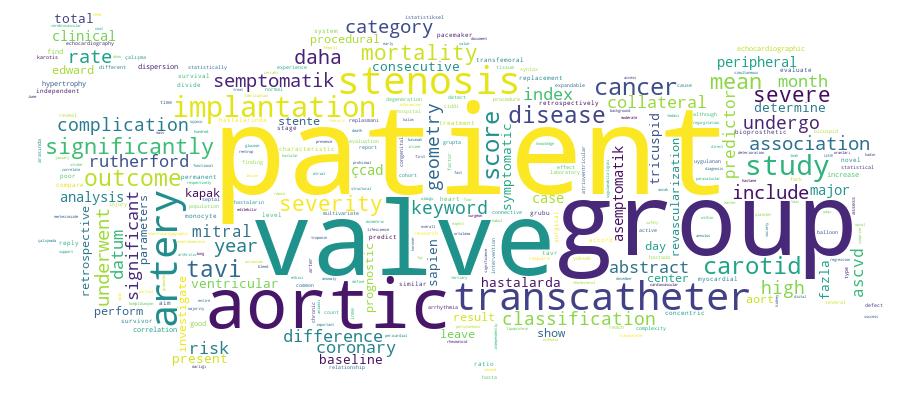
14 results
Scholarly Output Search Results
Now showing 1 - 10 of 14
Article Citation - WoS: 13Citation - Scopus: 13Evaluation of procedural and clinical outcomes of transcatheter aortic valve implantation: A single-center experience(Kare Publ, 2020) Karaduman, Bilge Duran; Kayaoğlu, Hüseyin Ayhan; Keleş, Telat; Bozkurt, EnginObjective: Transcatheter aortic valve implantation (TAVI) is an established alternative to surgical aortic valve replacement. Our study aimed to evaluate the implementation of TAVI at our large-volume center, having an all-comer patient population with short and long-term follow-ups. Methods: This retrospective, single-center analysis included 556 consecutive patients with symptomatic severe aortic stenosis (AS) who underwent TAVI between July 2011 and December 2019. Results: The mean age of the entire population was 77.6±7.9 years, and 54.9% were women. The Society of Thoracic Surgeons (STS) mean score of the cohort was 6.0%±3.5%. The balloon-expandable valve (Sapien XT, Sapien 3; Edwards Lifesciences, Irvine, California) was the most frequently used valves in this cohort (94.6%). Transfemoral access was used in 96.3% of patients. Implantation success was achieved in 96.6% of cases. During the TAVI procedure, 7.2% of patients required permanent pacemaker implantation, with 37.5% in the Lotus valve group needing the most permanent pacemakers. The mean length of hospital stay for the entire cohort was 4.5±2.3 days. Overall, 22 (3.9%) in-hospital deaths occurred before hospital discharge. The mean follow-up period was 15.1±14.9 months for all patients, and a significant improvement was noted in all echocardiographic parameters and functional capacity. Paravalvular leak (PVL) was documented in 18.9% patients, mild in 17.9%, and moderate in 1% at discharge. No cases with severe PVL, necessitating additional procedures. The multiple logistic regression analysis revealed that sex, STS score, baseline SYNTAX score, bicuspid valve morphology, common femoral artery diameter, and post-TAVI PVL were independent predictors of overall mortality. Conclusion: To our knowledge, this study, which is the largest single-center real-world experience of TAVI in Turkey, demonstrated low complication rates with favorable short- and mid-term THV performance in patients undergoing TAVI.Article Citation - WoS: 4Citation - Scopus: 4Semptomatik Çok Ciddi Aort Darlıklı Hastalarda Transkateter Aort Kapak İmplantasyonun Etkisi(Kare Publ, 2021) Karaduman, Bilge Duran; Ayhan, Hüseyin; Keles, Telat; Bozkurt, EnginAmaç: Aort darlığı (AD) ilerleyici bir hastalıktır ve tek tedavi seçeneği olan kapak replasmanı semptomatik hale geldikten sonra ve geri dönüşümsüz miyokardiyal hasar gelişmeden önce yapılmalıdır. Çok ciddi aort darlığı (ÇCAD) hastalarında cerrahi kapak replasmanı asemptomatik olsa bile önerilmektedir. Ancak ÇCAD hastalarında transkateter aortik kapak implantasyonunun (TAVI) etkisi hakkında ayrıntılı bir çalışma yoktur. Bu çalışmada amacımız, semptomatik ÇCAD hastalarında TAVI’nin uygulanabilirliğini ve güvenilirliğini göstermektir. Yöntemler: Merkezimizde TAVI uygulanan toplam 505 ardışık semptomatik AD hastası retrospektif olarak incelendi. Hastaların ortalama yaşı 77.8±7.6 yıl ve %56.4 kadın idi. Hastalar ÇCAD grubu (n: 134 hasta) ve yüksek gradyentli AD grubu (YGAD, n: 371 hasta) olarak iki gruba ayrıldı. Bulgular: ÇCAD grubunda daha fazla kadın cinsiyet, daha yüksek sol ventrikül ejeksiyon (SV) fraksiyonu, daha fazla küçük SV, hipertrofik SV, daha fazla normal koronerler ve daha az koroner arter hastalığı, bypas cerrahisi, miyokard enfarktüsü ve atriyal fibrilasyon öyküsü vardı. Predilatasyon ve Edwards SAPIEN 3 ÇCAD grubunda olarak daha az kullanıldı. VARC-2 kriterlerine göre majör komplikasyonlar ve hastane içi mortalitede (ÇCAD grubu; 5 hasta, YG AD grubu; 16 hasta, p: 0.769) istatistiksel fark saptanmadı. İki grup arasında Cox regresyon modeli sağ kalım eğrisinde ÇCAD lehine istatistiksel olarak anlamlı fark vardı (p<0.001). Sonuç: Bu çalışmamız ile semptomatik çok ciddi aort darlığında TAVI’nin kabul edilebilir komplikasyon ve daha yüksek sağ kalım oranları ile uygulanabilir ve güvenli olduğu gösterilmiştir. Hâlihazırda cerrahi kapak replasmanı endikasyonu olan asemptomatik ÇCAD hastalarında TAVI uygulanabilmesi için daha fazla randomize büyük çalışma gereklidir.Article Citation - WoS: 1Citation - Scopus: 1Left Ventricular Geometry as a Predictor of Carotid Artery Stenosis Severity in Patients Undergoing Carotid Artery Stenting(Wiley, 2020) Karaduman, Bilge Duran; Ayhan, Huseyin; Keles, Telat; Bozkurt, EnginBackground and Aim Cerebrovascular diseases are the second most common cause of death worldwide. Moderate and severe carotid artery stenosis causes nearly 10% of all strokes. LV geometry is a familiar prognostic and diagnostic factor in several populations; yet, data on its role in carotid artery stenosis are unknown. In our study, we investigated the prognostic value of LV geometry in predicting carotid artery stenosis severity in patients undergoing carotid artery stenting. Methods Patients who underwent carotid artery stenting between January 2012 and January 2016 at our tertiary care center were evaluated retrospectively. Two hundred fifty-five patients who underwent carotid artery stenting were included in the study. Accessible echocardiographic documentation of ninety-eight patients was accessed and evaluated. Results LV normal geometry was detected in 37 (37.7%) of the 98 carotid artery stenting (CAS) patients, concentric hypertrophy in 13 (13.2%), eccentric hypertrophy in 9 (9.1%), and concentric remodeling in 39 (39.7%). By a majority, distal filter was used in normal geometry and eccentric hypertrophy groups (82.9% vs 100%, P: .017). Considering the relationship between carotid artery stenosis severity and LV geometry, we determined that the stenosis severity was statistically significantly higher in the concentric hypertrophy group (p:0.012). However, although no complications were detected in the concentric hypertrophy group, it did not reach statistical significance between the groups (P: .058). LVMi and as expected, Doppler velocity showed a significant correlation with stenosis severity (r = .23 vs .54; P: .021, <.001, respectively). Conclusion Echocardiographic evaluation of LV geometry provided prognostic information in the development of carotid artery stenosis. Abnormal LV geometry is an independent predictor in detecting the severity of carotid artery stenosis undergoing carotid artery stenting.Article Citation - WoS: 1Citation - Scopus: 1Karotis Arter Stentlemesinin Etkinliği ve Güvenliği: Tek Merkez Deneyimi(Kare Publ, 2020) Karaduman, Bilge Duran; Karaduman, Bilge Duran; Ayhan, Hüseyin; Ayhan, Hüseyin; Keles, Telat; Bozkurt, Engin; Karaduman, Bilge Duran; Ayhan, HüseyinAmaç: İnternal karotis arterdeki orta ve şiddetli darlıklar tüm inmelerin %10–15’ine neden olmaktadır. Bu çalışmada, üçüncü basamak bir referans merkezde karotis arter stentlemesinin (KAS) güvenliğini ve kısa dönem etkinliğini değerlendirmeyi amaçladık. Yöntemler: Üçüncü basamak merkezimizde Ocak 2017 ile Mayıs 2018 arasında KAS uygulanan hastalar geriye dönük olarak değerlendirildi. KAS uygulanan 145 hasta çalışmaya dahil edildi. Bulgular: Hastaların ortalama yaşı 70.1±8.6 yıl idi ve tüm grubun %75.2’si erkek olup %37.9’unda hipertansiyon mevcuttu. Hastaların 81’i (%55.9) semptomatik, 64’ü (%44.1) asemptomatik olarak gruplandırıldı. Semptomatik hastalarda koroner girişimler daha çok KAS sonrası (%38.9) yapılırken, asemptomatik grupta ise KAS öncesi (%25.9) ve sonrasında (%25.9) benzer oranlarda yapıldığı görüldü ama gruplar arasında istatistiksel fark yoktu. Semptomatik hastalarda (%59.2), asemptomatik hastalarda (%78.7) olduğu gibi distal emboli koruyucu cihaz (EKC), proksimal EKC’ye göre daha fazla kullanıldı. Ancak proksimal EKC, semptomatik hastalarda asemptomatik hastalara kıyasla anlamlı olarak daha fazla kullanıldı. Hastane içi ölüm görülmedi ve tüm popülasyonda 5 (%3.4) hastada inme veya geçici iskemik atak (GİA) gözlendi. Asemptomatik grupta GİA veya inme gözlenmedi, semptomatik grupta 2 hastada (%2.4) inme ve 3 hastada (%3.7) GİA görüldü. Sonuç: Bu çalışma kabul edilebilir komplikasyon oranları ile KAS’ın güvenirliğini ve uygulanabilirliğini ortaya koymuştur. KAS prosedürü, deneyimli girişimciler tarafından optimal tıbbi tedavi altında, agresif risk modifikasyonu ile EKC kullanılarak, uygun hastalarda en az komplikasyonla gerçekleştirilmelidir.Article Citation - Scopus: 1Stenotic Double-Orifice Mitral Valve After Surgical Repaired Partial Atrioventricular Septal Defect(Wiley, 2020) Duran Karaduman, Bilge; Torun, Ayse Nur; Ayhan, Huseyin; Keles, Telat; Bozkurt, EnginDouble-orifice mitral valve (DOMV) is an uncommon congenital anomaly account for 1% of congenital heart disease. However, accurate diagnosis and evaluation of valve stenosis or regurgitation and other concomitant congenital anomalies due to DOMV are required to obtain suitable treatment. Two- and three-dimensional echocardiography can contribute valuable functional and anatomic information that can support to reach this goal. Here, we present a case of complete bridge-type DOMV that causes mitral stenosis after surgical repair of the partial atrioventricular septal defect in childhood.Article Citation - WoS: 2Citation - Scopus: 2Transcatheter valve-in-valve implantation Edwards Sapien XT in a direct flow valve after early degeneration(Wiley-hindawi, 2020) Duran Karaduman, Bilge; Ayhan, Huseyin; Bulguroglu, Serkan; Keles, Telat; Bozkurt, EnginIn recent years, the use of bioprosthetic valve (BPV) has increased significantly with both surgical aortic valve replacement (SAVR) and transcatheter aortic valve implantation (TAVI) due to reasons such as the advantage of not using anticoagulants. Nevertheless, major disadvantage of all BPV is the risk of early structural valve deterioration, leading to valve dysfunction, and requires reoperation, which significantly increases the risk of mortality or major morbidity especially after SAVR. There are a limited number of TAV-in-TAV case reports due to TAVI BPV degeneration. In our knowledge, this is the second report of TAV-in-TAV implantation wherein a previously implanted transfemoral 25-mm nonmetallic Direct Flow SVD valve treated with ViV TAVI via Edwards Sapien XT.Article Citation - WoS: 2Citation - Scopus: 3Predictors and Prognostic Implications of Myocardial Injury After Transcatheter Aortic Valve Replacement(Texas Heart inst, 2022) Guney, Murat Can; Keles, Telat; Karaduman, Bilge Duran; Ayhan, Huseyin; Suygun, Hakan; Kahyaoglu, Muzaffer; Bozkurt, EnginMyocardial injury (MI) is not unusual after transcatheter aortic valve replacement (TAVR). To determine precipitating factors and prognostic outcomes of MI after TAVR, we retrospectively investigated relationships between MI after TAVR and aortic root dimensions, baseline patient characteristics, echocardiographic findings, and procedural features. Of 474 patients who underwent transfemoral TAVR for severe aortic stenosis in our tertiary center from June 2011 through June 2018, 188 (mean age, 77.7 +/- 7.7 yr; 96 women [51%]) met the study inclusion criteria. Patients were divided into postprocedural MI (PMI) (n=74) and no-PMI (n=114) groups, in accordance with high-sensitivity troponin T levels. We found that MI risk was associated with older age (odds ratio [OR]=1.054; 95% CI, 1.013-1.098; P=0.01), transcatheter heart valve type (OR=10.207; 95% CI, 2.861-36.463; P=0.001), distances from the aortic annulus to the right coronary artery ostium (OR=0.853; 95% CI, 0.731-0.995; P=0.04) and the left main coronary artery ostium (OR=0.747; 95% CI, 0.616-0.906; P=0.003), and baseline glomerular filtration rate (OR=0.985; 95% CI, 0.970-1.000; P= 0.04). Moreover, the PMI group had a longer time to hospital discharge (P=0.001) and a higher permanent pacemaker implantation rate (P=0.04) than did the noPMI group. Our findings may enable better estimation of which patients are at higher risk of MI after TAVR and thus improve the planning and course of clinical care.Article Association Between Rutherford Classification and Cha2ds2< Chads2 and Ascvd Scores in Peripheral Artery Disease Patients(Bmc, 2020) Karaduman, Bilge Duran; Ayhan, Huseyin; Keles, Telat; Bozkurt, EnginBackground and Aim: The classification system is important in assessing the severity of Peripheral Artery Disease (PAD) and making the treatment decision. However, classification systems may not be sufficient and scoring systems developed to predict cardiovascular and cerebrovascular events can also be useful to assess the severity of PAD. In this study, our aim was to investigate the association of the Rutherford classification and CHADS(2), CHA(2)DS(2)-VASc and ASCVD scores in PAD patients. Method: A total of 65 consecutive patients with PAD (males 92.3%, mean age 63.0 +/- 9.2 years), who underwent percutaneous peripheral intervention were included in our retrospective study. Results: There were 16 patients in Category 2, 31 patients in Category 3, and 10 patients in Category 4 and eight patients in Category 5. The CHADS(2), CHA(2)DS(2)-VASc and ASCVD scores were found to be significantly different among the Rutherford categories and between each other. From Category 1 to 5, CHADS(2), CHA(2)DS(2)-VASc and ASCVD scores were significantly increased. When we grouped the scores as CHADS 2 <2 and <2 and CHA(2)DS(2)-VASc<4 and >= 4, it was determined that as the category increased the score group also increased. There was significantly correlation between CHADS(2), CHA(2)DS(2)-VASc and ASCVD scores with the Rutherford categories in correlation analyses. Conclusion: As far as we know, in this study which is the first study about the association of Rutherford classification and scoring systems, the major finding of the present study is that the CHADS(2), CHA(2)DS(2)-VASc and ASCVD scores was independently correlated with the severity of Rutherford Category in patients with PAD. (C) 2020 Association for Research into Arterial Structure and Physiology. Publishing services by Atlantis Press International B.V.Article Citation - WoS: 3Citation - Scopus: 2Transcatheter Aortic Valve Implantation in Patients With Connective Tissue Disease(Taiwan Soc Cardiology, 2021) Ayhan, Huseyin; Karaduman, Bilge Duran; Keles, Telat; Bozkurt, EnginBackground: There is still no consensus on the treatment of patients with connective tissue disease (CTD) with severe symptomatic aortic stenosis (AS). The aim of this study was to evaluate the feasibility and safety of transcatheter aortic valve implantation (TAVI) in patients with CTD. Methods: Five hundred and fifty consecutive symptomatic severe AS patients who underwent TAVI between 2011 and 2019 were included in this retrospective study, of whom 14 had CTD. Follow-up was performed 30 days, 6 months, and 1 year after the procedure. Results: Of the 14 (2.5%) patients who had CTD, most had rheumatoid arthritis (n = 10), followed by lupus erythematosus (n = 2), scleroderma (n = 1) and mixed (n = 1) CTD. The mean age was 77.6 +/- 7.9 years, and there was no statistical difference between the CTD and no-CTD groups. In addition, significantly more of the CTD patients (85.7%) were female compared to the no-CTD group (p = 0.018). None of the patients in the CTD group had acute kidney injury, stroke, major bleeding, or pericardial effusion. However, significantly more patients in the CTD group (n = 4) needed permanent pacemaker implantation than in the no-CTD group (p = 0.008). There were no significant differences between the two groups in terms of mean discharge time (CTD 4.6 +/- 2.0, no-CTD 4.5 +/- 2.3 days, p = 0.926) and in-hospital mortality [CTD 1 (7.1%), no-CTD 21 (3.9%); p = 0.542]. Conclusions: In this study, we presented the results of TAVI in patients with and without CTD. The TAVI procedure had similar mid-term outcomes in the two groups, and the CTD group had numerically lower rates of major complications at the cost of a higher incidence of pacemaker implantation.Article Citation - WoS: 4Citation - Scopus: 4Clinical Outcomes After Transcatheter Aortic Valve Implantation in Active Cancer Patients and Cancer Survivors(Baycinar Medical Publ-baycinar Tibbi Yayincilik, 2021) Karaduman, Bilge Duran; Ayhan, Huseyin; Keles, Telat; Bozkurt, EnginBackground: In this study, we aimed to evaluate the clinical characteristics, perioperative, and mid-term outcomes of patients with severe symptomatic aortic stenosis and active cancer disease and cancer survivors undergoing transcatheter aortic valve implantation. Methods: Between December 2011 and March 2019, a total of 550 patients (248 males, 302 females; mean age: 77.6 +/- 7.9 years; range, 46 to 103 years) who underwent transcatheter aortic valve implantation for severe symptomatic aortic stenosis in our center were retrospectively analyzed. Baseline demographic characteristics, cancer type, laboratory data, procedural data, and outcome data of the patients were collected. The primary outcome measure was all-cause mortality at 30 days and every six months up to maximally available follow-up. Follow-up was performed at 30 days, six months, and 12 months after the procedure and annually thereafter. Results: Of the patients, 36 had a cancer diagnosis-active (n=10) or cured (n=26). The most common types of cancer were colorectal (16.6%), prostate (13.8%), leukemia (11.1%), and bladder (11.1%) cancers. Post-procedural complication rates were similar between the two groups. No mortality was observed in the cancer group at one month of follow-up. During follow-up, seven patients died within one year due to non-cardiac reasons. Although mortality at one year was higher in cancer patients, it did not reach statistical significance (23.3% vs. 11.6%, respectively; p=0.061). The estimated cumulative survival rate was 71.0% in the non-cancer group and 58.3% in the cancer group. The multivariate Cox regression analysis revealed that cancer was independently associated with cumulative mortality after adjusting for age, sex, body mass index, and atrial fibrillation (p=0.008). Conclusion: Our study results show that transcatheter aortic valve implantation is safe and feasible in active cancer patients and cancer survivors with similar short-term and mid-term mortality and procedure-related complication rates, compared to non-cancer patients.
