Karaduman, Bilge Duran

Loading...
Profile Picture
Name Variants
Duran Karaduman, Bilge
Karaduman, Bilge Duran
K.,Bilge Duran
B., Karaduman
K., Bilge Duran
B.D.Karaduman
Bilge Duran, Karaduman
Karaduman,B.D.
B.,Karaduman
Job Title
Doçent Doktor
Email Address
bilge.durankaraduman@atilim.edu.tr
Main Affiliation
Internal Medical Sciences
Status
Former Staff
Website
ORCID ID
Scopus Author ID
Turkish CoHE Profile ID
Google Scholar ID
WoS Researcher ID

Sustainable Development Goals

NO POVERTY1
NO POVERTY
0
Research Products
ZERO HUNGER2
ZERO HUNGER
0
Research Products
GOOD HEALTH AND WELL-BEING3
GOOD HEALTH AND WELL-BEING
10
Research Products
QUALITY EDUCATION4
QUALITY EDUCATION
0
Research Products
GENDER EQUALITY5
GENDER EQUALITY
0
Research Products
CLEAN WATER AND SANITATION6
CLEAN WATER AND SANITATION
0
Research Products
AFFORDABLE AND CLEAN ENERGY7
AFFORDABLE AND CLEAN ENERGY
0
Research Products
DECENT WORK AND ECONOMIC GROWTH8
DECENT WORK AND ECONOMIC GROWTH
0
Research Products
INDUSTRY, INNOVATION AND INFRASTRUCTURE9
INDUSTRY, INNOVATION AND INFRASTRUCTURE
0
Research Products
REDUCED INEQUALITIES10
REDUCED INEQUALITIES
0
Research Products
SUSTAINABLE CITIES AND COMMUNITIES11
SUSTAINABLE CITIES AND COMMUNITIES
0
Research Products
RESPONSIBLE CONSUMPTION AND PRODUCTION12
RESPONSIBLE CONSUMPTION AND PRODUCTION
0
Research Products
CLIMATE ACTION13
CLIMATE ACTION
0
Research Products
LIFE BELOW WATER14
LIFE BELOW WATER
0
Research Products
LIFE ON LAND15
LIFE ON LAND
0
Research Products
PEACE, JUSTICE AND STRONG INSTITUTIONS16
PEACE, JUSTICE AND STRONG INSTITUTIONS
0
Research Products
PARTNERSHIPS FOR THE GOALS17
PARTNERSHIPS FOR THE GOALS
0
Research Products
This researcher does not have a Scopus ID.
This researcher does not have a WoS ID.
Scholarly Output

25

Articles

14

Views / Downloads

90/0

Supervised MSc Theses

0

Supervised PhD Theses

0

WoS Citation Count

78

Scopus Citation Count

88

Patents

0

Projects

0

WoS Citations per Publication

3.12

Scopus Citations per Publication

3.52

Open Access Source

17

Supervised Theses

0

JournalCount
The Anatolian Journal of Cardiology6
Echocardiography2
Turkish Journal of Medical Sciences2
Türk Kardiyoloji Derneği Arşivi2
International Journal of Cardiology1
Current Page: 1 / 3

Scopus Quartile Distribution

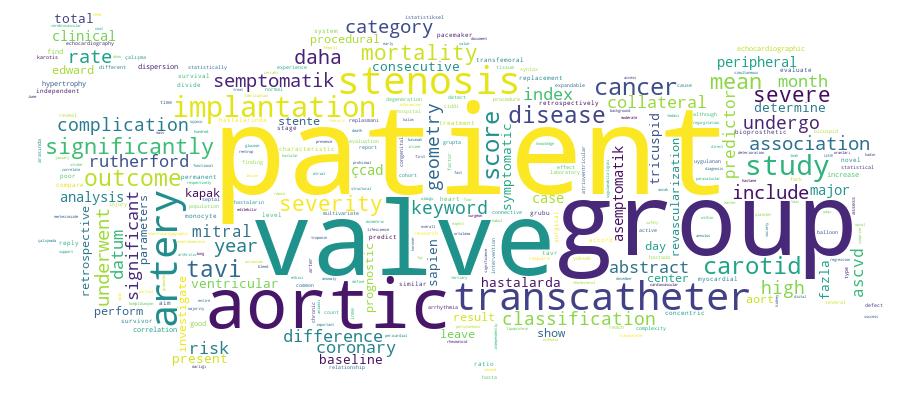
Competency Cloud

GCRIS Competency Cloud

Scholarly Output Search Results

Now showing 1 - 2 of 2
  • Article
    Citation - WoS: 3
    Citation - Scopus: 2
    Transcatheter Aortic Valve Implantation in Patients With Connective Tissue Disease
    (Taiwan Soc Cardiology, 2021) Ayhan, Huseyin; Karaduman, Bilge Duran; Keles, Telat; Bozkurt, Engin
    Background: There is still no consensus on the treatment of patients with connective tissue disease (CTD) with severe symptomatic aortic stenosis (AS). The aim of this study was to evaluate the feasibility and safety of transcatheter aortic valve implantation (TAVI) in patients with CTD. Methods: Five hundred and fifty consecutive symptomatic severe AS patients who underwent TAVI between 2011 and 2019 were included in this retrospective study, of whom 14 had CTD. Follow-up was performed 30 days, 6 months, and 1 year after the procedure. Results: Of the 14 (2.5%) patients who had CTD, most had rheumatoid arthritis (n = 10), followed by lupus erythematosus (n = 2), scleroderma (n = 1) and mixed (n = 1) CTD. The mean age was 77.6 +/- 7.9 years, and there was no statistical difference between the CTD and no-CTD groups. In addition, significantly more of the CTD patients (85.7%) were female compared to the no-CTD group (p = 0.018). None of the patients in the CTD group had acute kidney injury, stroke, major bleeding, or pericardial effusion. However, significantly more patients in the CTD group (n = 4) needed permanent pacemaker implantation than in the no-CTD group (p = 0.008). There were no significant differences between the two groups in terms of mean discharge time (CTD 4.6 +/- 2.0, no-CTD 4.5 +/- 2.3 days, p = 0.926) and in-hospital mortality [CTD 1 (7.1%), no-CTD 21 (3.9%); p = 0.542]. Conclusions: In this study, we presented the results of TAVI in patients with and without CTD. The TAVI procedure had similar mid-term outcomes in the two groups, and the CTD group had numerically lower rates of major complications at the cost of a higher incidence of pacemaker implantation.
  • Article
    Citation - WoS: 4
    Citation - Scopus: 4
    Clinical Outcomes After Transcatheter Aortic Valve Implantation in Active Cancer Patients and Cancer Survivors
    (Baycinar Medical Publ-baycinar Tibbi Yayincilik, 2021) Karaduman, Bilge Duran; Ayhan, Huseyin; Keles, Telat; Bozkurt, Engin
    Background: In this study, we aimed to evaluate the clinical characteristics, perioperative, and mid-term outcomes of patients with severe symptomatic aortic stenosis and active cancer disease and cancer survivors undergoing transcatheter aortic valve implantation. Methods: Between December 2011 and March 2019, a total of 550 patients (248 males, 302 females; mean age: 77.6 +/- 7.9 years; range, 46 to 103 years) who underwent transcatheter aortic valve implantation for severe symptomatic aortic stenosis in our center were retrospectively analyzed. Baseline demographic characteristics, cancer type, laboratory data, procedural data, and outcome data of the patients were collected. The primary outcome measure was all-cause mortality at 30 days and every six months up to maximally available follow-up. Follow-up was performed at 30 days, six months, and 12 months after the procedure and annually thereafter. Results: Of the patients, 36 had a cancer diagnosis-active (n=10) or cured (n=26). The most common types of cancer were colorectal (16.6%), prostate (13.8%), leukemia (11.1%), and bladder (11.1%) cancers. Post-procedural complication rates were similar between the two groups. No mortality was observed in the cancer group at one month of follow-up. During follow-up, seven patients died within one year due to non-cardiac reasons. Although mortality at one year was higher in cancer patients, it did not reach statistical significance (23.3% vs. 11.6%, respectively; p=0.061). The estimated cumulative survival rate was 71.0% in the non-cancer group and 58.3% in the cancer group. The multivariate Cox regression analysis revealed that cancer was independently associated with cumulative mortality after adjusting for age, sex, body mass index, and atrial fibrillation (p=0.008). Conclusion: Our study results show that transcatheter aortic valve implantation is safe and feasible in active cancer patients and cancer survivors with similar short-term and mid-term mortality and procedure-related complication rates, compared to non-cancer patients.