Demir, Canan

Loading...
Profile Picture
Name Variants
Demir, Canan Çiçek
Demir,C.
D., Canan
Demir, C. C.
Demir, Canan C.
C., Demir
C.,Demir
Demir C.
Canan, Demir
Demir, C. Cicek
D.,Canan
Demir, Canan
Demir, Canan Cicek
Demir, C.
Job Title
Doktor Öğretim Üyesi
Email Address
canan.demir@atilim.edu.tr
Main Affiliation
Internal Medical Sciences
Status
Website
ORCID ID
Scopus Author ID
Turkish CoHE Profile ID
Google Scholar ID
WoS Researcher ID

Sustainable Development Goals

2

ZERO HUNGER
ZERO HUNGER Logo

0

Research Products

11

SUSTAINABLE CITIES AND COMMUNITIES
SUSTAINABLE CITIES AND COMMUNITIES Logo

0

Research Products

14

LIFE BELOW WATER
LIFE BELOW WATER Logo

0

Research Products

6

CLEAN WATER AND SANITATION
CLEAN WATER AND SANITATION Logo

0

Research Products

1

NO POVERTY
NO POVERTY Logo

0

Research Products

5

GENDER EQUALITY
GENDER EQUALITY Logo

0

Research Products

9

INDUSTRY, INNOVATION AND INFRASTRUCTURE
INDUSTRY, INNOVATION AND INFRASTRUCTURE Logo

0

Research Products

16

PEACE, JUSTICE AND STRONG INSTITUTIONS
PEACE, JUSTICE AND STRONG INSTITUTIONS Logo

0

Research Products

17

PARTNERSHIPS FOR THE GOALS
PARTNERSHIPS FOR THE GOALS Logo

0

Research Products

15

LIFE ON LAND
LIFE ON LAND Logo

0

Research Products

10

REDUCED INEQUALITIES
REDUCED INEQUALITIES Logo

0

Research Products

7

AFFORDABLE AND CLEAN ENERGY
AFFORDABLE AND CLEAN ENERGY Logo

0

Research Products

8

DECENT WORK AND ECONOMIC GROWTH
DECENT WORK AND ECONOMIC GROWTH Logo

0

Research Products

4

QUALITY EDUCATION
QUALITY EDUCATION Logo

0

Research Products

12

RESPONSIBLE CONSUMPTION AND PRODUCTION
RESPONSIBLE CONSUMPTION AND PRODUCTION Logo

0

Research Products

3

GOOD HEALTH AND WELL-BEING
GOOD HEALTH AND WELL-BEING Logo

4

Research Products

13

CLIMATE ACTION
CLIMATE ACTION Logo

0

Research Products
Documents

14

Citations

130

h-index

6

Documents

16

Citations

117

Scholarly Output

7

Articles

6

Views / Downloads

35/0

Supervised MSc Theses

1

Supervised PhD Theses

0

WoS Citation Count

17

Scopus Citation Count

13

WoS h-index

3

Scopus h-index

2

Patents

0

Projects

0

WoS Citations per Publication

2.43

Scopus Citations per Publication

1.86

Open Access Source

5

Supervised Theses

1

Google Analytics Visitor Traffic

JournalCount
Flora İnfeksiyon Hastalıkları ve Klinik Mikrobiyoloji Dergisi1
Gülhane Tıp Dergisi1
International Journal of General Medicine1
International Urology and Nephrology1
Medicine Science1
Current Page: 1 / 2

Scopus Quartile Distribution

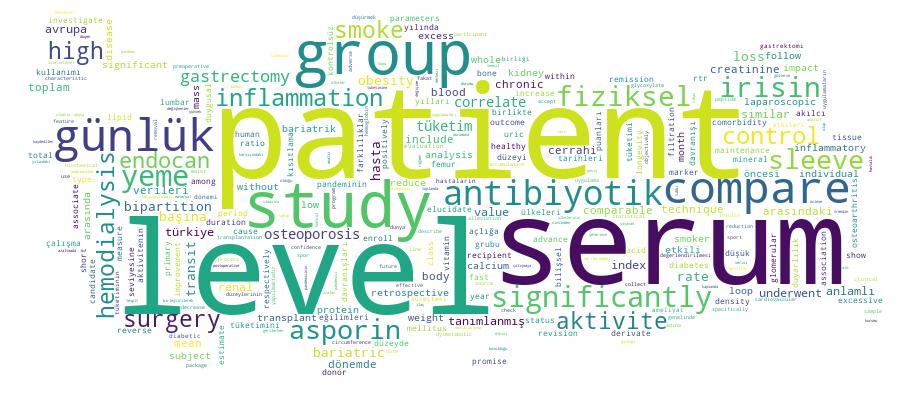
Competency Cloud

GCRIS Competency Cloud

Scholarly Output Search Results

Now showing 1 - 2 of 2
  • Article
    Citation - WoS: 7
    Citation - Scopus: 8
    Laparoscopic Sleeve Gastrectomy With Transit Loop Bipartition and Transit Bipartition in Type 2 Diabetic Patients With Obesity: a Retrospective Analysis
    (Lippincott Williams & Wilkins, 2023) Demir, Canan; Arslan, Ergin; Sariyildiz, Guelcin; Anil, Cueneyd; Banli, Oktay
    Aim:We aimed to compare 1-year postoperative results of patients with obesity and type 2 diabetes mellitus (T2DM) who underwent laparoscopic sleeve gastrectomy with transit bipartition (LSG-TB) and transit loop bipartition (LSG-TLB) and mini gastric bypass (MGB). Patients and Methods:This is a retrospective comparison of 2 novel bariatric surgery techniques with MGB. Primary outcome measure of the study was a rate of T2DM remission. Secondary outcomes included excess body mass index (BMI) loss, improvement in hepatosteatosis, and duration of operation. Revision surgery needs were also assessed. Results:Overall, 32 patients underwent the LSG-TLB, 15 underwent LSG-TB, and 50 underwent MGB. Mean age and sex distribution were comparable for all groups. Presurgical BMI was similar in MGB and LSG + TB groups, whereas LSG + TLB group had significantly lower BMI values compared with the MGB group. In both groups, BMI values reduced significantly compared with respective baseline values. Excess BMI loss was significantly higher in patients who underwent LSG-TLB compared with patients treated with LSG-TB and MGB. Bariatric surgery procedures lasted shorter in LSG-TLB than in LSG-TB. However, the shortest of all was MGB. The remission of T2DM rates were 71% and 73.3% in LSG-TLB and LSG-TB groups, respectively (P > 9.999). The rate of revision surgeries was comparable in both groups. Conclusion:In conclusion, LSG-TLB took less time and provided significantly higher excess BMI loss compared with LSG-TB. T2DM remission and improvement rates were similar in both groups. LSG-TLB seemed like a promising bariatric surgery technique in patients with obesity and T2DM.
  • Article
    Citation - WoS: 5
    The Evaluation of Serum Endocan, Interleukin-6, and Crp Levels Following Sleeve Gastrectomy
    (Dove Medical Press Ltd, 2023) Sariyildiz, Gulcin Turkmen; Demir, Canan Cicek; Demir, Mehmet Emin; Arslan, Aykut Ilker; Banli, Oktay; Dursun, Ali Dogan
    Background: The excessive accumulation of fat tissue in obesity is the source of chronic low-level inflammation and causes future dysmetabolic and cardiovascular disorders. Removal of this excessive fat tissue with the aid of bariatric surgery (BS) techniques, such as sleeve gastrectomy, may reverse adverse inflammatory outcomes. The aim of this study is to investigate the impact of sleeve gastrectomy on inflammatory markers, specifically endocan, IL-6, and CRP, in individuals with obesity.Methods: Thirty-two patients with class 3 obesity and class 2 obesity + comorbidities were enrolled in the study. Clinical characteristics including age, comorbidity, body mass index (BMI), waist, and hip circumferences of the participants were noted before and 3 months after sleeve gastrectomy. Blood samples were collected during those periods to assess biochemical features such as serum endocan, interleukin-6 (IL-6), C-reactive peptide, fasting insulin, glycosylated hemoglobin A1c levels, and lipid panel. A statistical package program was used for the analysis of those parameters, and p<0.05 was accepted as significant at a 95.0% confidence interval.Results: BMI reduced from 43.55 +/- 6.78 to 36.16 +/- 6.14 kg/m(2) within 3 months following BS (p<0.001). Preoperative serum endocan, IL-6, and CRP levels were correlated with BMI, and in line with BMI reduction, their serum levels decreased after BS (p<0.05). HOMA-IR also reduced after BS, and both in the pre and post-BS periods correlated with BMI, IL-6, endocan, and CRP levels (p<0.05). The mean total body weight loss was 20.4% within 3 months post-BS.Conclusion: BS techniques are effective in weight loss and reversing the inflammatory processes caused by obesity. Serum endocan, IL-6, and CRP levels are promising markers for describing obesity-related inflammation and objectively checking the alleviation of inflammation following BS.