Gençbaş, Dercan

Loading...
Profile Picture
Name Variants
G.,Dercan
Gencbas,D.
Gencbas, Dercan
Dercan, Gencbas
D.,Gencbas
Gençbaş,D.
D.,Gençbaş
D., Gencbas
G., Dercan
Dercan, Gençbaş
Gençbaş, Dercan
Job Title
Doktor Öğretim Üyesi
Email Address
dercan.gencbas@atilim.edu.tr
Main Affiliation
Nursing
Status
Former Staff
Website
ORCID ID
Scopus Author ID
Turkish CoHE Profile ID
Google Scholar ID
WoS Researcher ID

Sustainable Development Goals

NO POVERTY1
NO POVERTY
0
Research Products
ZERO HUNGER2
ZERO HUNGER
0
Research Products
GOOD HEALTH AND WELL-BEING3
GOOD HEALTH AND WELL-BEING
1
Research Products
QUALITY EDUCATION4
QUALITY EDUCATION
0
Research Products
GENDER EQUALITY5
GENDER EQUALITY
0
Research Products
CLEAN WATER AND SANITATION6
CLEAN WATER AND SANITATION
0
Research Products
AFFORDABLE AND CLEAN ENERGY7
AFFORDABLE AND CLEAN ENERGY
1
Research Products
DECENT WORK AND ECONOMIC GROWTH8
DECENT WORK AND ECONOMIC GROWTH
0
Research Products
INDUSTRY, INNOVATION AND INFRASTRUCTURE9
INDUSTRY, INNOVATION AND INFRASTRUCTURE
0
Research Products
REDUCED INEQUALITIES10
REDUCED INEQUALITIES
0
Research Products
SUSTAINABLE CITIES AND COMMUNITIES11
SUSTAINABLE CITIES AND COMMUNITIES
0
Research Products
RESPONSIBLE CONSUMPTION AND PRODUCTION12
RESPONSIBLE CONSUMPTION AND PRODUCTION
0
Research Products
CLIMATE ACTION13
CLIMATE ACTION
0
Research Products
LIFE BELOW WATER14
LIFE BELOW WATER
0
Research Products
LIFE ON LAND15
LIFE ON LAND
0
Research Products
PEACE, JUSTICE AND STRONG INSTITUTIONS16
PEACE, JUSTICE AND STRONG INSTITUTIONS
0
Research Products
PARTNERSHIPS FOR THE GOALS17
PARTNERSHIPS FOR THE GOALS
0
Research Products
This researcher does not have a Scopus ID.
This researcher does not have a WoS ID.
Scholarly Output

10

Articles

10

Views / Downloads

16/0

Supervised MSc Theses

0

Supervised PhD Theses

0

WoS Citation Count

48

Scopus Citation Count

53

Patents

0

Projects

0

WoS Citations per Publication

4.80

Scopus Citations per Publication

5.30

Open Access Source

7

Supervised Theses

0

JournalCount
International Journal of Nursing Knowledge2
Sağlık ve Toplum2
Florence Nightingale Hemşirelik Dergisi1
Gulhane Medical Journal1
Acıbadem Üniversitesi Sağlık Bilimleri Dergisi1
Current Page: 1 / 2

Scopus Quartile Distribution

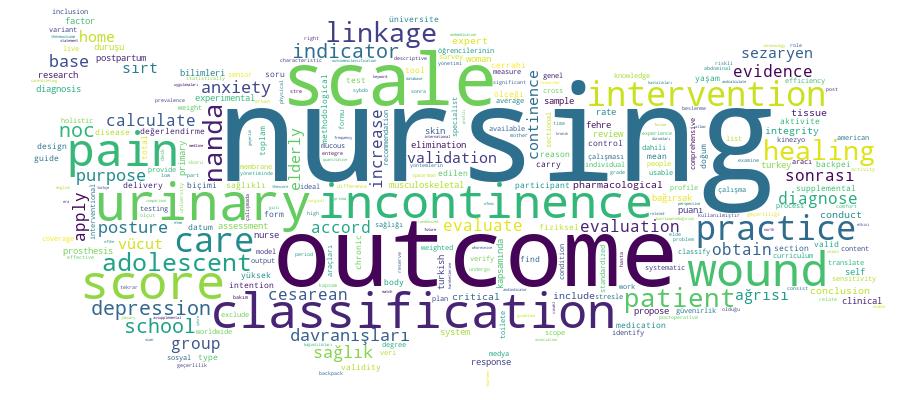
Competency Cloud

GCRIS Competency Cloud

Scholarly Output Search Results

Now showing 1 - 3 of 3
  • Article
    Citation - WoS: 18
    Citation - Scopus: 21
    Musculoskeletal Pain, Related Factors, and Posture Profiles Among Adolescents: a Cross-Sectional Study From Turkey
    (Elsevier Science inc, 2021) Ozdemir, Serpil; Gencbas, Dercan; Tosun, Betul; Bebis, Hatice; Sinan, Ozlem
    Purpose: The aim of the study was to evaluate musculoskeletal pain due to mechanical reasons and related risk factors in adolescents and to define posture profiles of adolescents. Design: A cross-sectional study. Methods: The study was conducted with 2221 adolescents between February 2015 and May 2015. The questionnaire used to collect data consisted of three parts: (1) descriptive characteristics of the participants, (2) pain assessment of 14 parts of the body, and (3) Back Pain and Body Posture Evaluation Instrument (BackPEI). Results: The prevalence of low back pain among the participants was 73.3% (n = 1,343), while the prevalence of back pain was 68.4% (n = 1,254). The participants attributed their pain to their poor sitting postures at school (38.1%, n = 847) and carrying school backpacks (84.1%, n = 1,713). There was a statistically significant difference in the physical activities of adolescents and the BackPEI score (z = 4.40; p = .001). Posture factors of the BackPEI score increased while school desk comfort score increased (Spearman's rho = 0.148; p = .001), but it decreased while the school grades of the adolescents increased (Spearman's rho [rho] = -0.161; p = .001). Conclusions: According to this study, body posture was related to musculoskeletal pain and was correlated with physical activities, school desk comfort, and school grades of the adolescents. It is suggested that correct posture and ergonomic positions should be taught to adolescents when using computers, carrying school backpacks, and sitting in school chairs to prevent musculoskeletal pain. (C) 2020 American Society for Pain Management Nursing. Published by Elsevier Inc. All rights reserved.
  • Article
    Citation - WoS: 23
    Citation - Scopus: 25
    Evaluation of the Efficiency of the Nursing Care Plan Applied Using Nanda, Noc, and Nic Linkages To Elderly Women With Incontinence Living in a Nursing Home: a Randomized Controlled Study
    (Wiley, 2018) Gencbas, Dercan; Bebis, Hatice; Cicek, Hatice
    PURPOSE: Evaluate the efficiency of the nursing care plan, applied with the use of NANDA-I, NOC, and NIC (NNN) linkages, for elderly women with incontinence who live in nursing homes. METHODS: A randomized controlled experimental design was applied. NNN linkages were prepared and applied for 12 weeks in an experimental group. NOC scales were evaluated again for two groups. RESULTS: A 0.5 NOC point change targeted in all elderly in the experimental group were provided between pretest-posttest scores. The experimental group had higher life quality and lower incontinence severity/symptoms than the control group. CONCLUSION: It is important that NNN linkages effective for solving the problems are used in different groups and with larger samples to create further evidence linking NNN.
  • Review
    Citation - WoS: 5
    Noc/Nic Linkages To Nanda-I for Continence Care of Elderly People With Urinary Incontinence in Nursing Homes: a Systematic Review
    (Istanbul Univ-cerrahapasa, 2019) Bebis, Hatice; Moorhead, Sue; Gencbas, Dercan; Ozdemir, Serpil; Seven, Memnun
    Aim: The aim of this study was to review interventional studies conducted by nurses about elderly people with urinary incontinence in nursing homes and to match the results to standardized nursing terminology using the Nursing Interventions Classification and the Nursing Outcomes Classification Linkages to the NANDA-I diagnoses guidelines. Method: A systematic review of quantitative intervention studies was conducted using the PRISMA statement as a guide. The interventional research in English was scanned using the MEDLINE and CINAHL databases from January 2005 to May 2015. Fourteen studies that had at least one nurse researcher were conducted in nursing homes, excluding surgical and pharmacological interventions. The Nursing Outcome Classification and Nursing Intervention Classification Linkages to NANDA-I diagnoses and the Clinical Conditions Part II-U List were used as a guide to select North American Nursing Diagnosis Association International nursing diagnoses, Nursing Outcome Classification Scales, and Nursing Interventions from the data. Results: We found the frequency of use of various NANDA-I diagnoses, Nursing Interventions, and Nursing Outcomes based on the Nursing Outcomes Classification and Nursing Interventions Classification Linkages to NANDA-I diagnoses and the Clinical Conditions List for incontinence. Conclusion: Using the Nursing Outcomes Classification and Nursing Interventions Classification Linkages to NANDA-I diagnoses guide may provide new nursing perspectives on non-standardized research. In future studies, this may allow a comparison of data worldwide, enabling nurses to use the results in evidence-based practices.