Gökçay, Erhan

Loading...
Profile Picture
Name Variants
Gokcay, E
E.,Gökçay
Gökçay,E.
E., Gökçay
G.,Erhan
Gokcay E.
Goekcay, Erhan
Gokcay, Erhan
Erhan, Gokcay
Gökçay, Erhan
E., Gokcay
GOKCAY, E
Erhan, Gökçay
Gokcay,E.
Gökçay E.
G., Erhan
E.,Gokcay
Job Title
Doktor Öğretim Üyesi
Email Address
erhan.gokcay@atilim.edu.tr
Main Affiliation
Software Engineering
Status
Website
Scopus Author ID
Turkish CoHE Profile ID
Google Scholar ID
WoS Researcher ID

Sustainable Development Goals

2

ZERO HUNGER
ZERO HUNGER Logo

0

Research Products

14

LIFE BELOW WATER
LIFE BELOW WATER Logo

0

Research Products

17

PARTNERSHIPS FOR THE GOALS
PARTNERSHIPS FOR THE GOALS Logo

0

Research Products

5

GENDER EQUALITY
GENDER EQUALITY Logo

0

Research Products

16

PEACE, JUSTICE AND STRONG INSTITUTIONS
PEACE, JUSTICE AND STRONG INSTITUTIONS Logo

0

Research Products

8

DECENT WORK AND ECONOMIC GROWTH
DECENT WORK AND ECONOMIC GROWTH Logo

0

Research Products

4

QUALITY EDUCATION
QUALITY EDUCATION Logo

0

Research Products

6

CLEAN WATER AND SANITATION
CLEAN WATER AND SANITATION Logo

0

Research Products

7

AFFORDABLE AND CLEAN ENERGY
AFFORDABLE AND CLEAN ENERGY Logo

0

Research Products

10

REDUCED INEQUALITIES
REDUCED INEQUALITIES Logo

0

Research Products

11

SUSTAINABLE CITIES AND COMMUNITIES
SUSTAINABLE CITIES AND COMMUNITIES Logo

0

Research Products

9

INDUSTRY, INNOVATION AND INFRASTRUCTURE
INDUSTRY, INNOVATION AND INFRASTRUCTURE Logo

1

Research Products

1

NO POVERTY
NO POVERTY Logo

0

Research Products

3

GOOD HEALTH AND WELL-BEING
GOOD HEALTH AND WELL-BEING Logo

1

Research Products

12

RESPONSIBLE CONSUMPTION AND PRODUCTION
RESPONSIBLE CONSUMPTION AND PRODUCTION Logo

0

Research Products

13

CLIMATE ACTION
CLIMATE ACTION Logo

0

Research Products

15

LIFE ON LAND
LIFE ON LAND Logo

0

Research Products
Documents

16

Citations

395

h-index

7

Documents

15

Citations

293

Scholarly Output

20

Articles

6

Views / Downloads

1/0

Supervised MSc Theses

5

Supervised PhD Theses

2

WoS Citation Count

36

Scopus Citation Count

52

WoS h-index

3

Scopus h-index

3

Patents

0

Projects

0

WoS Citations per Publication

1.80

Scopus Citations per Publication

2.60

Open Access Source

4

Supervised Theses

7

Google Analytics Visitor Traffic

JournalCount
Multimedia Tools and Applications3
2017 IEEE 1st Ukraine Conference on Electrical and Computer Engineering, UKRCON 2017 - Proceedings -- 1st IEEE Ukraine Conference on Electrical and Computer Engineering, UKRCON 2017 -- 29 May 2017 through 2 June 2017 -- Kyiv -- 1317631
24th IEEE International Conference on Electronics, Circuits and Systems (ICECS) -- DEC 05-08, 2017 -- Batumi, GEORGIA1
7th International Conference on Cloud Computing and Services Science (CLOSER) -- APR 24-26, 2017 -- Porto, PORTUGAL1
8th International Conference on Cloud Computing and Services Science (CLOSER) -- MAR 19-21, 2018 -- Funchal, PORTUGAL1
Current Page: 1 / 3

Scopus Quartile Distribution

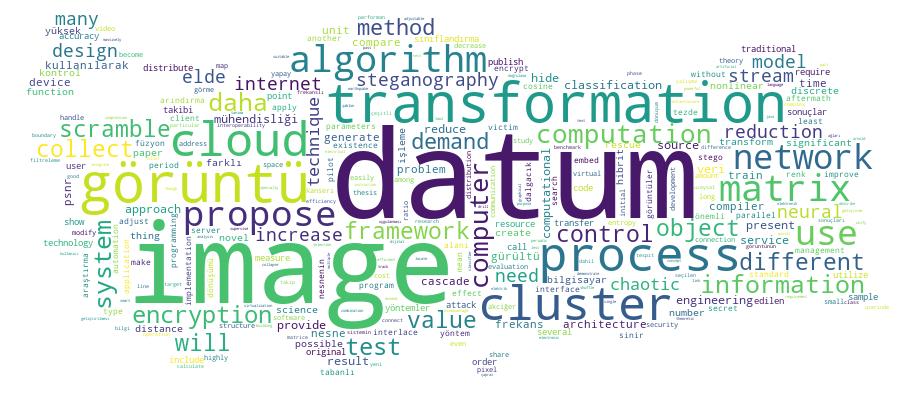
Competency Cloud

GCRIS Competency Cloud

Scholarly Output Search Results

Now showing 1 - 7 of 7
  • Conference Object
    Citation - WoS: 1
    Citation - Scopus: 2
    An on Demand Virtual CPU Arhitecture based on Cloud Infrastructure
    (Scitepress, 2017) Gokcay, Erhan
    Cloud technology provides different computational models like, including but not limited to, infrastructure, platform and software as a service. The motivation of a cloud system is based on sharing resources in an optimal and cost effective way by creating virtualized resources that can be distributed easily but the distribution is not necessarily parallel. Another disadvantage is that small computational units like smart devices and less powerful computers, are excluded from resource sharing. Also different systems may have interoperability problems, since the operating system and CPU design differs from each other. In this paper, an on demand dynamically created computational architecture, inspired from the CPU design and called Cloud CPU, is described that can use any type of resource including all smart devices. The computational and data transfer requirements from each unit are minimized. Because of this, the service can be created on demand, each time with a different functionality. The distribution of the calculation over not-so-fast internet connections is compensated by a massively parallel operation. The minimized computational requirements will also reduce the interoperability problems and it will increase fault tolerance because of increased number of units in the system.
  • Conference Object
    Citation - Scopus: 1
    Effect of Secret Image Transformation on the Steganography Process
    (Institute of Electrical and Electronics Engineers Inc., 2017) Buke,M.; Tora,H.; Gokcay,E.
    Steganography is the art of hiding information in something else. It is favorable over encryption because encryption only hides the meaning of the information; whereas steganography hides the existence of the information. The existence of a hidden image decreases Peak Signal to Noise Ratio (PSNR) and increases Mean Square Error (MSE) values of the stego image. We propose an approach to improve PSNR and MSE values in stego images. In this method a transformation is applied to the secret image, concealed within another image, before embedding into the cover image. The effect of the transformation is tested with Least Significant Bit (LSB) insertion and Discrete Cosine Transformation (DCT) techniques. MSE and PSNR are calculated for both techniques with and without transformation. Results show a better MSE and PSNR values when a transformation is applied for LSB technique but no significant difference was shown in DCT technique. © 2017 IEEE.
  • Conference Object
    An Iot Application for Locating Victims Aftermath of an Earthquake
    (Ieee, 2017) Karakaya, Murat; Sengul, Gokhan; Gokcay, Erhan
    This paper presents an Internet of Things (IoT) framework which is specially designed for assisting the research and rescue operations targeted to collapsed buildings aftermath of an earthquake. In general, an IoT network is used to collect and process data from different sources called things. According to the collected data, an IoT system can actuate different mechanisms to react the environment. In the problem at hand, we exploit the IoT capabilities to collect the data about the victims before the building collapses and when it falls down the collected data is processed to generate useful reports which will direct the search and rescue efforts. The proposed framework is tested by a pilot implementation with some simplifications. The initial results and experiences are promising. During the pilot implementation, we observed some issues which are addressed in the proposed IoT framework properly.
  • Conference Object
    Citation - Scopus: 1
    An Iot Application for Locating Victims Aftermath of an Earthquake
    (Institute of Electrical and Electronics Engineers Inc., 2017) Karakaya,M.; Şengül,G.; Gökçay,E.
    This paper presents an Internet of Things (IoT) framework which is specially designed for assisting the research and rescue operations targeted to collapsed buildings aftermath of an earthquake. In general, an IoT network is used to collect and process data from different sources called things. According to the collected data, an IoT system can actuate different mechanisms to react the environment. In the problem at hand, we exploit the IoT capabilities to collect the data about the victims before the building collapses and when it falls down the collected data is processed to generate useful reports which will direct the search and rescue efforts. The proposed framework is tested by a pilot implementation with some simplifications. The initial results and experiences are promising. During the pilot implementation, we observed some issues which are addressed in the proposed IoT framework properly. © 2017 IEEE.
  • Conference Object
    Effect of Secret Image Transformation on the Steganography Process
    (Ieee, 2017) Buker, Mohamed; Tora, Hakan; Gokcay, Erhan
    Steganography is the art of hiding information in something else. It is favorable over encryption because encryption only hides the meaning of the information; whereas steganography hides the existence of the information. The existence of a hidden image decreases Peak Signal to Noise Ratio (PSNR) and increases Mean Square Error (MSE) values of the stego image. We propose an approach to improve PSNR and MSE values in stego images. In this method a transformation is applied to the secret image, concealed within another image, before embedding into the cover image. The effect of the transformation is tested with Least Significant Bit (LSB) insertion and Discrete Cosine Transformation (DCT) techniques. MSE and PSNR are calculated for both techniques with and without transformation. Results show a better MSE and PSNR values when a transformation is applied for LSB technique but no significant difference was shown in DCT technique.
  • Conference Object
    Citation - Scopus: 2
    A Stream Clustering Algorithm Using Information Theoretic Clustering Evaluation Function
    (Scitepress, 2018) Gokcay, Erhan
    There are many stream clustering algorithms that can be divided roughly into density based algorithms and hyper spherical distance based algorithms. Only density based algorithms can detect nonlinear clusters and all algorithms assume that the data stream is an ordered sequence of points. Many algorithms need to receive data in buckets to start processing with online and offline iterations with several passes over the data. In this paper we propose a streaming clustering algorithm using a distance function which can separate highly nonlinear clusters in one pass. The distance function used is based on information theoretic measures and it is called Clustering Evaluation Function. The algorithm can handle data one point at a time and find the correct number of clusters even with highly nonlinear clusters. The data points can arrive in any random order and the number of clusters does not need to be specified. Each point is compared against already discovered clusters and each time clusters are joined or divided using an iteratively updated threshold.
  • Conference Object
    A Decentralized on Demand Cloud Cpu Design With Instruction Level Virtualization
    (Springer Verlag, 2018) Gokcay,E.
    Cloud technology provides many advantages and provides many services over traditional computational models. Although the provided virtual services increase resource sharing and cost effectiveness of the system, each node in the system is still centralized. Different CPU and OS versions bring interoperability problems in data exchange between nodes. In most cases less powerful units are left outside the service area. These units can only be considered as consumers of the cloud system. A new service called Cloud CPU is described elsewhere where the cloud provides the computational background for the components of a virtual CPU and the computation is distributed over internet. The design is using all units connected to the internet and it achieves a massively parallel operation. In this paper, the design of Cloud CPU will be extended and description of services needed with the new architecture will be discussed. One of the new services needed is a multi-language compiler where the target language is not fixed as well as the source language. The job of the compiler is not using the cloud for execution but to distribute the computation depending on the provided instruction sets published by each node. The computation makes sense only when all units work together and there is a need to synchronize and connect all nodes included in a particular computation. The need for synchronization will be gone when the computation is finished. Therefore an on demand Cloud-OS service is needed for bookkeeping and synchronization. The need for the Cloud-OS is temporary and the on demand initiated Cloud-OS will be terminated when the computation is ended. © Springer International Publishing AG, part of Springer Nature 2018.