
Işık, Mehmet
Loading...

Profile URL
Name Variants
Mehmet, Işık
M.,Işık
Isik, Mehmet
Mehmet, Isik
I., Mehmet
I.,Mehmet
Işık,M.
Isik,M.
I.,Mehmet
M.,Isik
Işık, Mehmet
M., Isik
Isik, M.
M.,Işık
Isik, Mehmet
Mehmet, Isik
I., Mehmet
I.,Mehmet
Işık,M.
Isik,M.
I.,Mehmet
M.,Isik
Işık, Mehmet
M., Isik
Isik, M.
Job Title
Profesör Doktor
Email Address
mehmet.isik@atilim.edu.tr
Main Affiliation
Department of Electrical & Electronics Engineering
Status
Former Staff
Website
ORCID ID
Scopus Author ID
Turkish CoHE Profile ID
Google Scholar ID
WoS Researcher ID
Sustainable Development Goals
 1
1NO POVERTY
0
Research Products
 2
2ZERO HUNGER
0
Research Products
 3
3GOOD HEALTH AND WELL-BEING
1
Research Products
 4
4QUALITY EDUCATION
0
Research Products
 5
5GENDER EQUALITY
0
Research Products
 6
6CLEAN WATER AND SANITATION
0
Research Products
 7
7AFFORDABLE AND CLEAN ENERGY
11
Research Products
 8
8DECENT WORK AND ECONOMIC GROWTH
0
Research Products
 9
9INDUSTRY, INNOVATION AND INFRASTRUCTURE
0
Research Products
 10
10REDUCED INEQUALITIES
0
Research Products
 11
11SUSTAINABLE CITIES AND COMMUNITIES
0
Research Products
 12
12RESPONSIBLE CONSUMPTION AND PRODUCTION
0
Research Products
 13
13CLIMATE ACTION
0
Research Products
 14
14LIFE BELOW WATER
1
Research Products
 15
15LIFE ON LAND
1
Research Products
 16
16PEACE, JUSTICE AND STRONG INSTITUTIONS
0
Research Products
 17
17PARTNERSHIPS FOR THE GOALS
0
Research Products

This researcher does not have a Scopus ID.

This researcher does not have a WoS ID.

Scholarly Output
173
Articles
169
Views / Downloads
97/114
Supervised MSc Theses
3
Supervised PhD Theses
0
WoS Citation Count
1940
Scopus Citation Count
2022
Patents
0
Projects
0
WoS Citations per Publication
11.21
Scopus Citations per Publication
11.69
Open Access Source
11
Supervised Theses
3
| Journal | Count |
|---|---|
| Optical Materials | 17 |
| Physica B: Condensed Matter | 16 |
| Journal of Luminescence | 15 |
| Materials Science in Semiconductor Processing | 14 |
| Journal of Materials Science: Materials in Electronics | 12 |
Current Page: 1 / 10
Scopus Quartile Distribution
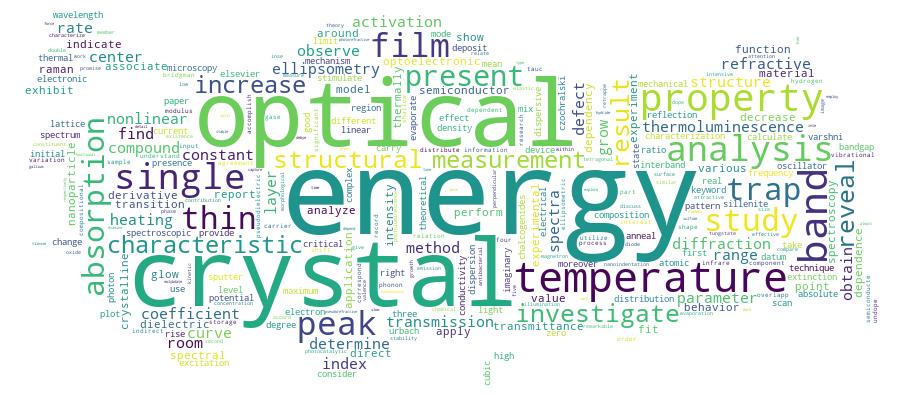
Competency Cloud
27 results
Scholarly Output Search Results
Now showing 1 - 10 of 27
Article Citation - WoS: 14Citation - Scopus: 14Low Temperature Thermoluminescence Behaviour of Y2o3< Nanoparticles(Elsevier, 2019) Delice, S.; Isik, M.; Gasanly, N. M.Y2O3 nanoparticles were investigated using low temperature thermoluminescence (TL) experiments. TL glow curve recorded at constant heating rate of 0.4 K/s exhibits seven peaks around 19, 62, 91, 115, 162, 196 and 215 K. Activation energies and characteristics of traps responsible for observed curves were revealed under the light of results of initial rise analyses and T-max-T-stop experimental methods. Analyses of TL curves obtained at different stopping temperatures resulted in presence of one quasi-continuously distributed trap with activation energies increasing from 18 to 24 meV and six single trapping centers at 49, 117, 315, 409, 651 and 740 meV. Activation energies of all revealed centers were reported in the present paper. Structural characterization of Y2O3 nanoparticles was accomplished using X-ray diffraction and scanning electron microscopy measurements. (C) 2019 Chinese Society of Rare Earths. Published by Elsevier B.V. All rights reserved.Article Citation - WoS: 1Citation - Scopus: 1Shallow Trapping Centers in Bi12geo20 Single Crystals by Thermally Stimulated Current Measurements(Elsevier, 2022) Delice, S.; Isik, M.; Gasanly, N. M.Bi12GeO20 single crystals were investigated by thermally stimulated current (TSC) experiments performed in the temperature range of 10-290 K. Recorded TSC glow curve exhibited six distinctive peaks with maxima at around 90, 105, 166, 209, 246, 275 K. The analyses of the obtained glow curve were accomplished by curve fitting and initial rise methods. The analysis results were in good agreement that the TSC peaks appeared in the glow curve due to existence of trapping levels with activation energies of 0.10, 0.18, 0.23, 0.53, 0.68 and 0.73 eV. These trapping levels were estimated to be hole traps above valence band. The heating rate dependent TSC glow curves were also obtained for various rates between 0.30 and 0.45 K/s. The changes of TSC intensity, peak maximum temperature and full-widths-half-maximum values with heating rates were studied in detail. TSC intensity decreased and peak maximum temperature increased with increasing heating rate. Determination of defects and trapping/stimulation mechanism of those are significant for technological applications since local states in these materials take critical role for device performance.Article Citation - WoS: 5Citation - Scopus: 5Identification of Shallow Trap Centers in Inse Single Crystals and Investigation of Their Distribution: a Thermally Stimulated Current Spectroscopy(Elsevier, 2024) Isik, M.; Gasanly, N. M.Identification of trap centers in semiconductors takes great importance for improving the performance of electronic and optoelectronic devices. In the present study, we employed the thermally stimulated current (TSC) method within a temperature range of 10-280 K to explore trap centers in InSe crystal-a material with promising applications in next-generation devices. Our findings revealed the existence of two distinct hole trap centers within the InSe crystal lattice located at 0.06 and 0.14 eV. Through the leveraging the T-stop method, we offered trap distribution parameters of revealed centers. The results obtained from the experimental methodology employed to investigate the distribution of trap centers indicated that one of the peaks extended between 0.06 and 0.13 eV, while the other spanned from 0.14 to 0.31 eV. Notably, our research uncovers a remarkable variation in trap density, spanning one order of magnitude, for every 10 and 88 meV of energy variation. The results of our research present the characteristics of shallow trap centers in InSe, providing important information for the design and optimization of InSe-based optoelectronic devices.Article Citation - WoS: 5Citation - Scopus: 5Thermoluminescence Properties of Al Doped Zno Nanoparticles(Elsevier Sci Ltd, 2018) Isik, M.; Gasanly, N. M.ZnO nanoparticles doped with aluminum (AZO nanoparticles) were investigated using low temperature thermoluminescence (TL) and structural characterization experiments. TL experiments were performed on AZO nanoparticles in the temperature range of 10-300 K. TL curve presented one intensive peak around 123 K and two overlapped peaks to intensive peak around 85 and 150 K for heating rate of 0.1 K/s. Curve fitting and initial rise methods were used to find the activation energies of associated trapping centers. Analyses resulted in the presence of three centers at 0.05, 0.08 and 0.17 eV with peak maximum temperatures (T-m) of 86.2, 121.5 and 147.1 K, respectively. TL experiments were expanded using different heating rates between 0.1 K/s and 0.5 K/s. Behavior of revealed traps was investigated using an experimental technique called as T-m - T-stop method. It was seen that traps are quasi-continuously distributed within the band gap. Structural properties were studied using x-ray diffraction, energy dispersive spectroscopy and scanning electron microscopy experiments.Article Citation - WoS: 8Citation - Scopus: 8Thermoluminescence Properties of Zno Nanoparticles in the Temperature Range 10-300 K(Springer, 2016) Isik, M.; Yildirim, T.; Gasanly, N. M.Low-temperature thermoluminescence (TL) properties of ZnO nanoparticles grown by sol-gel method were investigated in the 10-300 K temperature range. TL glow curve obtained at 0.2 K/s constant heating rate exhibited one broad peak around 83 K. The observed peak was analyzed using curve fitting method to determine the activation energies of trapping center(s) responsible for glow curve. Analyses resulted in the presence of three peaks at 55, 85 and 118 K temperatures with activation energies of 12, 30 and 45 meV, respectively. Thermal cleaning process was applied to separate overlapped peaks and get an opportunity to increase the reliability of results obtained from curve fitting method. Heating rate dependence of glow curve was also studied for rates between 0.2 and 0.7 K/s. The shift of the peak maximum temperatures to higher values and decrease in peak height with heating rate were observed. Moreover, X-ray diffraction and scanning electron microscopy were used for structural characterization.Article Low Temperature Thermoluminescence of Quaternary Thallium Sulfide Tl4inga3<(indian Assoc Cultivation Science, 2015) Delice, S.; Isik, M.; Bulur, E.; Gasanly, N. M.Thermoluminescence measurements have been carried out on Tl4InGa3S8 single crystals in the temperature range of 10-300 K at various heating rates. The observed thermoluminescence spectra have been analyzed applying many methods like curve fitting, initial rise, peak shape and heating rate methods. Thermal cleaning method has been performed on the observed thermoluminescence glow curve to separate the overlapped peaks. Three distinctive trapping centers with activation energies of 13, 44 and 208 meV have been revealed from the results of the analysis. Heating rate dependence and traps distribution investigations have been also undertaken on the most intensive peak. The thermoluminescence mechanisms in the observed traps have been attributed to first order kinetics (slow retrapping) on the strength of the consistency between theoretical assumptions for slow retrapping process and experimental outcomes.Article Citation - WoS: 2Citation - Scopus: 2Trap Distribution in Agin5s8< Single Crystals: Thermoluminescence Study(Pergamon-elsevier Science Ltd, 2018) Delice, S.; Işık, Mehmet; Isik, M.; Gasanly, N. M.; Işık, Mehmet; Department of Electrical & Electronics Engineering; Department of Electrical & Electronics EngineeringDistribution of shallow trap levels in AgIn5S8 crystals has been investigated by thermoluminescence (TL) measurements performed below room temperature (10-300 K). One broad TL peak centered at 33 K was observed as constant heating rate of 0.2 K/s was employed for measurement. The peak shape analysis showed that the TL curve could consist of several individual overlapping TL peaks or existence of quasi-continuous distributed traps. Therefore, TL experiments were repeated for different stopping temperatures (T-stop) between 10 and 34 K with constant heating rate of 0.2 K/s to separate the overlapping TL peaks. The E-t vs T-stop indicated that crystal has quasi-continuously distributed traps having activation energies increasing from 13 to 41 meV. Heating rate effect on trapped charge carriers was also investigated by carrying out the TL. experiments with various heating rates between 0.2 and 0.6 K/s for better comprehension of characteristics of existed trap levels. Analyses indicated that the trap levels exhibited the properties of anomalous heating rate behavior which means the TL intensity and area under the TL peak increase with increasing heating rate.Article Citation - WoS: 14Citation - Scopus: 18Traps distribution in sol-gel synthesized ZnO nanoparticles(Elsevier, 2019) Delice, S.; Isik, M.; Gasanly, N. M.The distribution of shallow traps within the sol-gel synthesized ZnO nanoparticles was investigated using thermoluminescence (TL) experiments in the 10-300 K temperature range. TL measurements presented two overlapped peaks around 110 and 155 K. The experimental technique based on radiating the nanoparticles at different temperatures (T-exc.) between 60 and 125 K was carried out to understand the trap distribution characteristics of peaks. It was observed that peak maximum temperature shifted to higher values and activation energy (E-t) increased as irradiating temperature was increased. The E-t vs. T-exc. presented that ZnO nanoparticles have quasi-continuously distributed traps possessing activation energies increasing from 80 to 171 meV. (C) 2019 Elsevier B.V. All rights reserved.Article Citation - WoS: 8Citation - Scopus: 8Defect Characterization in Bi12geo20< Single Crystals by Thermoluminescence(Elsevier, 2021) Delice, S.; Isik, M.; Sarigul, N.; Gasanly, N. M.Bi12GeO20 single crystal grown by Czochralski method was investigated in terms of thermoluminescence (TL) properties. TL experiments were performed for various heating rates between 1 and 6 K/s in the temperature region of 300-675 K. One TL peak with peak maximum temperature of 557 K was observed in the TL spectrum as constant heating rate of 1 K/s was employed. Curve fitting, initial rise and variable heating rate methods were applied to calculate the activation energy of trap level corresponding to this TL peak. Analyses resulted in a presence of one trap center having mean activation energy of 0.78 eV. Heating rate characteristics of revealed trap center was also explored and theoretically well-known behavior that TL intensity decreases and peak maximum temperature increases with heating rates was observed for the trap level. Distribution of trapping levels was studied by thermally cleaning process for different T-stop between 425 and 525 K. Quasi-continuously distributed trapping levels were revealed with mean activation energies ranging from 0.78 to 1.26 eV. Moreover, absorption analysis revealed an optical transition taking place between a defect level and conduction band with an energy difference of 2.51 eV. These results are in good agreement for the presence of intrinsic defects above valence band in Bi12GeO20 crystals.Article Citation - WoS: 4Citation - Scopus: 5Thermoluminescence characteristics of GaSe and Ga2Se3 single crystals(Elsevier, 2022) Isik, M.; Sarigul, N.; Gasanly, N. M.GaSe and Ga2Se3 are semiconducting compounds formed from same constituent elements. These compounds have been attractive due to their optoelectronic and photovoltaic applications. Defects take remarkable attention since they affect quality of semiconductor devices. In the present paper, deep defect centers in GaSe and Ga2Se3 single crystals grown by Bridgman method were reported from the analyses of thermoluminescence measurements performed in the 350-675 K range. Experimental TL curves of GaSe and Ga2Se3 single crystals presented one and two overlapped peaks, respectively. The applied curve fitting and initial rise techniques were in good agreement about trap activation energies of 0.83 eV for GaSe, 0.96 and 1.24 eV for Ga2Se3 crystals. Crystalline structural properties of the grown single crystals were also investigated by x-ray diffraction measurements. The peaks observed in XRD patterns of the GaSe and Ga2Se3 crystals were well-consistent with hexagonal and zinc blende structures, respectively.

- «
- 1 (current)
- 2
- 3
- »