This item is non-discoverable
Işık, Mehmet
Loading...

Profile URL
Name Variants
Mehmet, Işık
M.,Işık
Isik, Mehmet
Mehmet, Isik
I., Mehmet
I.,Mehmet
Işık,M.
Isik,M.
I.,Mehmet
M.,Isik
Işık, Mehmet
M., Isik
Isik, M.
M.,Işık
Isik, Mehmet
Mehmet, Isik
I., Mehmet
I.,Mehmet
Işık,M.
Isik,M.
I.,Mehmet
M.,Isik
Işık, Mehmet
M., Isik
Isik, M.
Job Title
Profesör Doktor
Email Address
mehmet.isik@atilim.edu.tr
Main Affiliation
Department of Electrical & Electronics Engineering
Status
Former Staff
Website
ORCID ID
Scopus Author ID
Turkish CoHE Profile ID
Google Scholar ID
WoS Researcher ID
Sustainable Development Goals
2
ZERO HUNGER

0
Research Products
11
SUSTAINABLE CITIES AND COMMUNITIES

0
Research Products
14
LIFE BELOW WATER

1
Research Products
6
CLEAN WATER AND SANITATION

0
Research Products
1
NO POVERTY

0
Research Products
5
GENDER EQUALITY

0
Research Products
9
INDUSTRY, INNOVATION AND INFRASTRUCTURE

0
Research Products
16
PEACE, JUSTICE AND STRONG INSTITUTIONS

0
Research Products
17
PARTNERSHIPS FOR THE GOALS

0
Research Products
15
LIFE ON LAND

1
Research Products
10
REDUCED INEQUALITIES

0
Research Products
7
AFFORDABLE AND CLEAN ENERGY

11
Research Products
8
DECENT WORK AND ECONOMIC GROWTH

0
Research Products
4
QUALITY EDUCATION

0
Research Products
12
RESPONSIBLE CONSUMPTION AND PRODUCTION

0
Research Products
3
GOOD HEALTH AND WELL-BEING

1
Research Products
13
CLIMATE ACTION

0
Research Products

This researcher does not have a Scopus ID.

This researcher does not have a WoS ID.

Scholarly Output
173
Articles
169
Views / Downloads
442/792
Supervised MSc Theses
3
Supervised PhD Theses
0
WoS Citation Count
1802
Scopus Citation Count
1861
WoS h-index
20
Scopus h-index
20
Patents
0
Projects
0
WoS Citations per Publication
10.42
Scopus Citations per Publication
10.76
Open Access Source
11
Supervised Theses
3
Google Analytics Visitor Traffic
| Journal | Count |
|---|---|
| Optical Materials | 17 |
| Physica B: Condensed Matter | 16 |
| Journal of Luminescence | 15 |
| Materials Science in Semiconductor Processing | 14 |
| Journal of Materials Science: Materials in Electronics | 12 |
Current Page: 1 / 10
Scopus Quartile Distribution
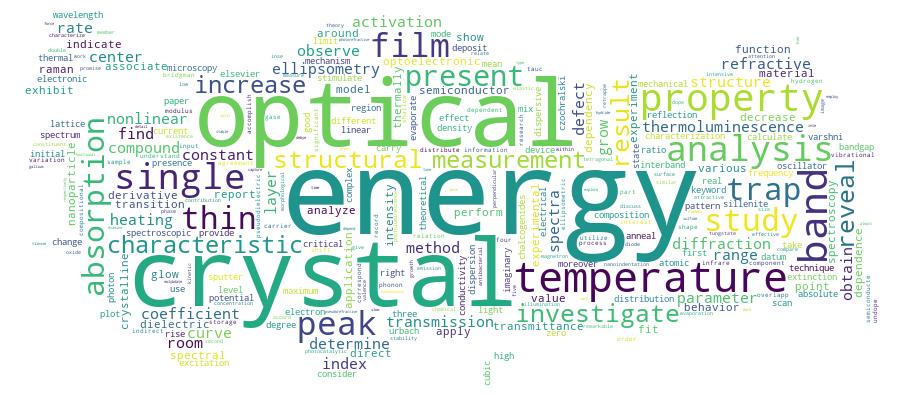
Competency Cloud

138 results
Scholarly Output Search Results
Now showing 1 - 10 of 138
Article Citation - WoS: 4Citation - Scopus: 4Optical Characterization of (tlins2)0.5< Crystal by Ellipsometry: Linear and Optical Constants for Optoelectronic Devices(Springer, 2023) Guler, I.; Isik, M.; Gasanly, N.TlInSSe [(TlInS2)(0.5)(TlInSe2)(0.5)] crystals have garnered significant attention as promising candidates for optoelectronic applications due to their exceptional optoelectrical characteristics. This study focused on investigating the linear and nonlinear optical properties of TlInSSe layered single crystals through ellipsometry measurements. The X-ray diffraction analysis revealed the presence of four distinct peaks corresponding to a monoclinic crystalline structure. In-depth analysis was conducted to examine the variations of refractive index, extinction coefficient, and complex dielectric function within the energy range of 1.25-6.15 eV. By employing derivative analysis of the absorption coefficient and utilizing the Tauc relation, the indirect and direct bandgap energies of TlInSSe crystals were determined to be 2.09 and 2.26 eV, respectively. Furthermore, this research paper presents findings on oscillator energy, dispersion energy, Urbach energy, zero and high frequency dielectric constants, plasma frequency, carrier density to effective mass ratio, nonlinear refractive index, and first-order and third-order nonlinear susceptibilities of TlInSSe crystals.Article Citation - WoS: 8Citation - Scopus: 8Spectroscopic ellipsometry study of Bi12TiO20 single crystals(Springer, 2021) Isik, M.; Gasanly, N. M.; Darvishov, N. H.; Bagiev, V. E.Bi12XO20 (X: Si, Ge, Ti, etc.) ternary compounds have attracted attention especially due to their fascinating photorefractive characteristics. The present paper introduces the structural and optical characteristics of Bi12TiO20 single crystals grown by Czochralski method. X-ray diffraction pattern of the compound exhibited sharp and intensive peaks corresponding to parallel planes of cubic crystalline structure. The lattice constant of the cubic structure was determined as a = 1.0118 nm using a diffraction pattern indexing program. The optical characterization of the Bi12TiO20 single crystals was carried through spectroscopic ellipsometry experiments performed in the 1.2-5.0 eV spectral range. The spectral dependencies of refractive index, extinction coefficient, and complex dielectric function were revealed analyzing experimental ellipsometric data under the light of sample-air optical model. The band gap energy of the compound was determined as 3.34 eV from the analyses of absorption coefficient. Three critical points at 3.51, 4.10, and 4.71 eV were obtained from the analyses of components of dielectric function using their second-energy derivative spectra.Article Citation - WoS: 14Citation - Scopus: 18Traps distribution in sol-gel synthesized ZnO nanoparticles(Elsevier, 2019) Delice, S.; Isik, M.; Gasanly, N. M.The distribution of shallow traps within the sol-gel synthesized ZnO nanoparticles was investigated using thermoluminescence (TL) experiments in the 10-300 K temperature range. TL measurements presented two overlapped peaks around 110 and 155 K. The experimental technique based on radiating the nanoparticles at different temperatures (T-exc.) between 60 and 125 K was carried out to understand the trap distribution characteristics of peaks. It was observed that peak maximum temperature shifted to higher values and activation energy (E-t) increased as irradiating temperature was increased. The E-t vs. T-exc. presented that ZnO nanoparticles have quasi-continuously distributed traps possessing activation energies increasing from 80 to 171 meV. (C) 2019 Elsevier B.V. All rights reserved.Article Citation - WoS: 8Citation - Scopus: 8Defect Characterization in Bi12geo20< Single Crystals by Thermoluminescence(Elsevier, 2021) Delice, S.; Isik, M.; Sarigul, N.; Gasanly, N. M.Bi12GeO20 single crystal grown by Czochralski method was investigated in terms of thermoluminescence (TL) properties. TL experiments were performed for various heating rates between 1 and 6 K/s in the temperature region of 300-675 K. One TL peak with peak maximum temperature of 557 K was observed in the TL spectrum as constant heating rate of 1 K/s was employed. Curve fitting, initial rise and variable heating rate methods were applied to calculate the activation energy of trap level corresponding to this TL peak. Analyses resulted in a presence of one trap center having mean activation energy of 0.78 eV. Heating rate characteristics of revealed trap center was also explored and theoretically well-known behavior that TL intensity decreases and peak maximum temperature increases with heating rates was observed for the trap level. Distribution of trapping levels was studied by thermally cleaning process for different T-stop between 425 and 525 K. Quasi-continuously distributed trapping levels were revealed with mean activation energies ranging from 0.78 to 1.26 eV. Moreover, absorption analysis revealed an optical transition taking place between a defect level and conduction band with an energy difference of 2.51 eV. These results are in good agreement for the presence of intrinsic defects above valence band in Bi12GeO20 crystals.Article Citation - WoS: 4Citation - Scopus: 5Thermoluminescence characteristics of GaSe and Ga2Se3 single crystals(Elsevier, 2022) Isik, M.; Sarigul, N.; Gasanly, N. M.GaSe and Ga2Se3 are semiconducting compounds formed from same constituent elements. These compounds have been attractive due to their optoelectronic and photovoltaic applications. Defects take remarkable attention since they affect quality of semiconductor devices. In the present paper, deep defect centers in GaSe and Ga2Se3 single crystals grown by Bridgman method were reported from the analyses of thermoluminescence measurements performed in the 350-675 K range. Experimental TL curves of GaSe and Ga2Se3 single crystals presented one and two overlapped peaks, respectively. The applied curve fitting and initial rise techniques were in good agreement about trap activation energies of 0.83 eV for GaSe, 0.96 and 1.24 eV for Ga2Se3 crystals. Crystalline structural properties of the grown single crystals were also investigated by x-ray diffraction measurements. The peaks observed in XRD patterns of the GaSe and Ga2Se3 crystals were well-consistent with hexagonal and zinc blende structures, respectively.Article Citation - WoS: 15Citation - Scopus: 16Investigation of Band Gap Energy Versus Temperature for Sns 2 Thin Films Grown by Rf-Magnetron Sputtering(Elsevier, 2020) Isik, M.; Gullu, H. H.; Terlemezoglu, M.; Surucu, O. Bayrakli; Parlak, M.; Gasanly, N. M.[No Abstract Available]Article Citation - WoS: 13Citation - Scopus: 14Linear and Nonlinear Optical Properties of Bi12geo20 Single Crystal for Optoelectronic Applications(Elsevier Sci Ltd, 2023) Isik, M.; Gasanly, N. M.The present paper aims at presenting linear and nonlinear optical properties of Bi12GeO20 single crystals grown by Czochralski method. Transmission and reflection measurements were performed in the 400-1000 nm region. The recorded spectra were analyzed considering well-known optical models. Spectral dependencies of absorption coefficient, skin depth, refractive index, real and imaginary components of dielectric function were presented. The analyses performed on absorption coefficient showed direct bandgap and Urbach energies as 2.56 and 0.22 eV, respectively. The first-and third-order nonlinear susceptibilities and nonlinear refractive index of the crystal were also reported in the present work. The results of the present paper would provide valuable information for optoelectronic device applications of Bi12GeO20.Article Citation - WoS: 23Citation - Scopus: 25Investigation of Optical Properties of Bi12geo20< Sillenite Crystals by Spectroscopic Ellipsometry and Raman Spectroscopy(Elsevier Sci Ltd, 2020) Isik, M.; Delice, S.; Gasanly, N. M.; Darvishov, N. H.; Bagiev, V. E.Bi12GeO20 (BGO) compound is one of the fascinating members of sillenites group due to its outstanding photorefractive and photocatalytic characteristics. The present paper aims at investigating optical properties of BGO crystals by means of spectroscopic ellipsometry and Raman spectroscopy measurements. Bi12GeO20 single crystals grown by Czochralski method were structurally characterized by X-ray diffraction (XRD) experiments and the analyses showed that studied crystals have cubic crystalline structure. Raman spectrum exhibited 15 peaks associated with A, E and F modes. Spectroscopic ellipsometry measurement data achieved in the energy region between 1.2 and 6.2 eV were used in the air/sample optical model to get knowledge about complex pseudodielectric constant, pseudorefractive index, pseudoextinction and absorption coefficients of the crystals. Spectral change of real and imaginary part of complex pseudodielectric constant were discussed in detail. Band gap energy of Bi12GeO20 single crystals was calculated to be 3.18 eV using absorption coefficient dependency on photon energy. Critical point energies at which photons are strongly absorbed were determined by utilizing the second energy derivative spectra of components of complex pseudodielectric function. Fitting of both spectra resulted in the presence of four interband transitions with energies of 3.49, 4.11, 4.67 and 5.51 eV.Article Citation - WoS: 6Citation - Scopus: 5Growth and Characterization of Pbmo0.75w0.25o4 Single Crystal: a Promising Material for Optical Applications(Elsevier Science Sa, 2023) Isik, M.; Gasanly, N. M.; Darvishov, N. H.; Bagiev, V. E.The present paper reports the structural and optical properties of PbMo0.75W0.25O4 single crystals grown by Czochralski method. XRD pattern of the crystal indicated well-defined two diffraction peaks associated with tetragonal crystalline structure. Raman and infrared spectra of the grown single crystals were presented to get information about the vibrational characteristics. Observed Raman modes were associated with modes of PbMoO4 and PbWO4. Eight bands were revealed in the infrared spectrum. The bands observed in the spectrum were attributed to multiphonon absorption processes. Transmission spectrum was measured in the 375-700 nm spectral region. The analyses of the spectrum resulted in direct band gap energy of 3.12 +/- 0.03 eV. The compositional dependent band gap energy plot was drawn considering the reported band gap energies of PbMoO4, PbWO4 and revealed band gap of PbMo0.75W0.25O4 single crystal. An almost linear behavior of composition-band gap energy was seen for PbMo1-xWxO4 compounds. Urbach energy was also found from the absorption coefficient analysis as 0.082 +/- 0.002 eV.Article Citation - WoS: 2Citation - Scopus: 2Investigation of Defect Levels in Bi12sio20< Single Crystals by Thermally Stimulated Current Measurements(Iop Publishing Ltd, 2021) Isik, M.; Delice, S.; Gasanly, N. M.Bi12SiO20 (BSO) single crystal belongs to the sillenite semiconducting family known as defective compounds. The present paper investigates the defect centers in BSO grown by Czochralski method by means of thermally stimulated current (TSC) measurements performed in the 10-260 K range. The TSC glow curve obtained at heating rate of beta = 0.1 K s(-1) presented several peaks associated with intrinsic defect centers. The activation energies of defect centers were revealed as 0.09, 0.15, 0.18, 0.22, 0.34, 0.70 and 0.82 eV accomplishing the curve fit analyses method. The peak maximum temperatures and orders of kinetics of each deconvoluted peak were also determined as an outcome of fitting process. TSC experiments were expanded by making the measurements at various heating rates between 0.1 and 0.3 K s(-1) to get information about the heating rate dependent peak parameters.